

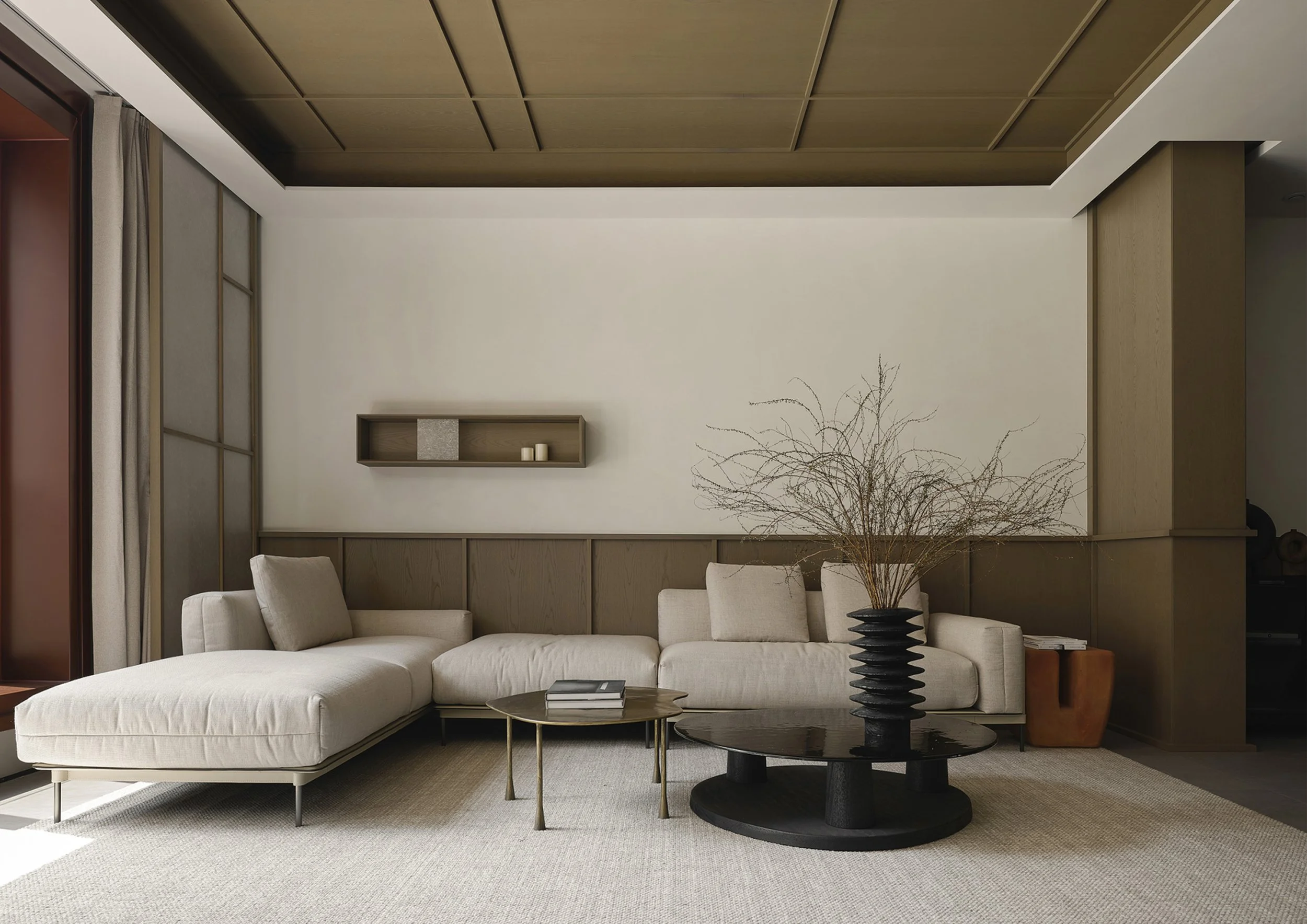
Zimo ● Songjing: A Narrative of Soft Light and Tactile Silence
In the realm of luxury residential interior design, the most successful spaces are those that learn to breathe. The Zimo, Songjing project addresses a classic townhouse renovation dilemma: a narrow, deep-plan layout disconnected from the natural world. Our design intervention reimagines the home not through restrictive walls, but through a central "well of light." By introducing a rhythmic three-flight staircase and a weightless glass elevator, the interior is transformed into a vertical gallery. This natural light optimization allows sunbeams to cascade from the rooftop to the ground floor, turning a once-dark passage into a glowing heart where minimalist aesthetics and daily life converge in a play of glass and shadow.
In the refined sphere of residential design, the most successful spaces are those that cultivate a sense of openness and vitality. Zimo ● Songjing encountered a quintessential interior challenge: a narrow and elongated floor plan that felt isolated from the natural environment. This challenge was addressed not by adding boundaries, but by introducing a central "well of light." The addition of a gracefully articulated three-flight staircase and an elegant glass elevator transformed the interior into a vertical gallery. Sunlight now pours from the rooftop to the ground floor, converting the heart of the home from a dim corridor into a luminous core where the subtle imprints of daily life are revealed in glass and shadow.
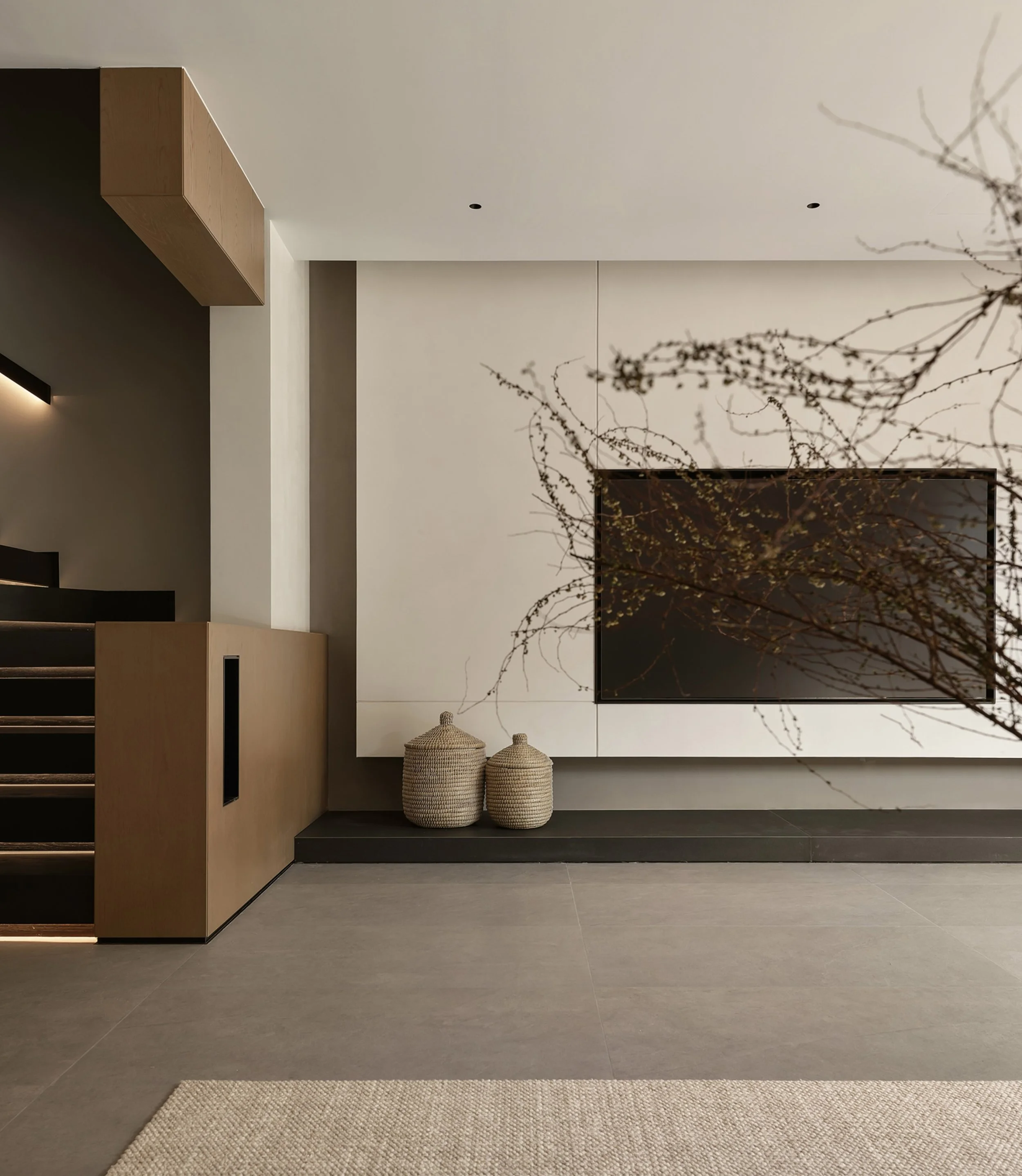
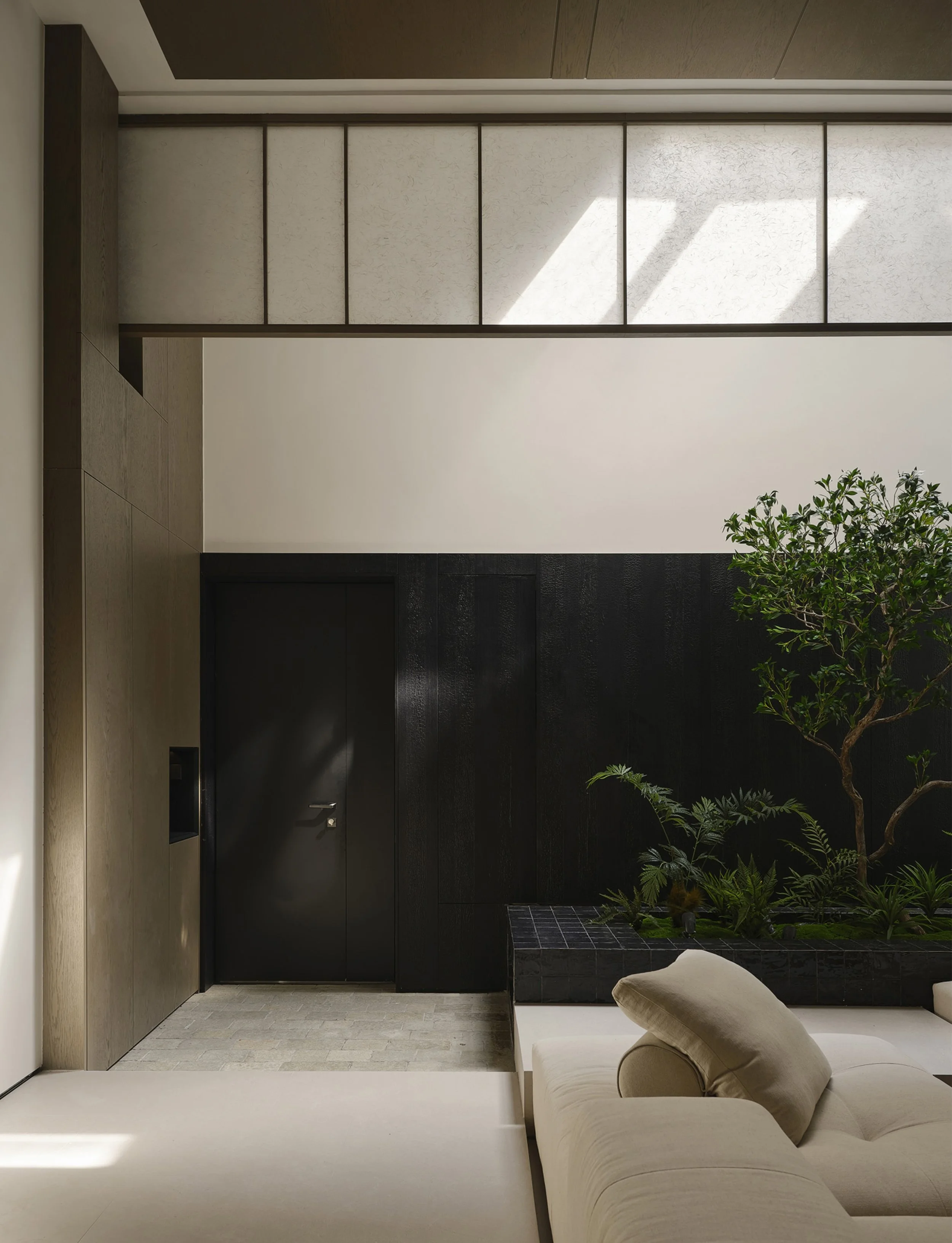
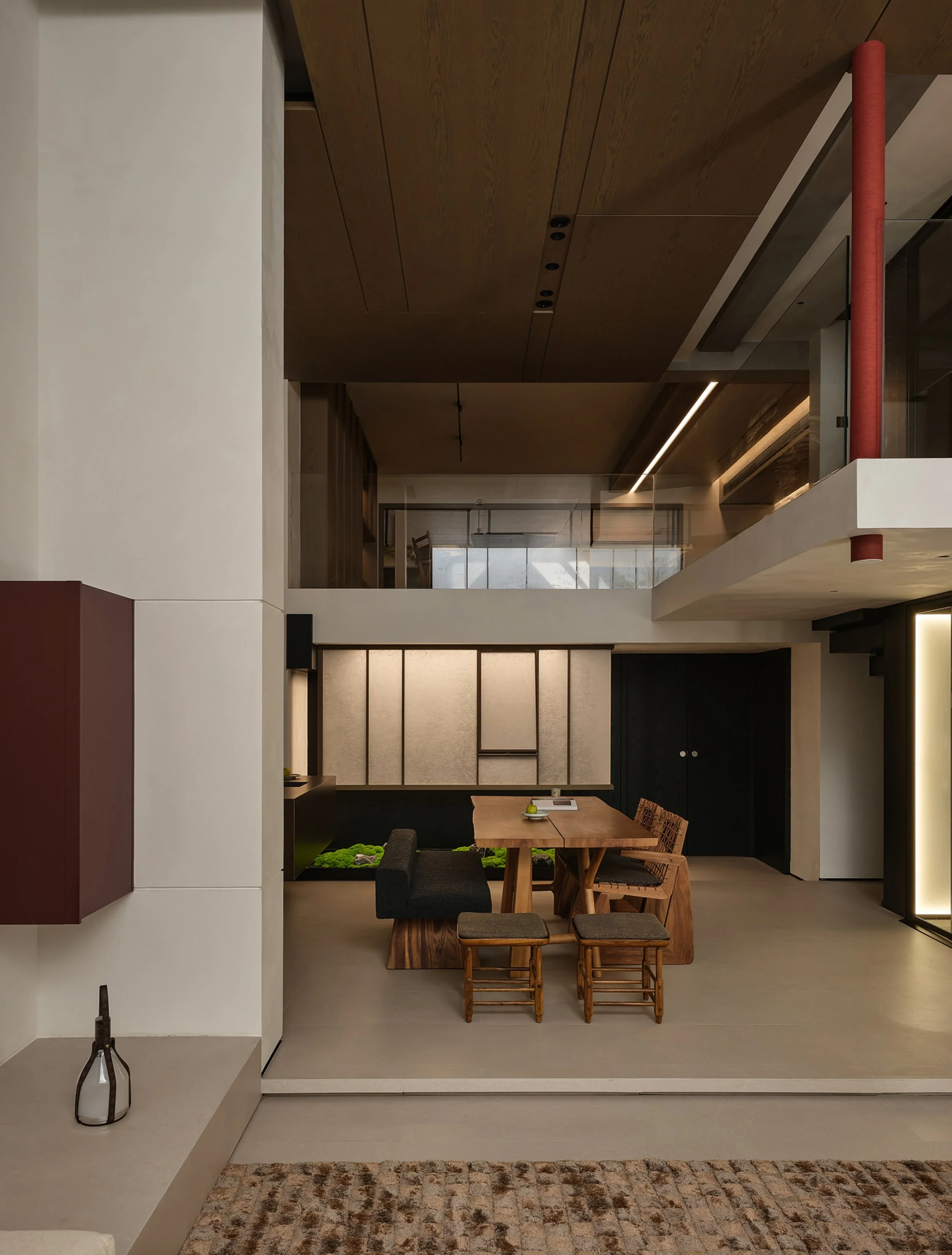
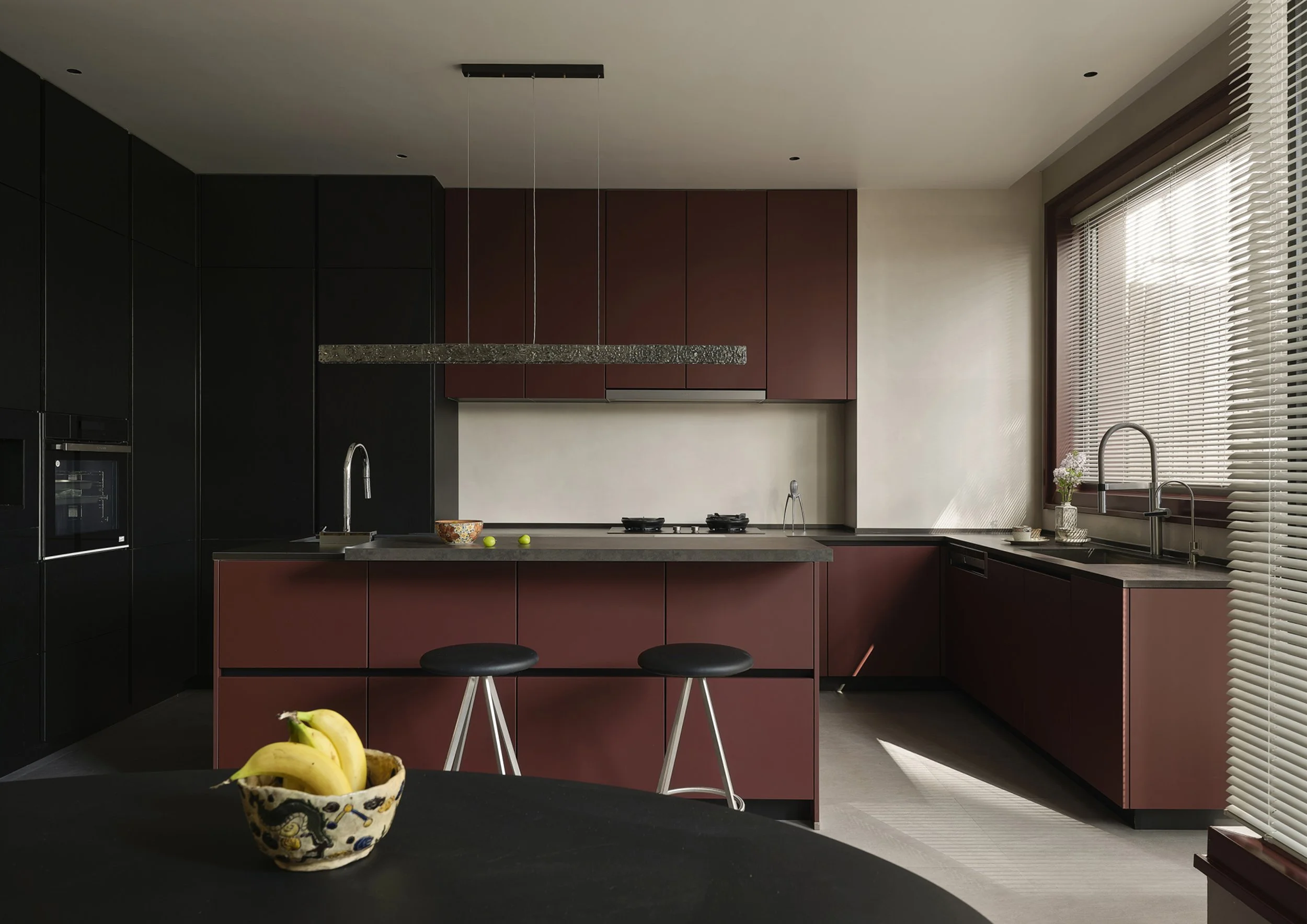
The home's layout is orchestrated through a deliberate choreography of space, distinctly separating communal areas from private retreats. The lower levels, which comprise the basement, ground floor, and mezzanine, are curated for refined living and entertaining. These spaces are open and fluid, thoughtfully designed to accommodate the vibrant gatherings of guests and family. Ascending through the home, the atmosphere transitions toward intimacy and repose. The second and third floors are dedicated to restful rituals, featuring tranquil bedrooms and private dressing suites. This layered spatial organization establishes a clear distinction between activity and serenity, ensuring the residence remains a sanctuary amid the urban landscape.
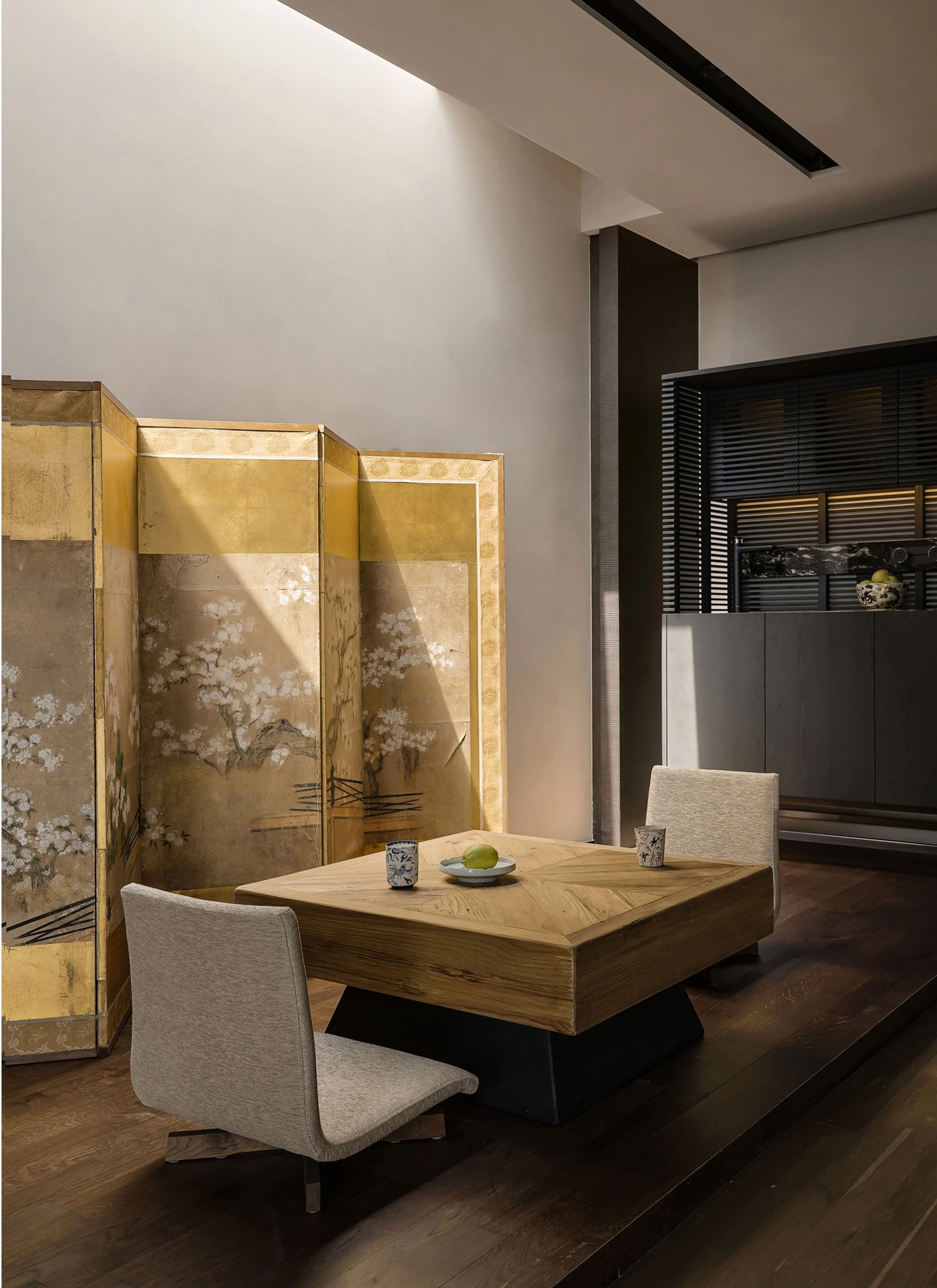
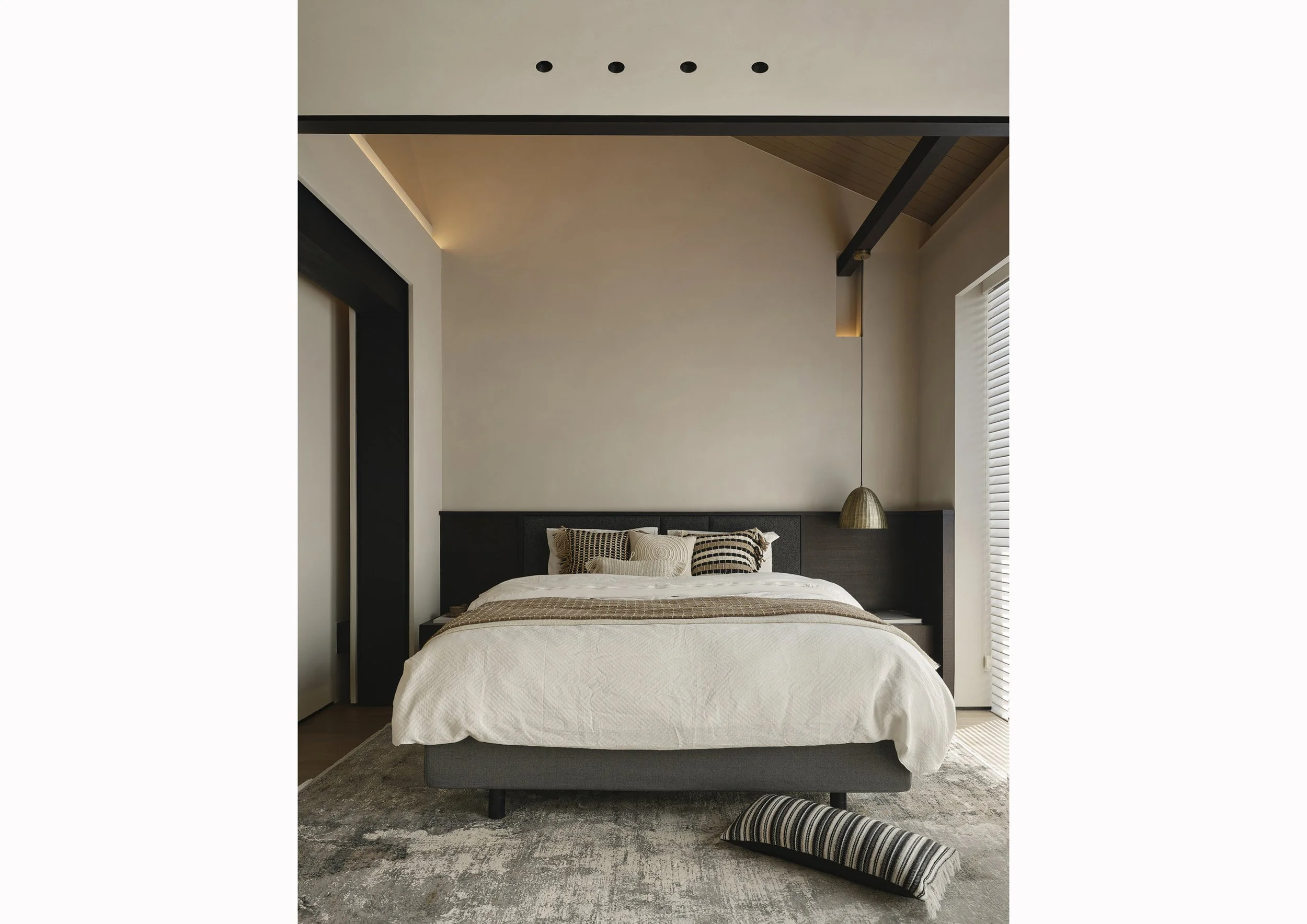
The master suite, located on the third floor, exemplifies the poetry of daily life. The design team chose to open the volume above the tatami area, allowing the afternoon sun to cast dynamic patterns across the walls. Eschewing sterile, flat finishes, the walls are instead adorned with deep, hand-applied textures that interact with light and imbue the room with organic warmth. These nuanced surfaces, combined with rustic screens and rich, grounding timbers, cultivate an ambiance that is enduring rather than ephemeral.
Within the master bedroom, structural elements such as black beams and columns are embraced as decorative anchors, establishing a sense of protection and scale beneath the room’s distinctive sloped roofline. The ensuite extends this interplay of transparency and privacy through a partition composed of rippled glass bricks, a material that introduces rhythmic, fluid light into the morning routine while gently obscuring the silhouette of the walk-in closet beyond.
Every detail, including the acrylic screens on the second floor that discreetly conceal the laundry area, reflects a profound understanding of the owner's lifestyle. This interior is not merely visually captivating; it is a home that thoughtfully addresses the authentic and subtle needs of the human spirit.

This Project is one of the submission from Merci x Sky Design Awards 2026
Category: Interior Design - Residential
NANJING SUKONG INTERIOR DESIGN CO. LTD :
Country: China
NANJING SUKONG INTERIOR DESIGN CO. LTD.
SUKONG DESIGN, established in 2016, is a new prominent space design company.

It is named after two Chinese characters of “su” and “kong”, with the first one indicating modesty and enterprising spirit and the second one representing the idea of emptiness, negative space in aesthetics and a kind of world outlook of sunyata. It is exactly our core design philosophy which leads us in creating first-class designs.
SUKONG DESIGN hopes to integrate localized elements into the world. And we are committed to expressing the rhythm of space and investing the space with expectations and surprises by using simple but elegant designs.
Our projects span a wide range of types including interior design of modern commercial space, modern offices, customized residences and conversion of historical buildings, as well as practices of aesthetics in daily life. The various practices bring diverse ideas together, providing endless possibilities of architectural and interior design.
We are a design team full of vitality, passion and collaborative spirit. We hope to gather more partners sharing the same ideal to strive to be one of the most influential cutting-edge design teams in China.
The Daily Ritual: Finding Stillness in Beijing’s SanYuanLi Market
Nestled at the threshold of Beijing’s SanYuanLi Food Market, Designed by B.L.U.E Architecture from China. This 25-square-metre café distils the vitality of its surroundings into a compact yet resonant urban moment. Serving a diverse local community while bordering the city’s diplomatic quarter and the Liangma River, SanYuanLi is both deeply familiar and quietly cosmopolitan, a place defined by movement, exchange, and daily ritual.
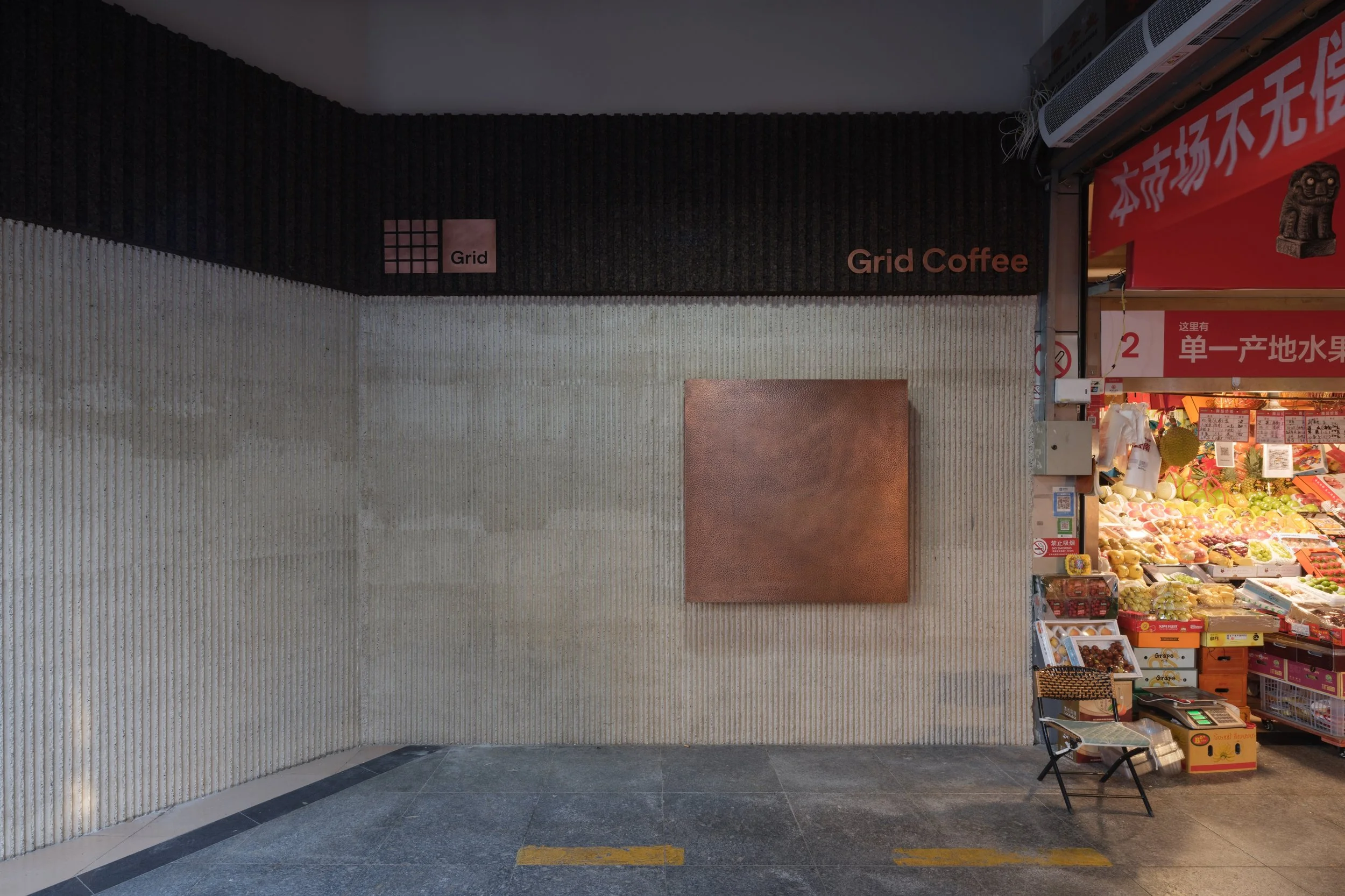
Nestled within Beijing’s SanYuanLi Food Market, this compact café is shaped as profoundly by its context as by the rhythms of daily life. Unlike traditional wet markets, SanYuanLi caters to a diverse residential community and sits at the crossroads of the city’s diplomatic quarter and the hotel-lined banks of the Liangma River. This unique setting imbues the market with a character that is at once intensely local and subtly cosmopolitan, creating an atmosphere rich with movement, interaction, and daily ritual.
Positioned at the market’s northern entrance, the café stands at a vital threshold. One façade engages the street, while the other establishes the first retail encounter within the market, naturally attracting passers-by. Despite its modest 25-square-metre footprint, the café serves as a distinct urban node. It is compact in size, yet remarkably prominent within the daily choreography of the market.
Inspired by Colin Rowe’s concept of contextualism in Collage City, the project contemplates the city as a tapestry of intertwined histories rather than a linear narrative. In many modern developments, incremental urban renewal has inadvertently diminished the vibrancy of street life, replacing authentic complexity with neutral, impersonal norms. Traditional markets, once vibrant vessels of collective memory, have been especially susceptible to this erosion.
This project aspires to renew the connection between street, community, and public life. Rather than positioning the café as an isolated entity, B.L.U.E Architecture embraces a dual approach: forging a distinct spatial identity while remaining deeply anchored in the market’s everyday logic. The goal is not to idealise the past, but to enable memory, routine, and contemporary function to coexist harmoniously.
Uniqueness: Reintroducing Energy into the Everyday
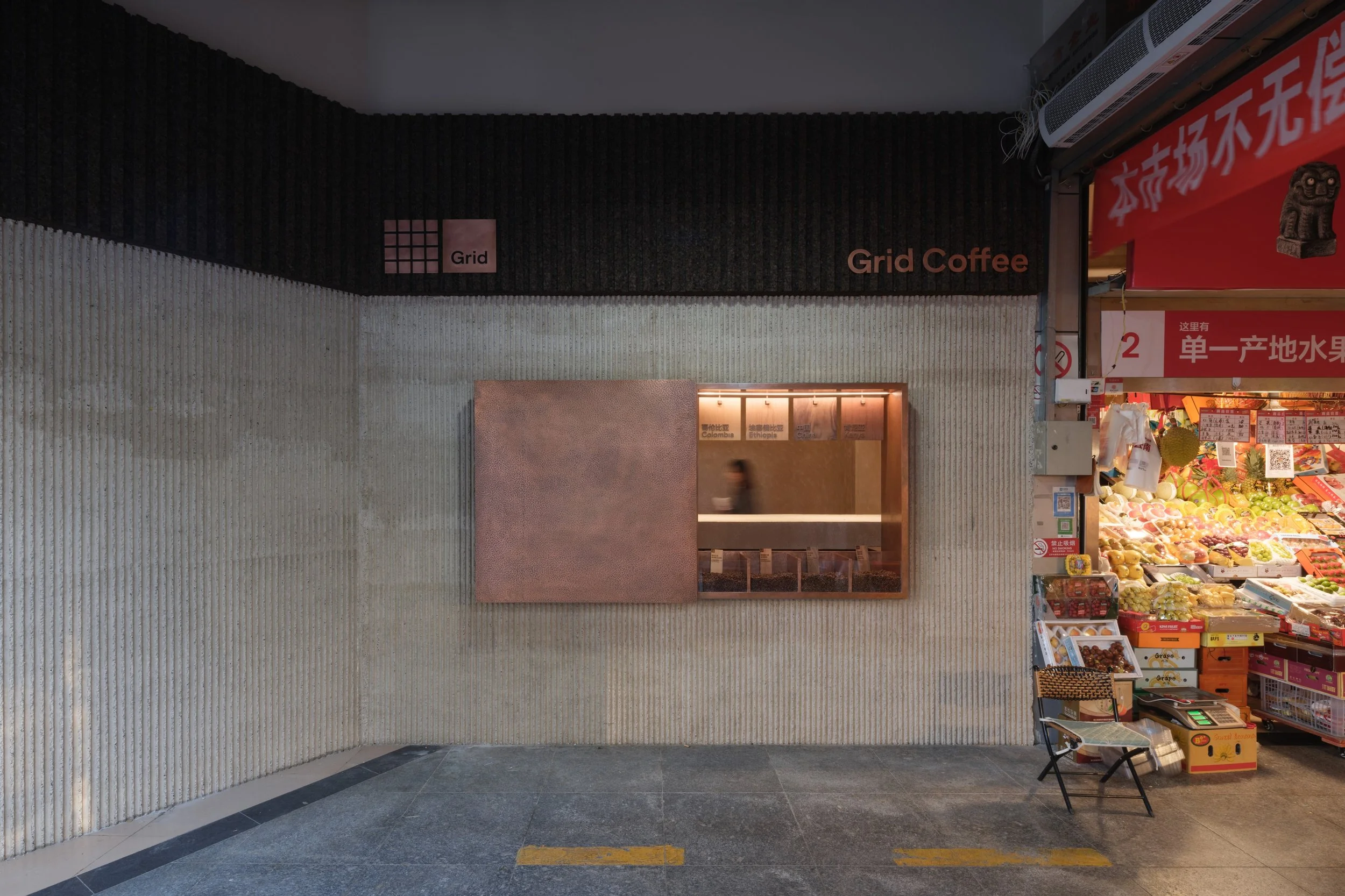
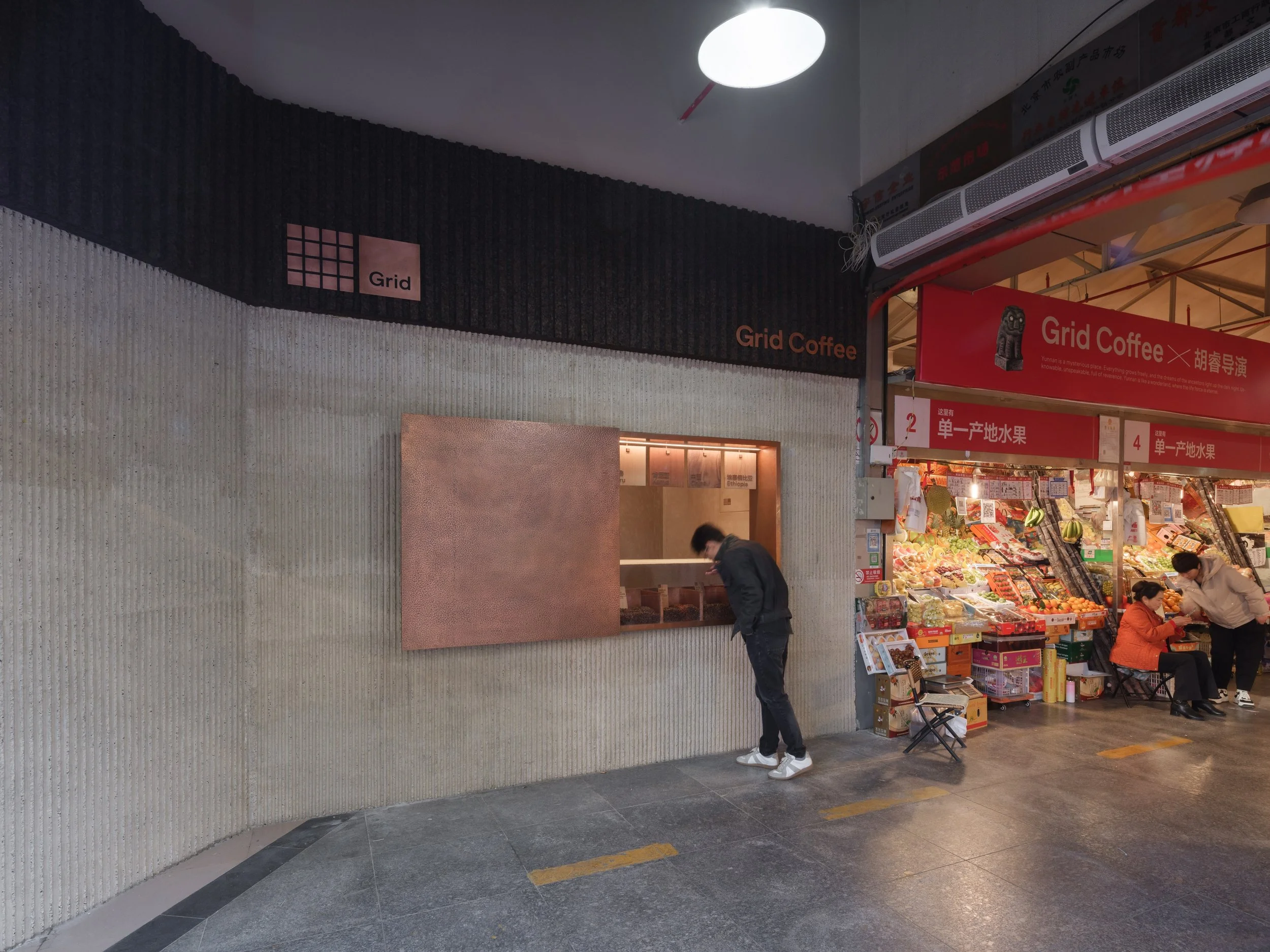
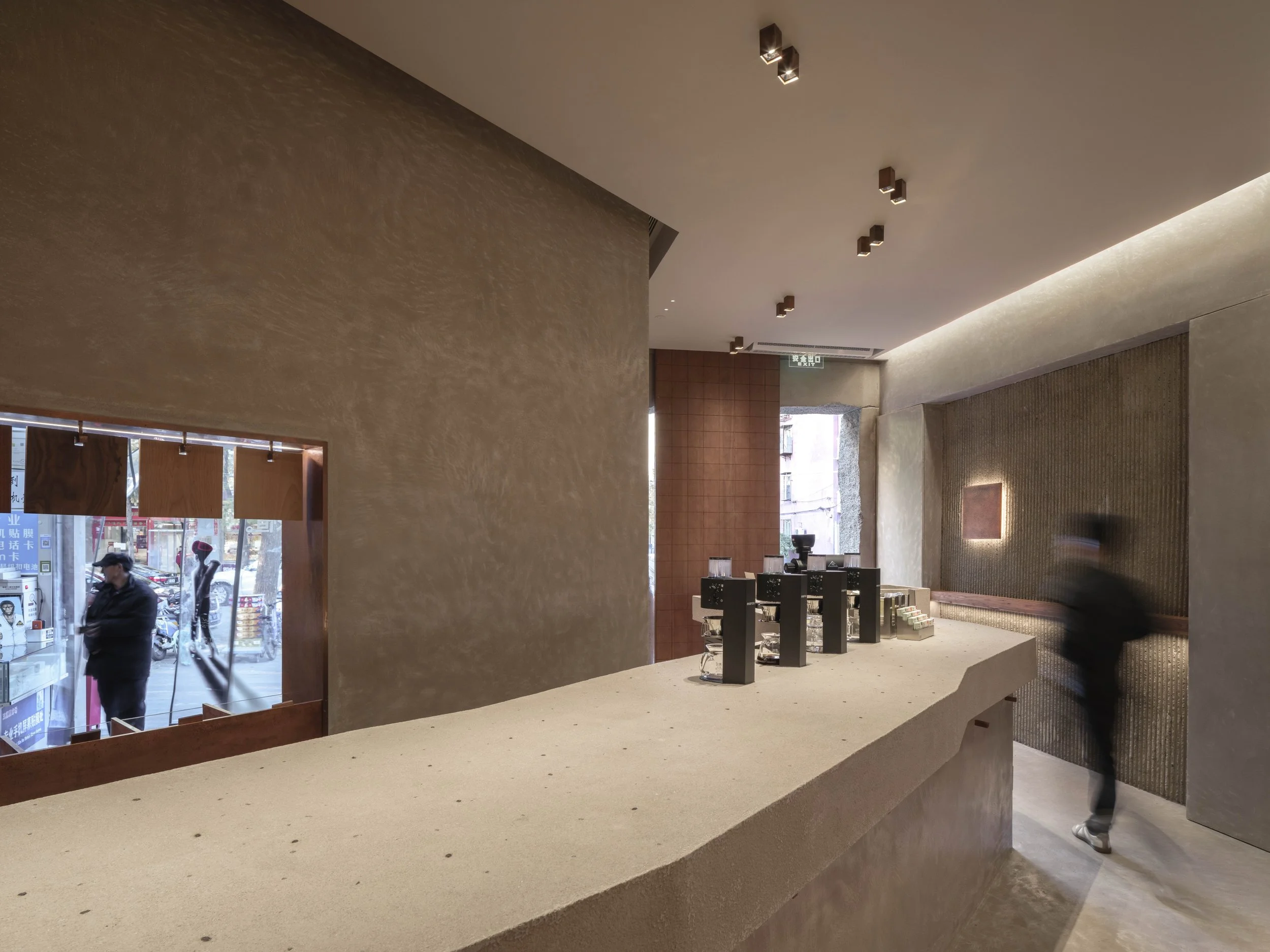
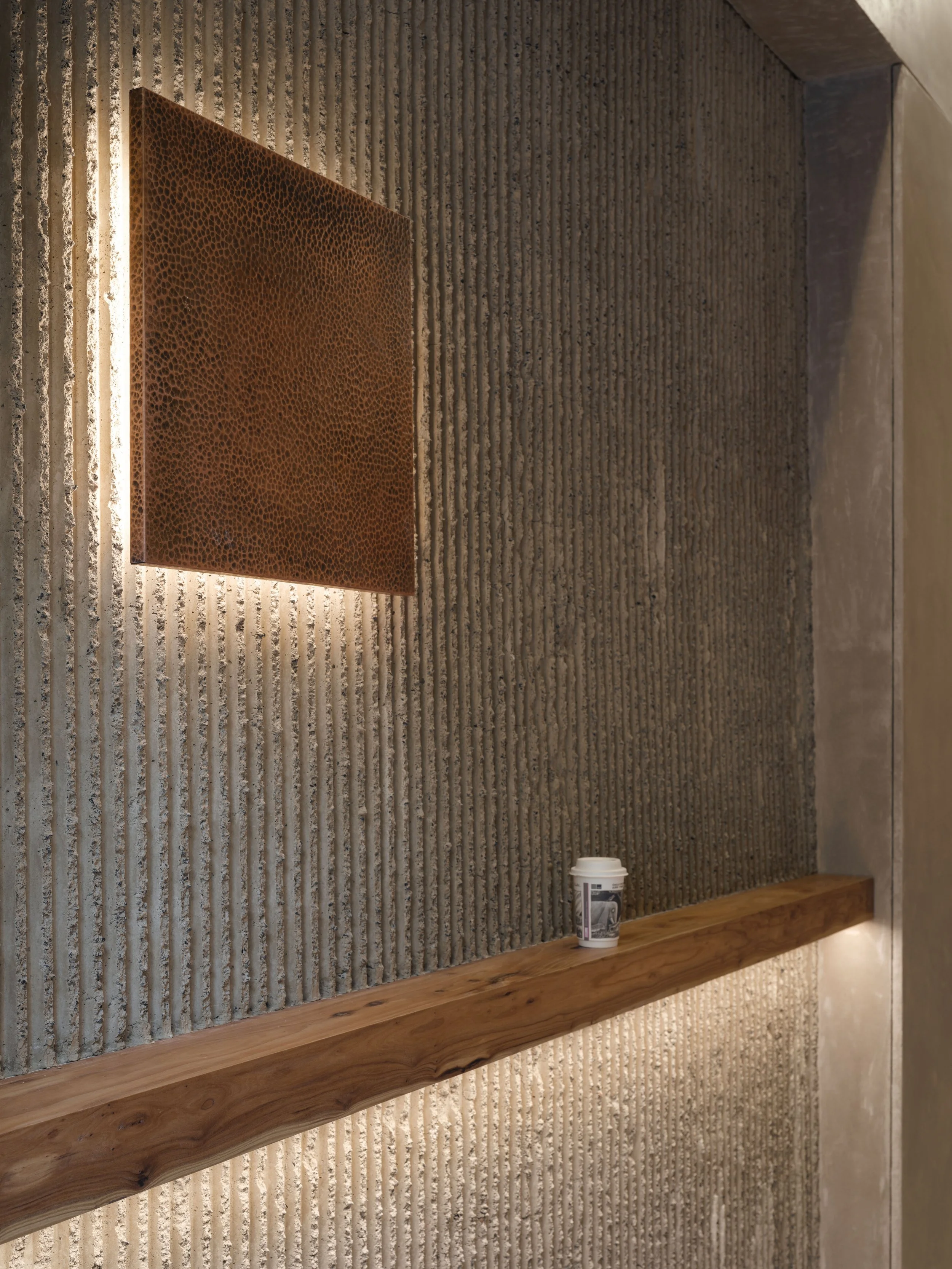
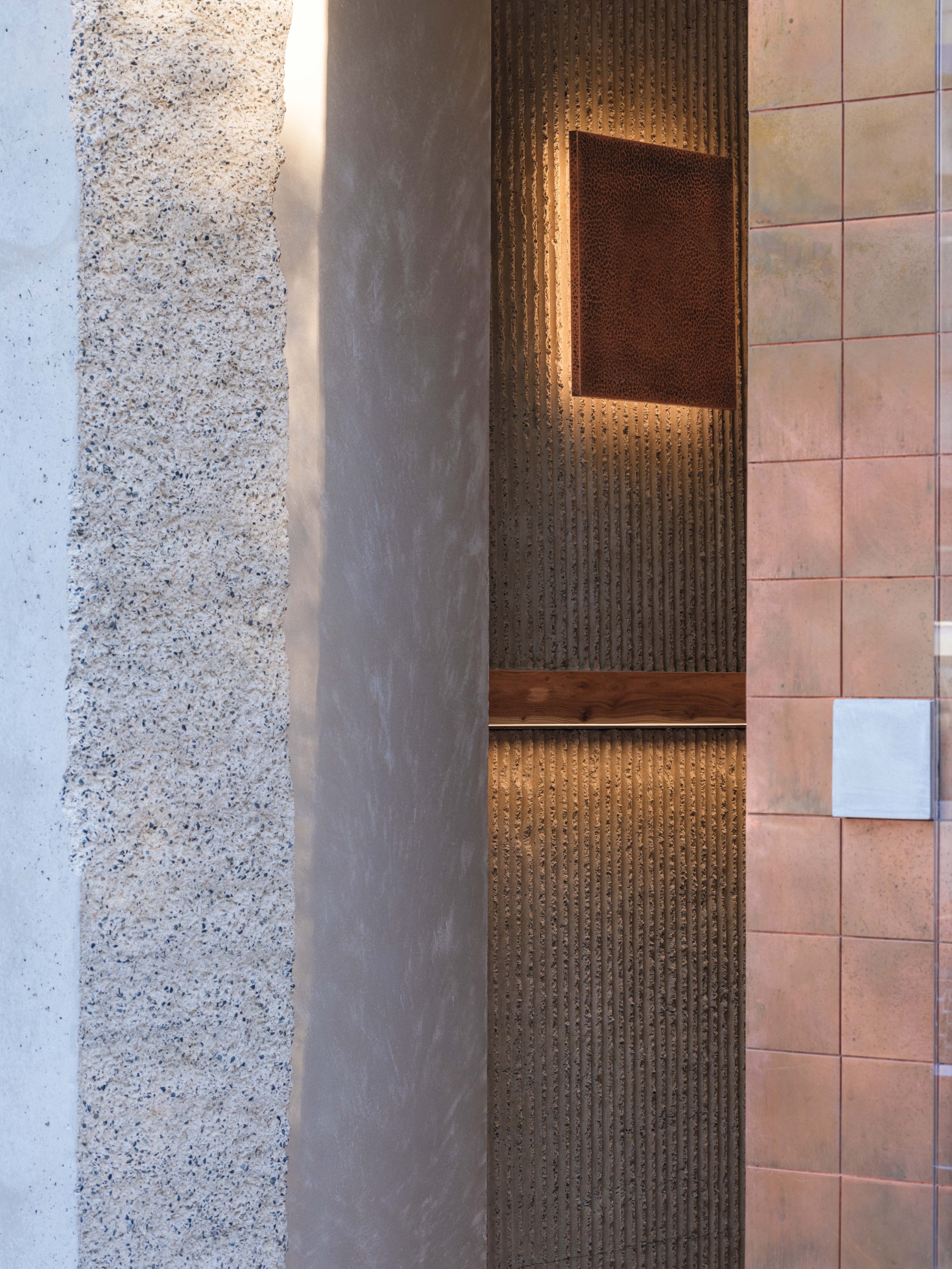
SanYuanLi Market reveals a quiet sophistication beneath its informal exterior, a quality reflected in Grid Coffee’s stand-and-sip culture and its generous coffee experience. The café’s entrance façade responds with a purposefully unrefined yet carefully composed design. Cast concrete elements frame transient moments of pause: people stopping, leaning, drinking, transforming everyday actions into a living tableau. Against this substantial backdrop, a handcrafted copper door adds warmth and tactility, asserting its presence without dominating the vibrant market environment.
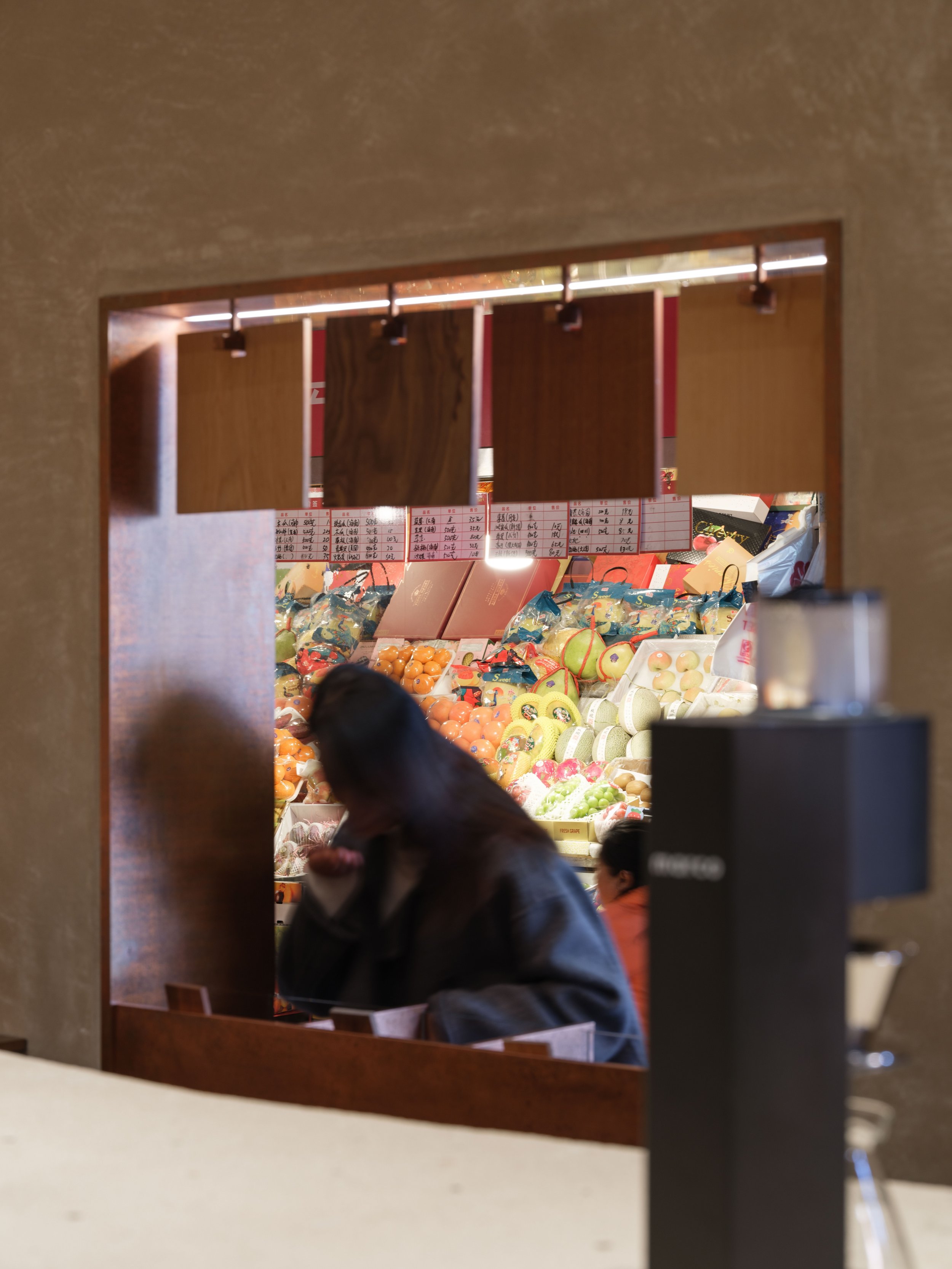
On the market-facing façade, the selling window is both functional and performative. Its custom opening mechanism transforms each purchase into a meaningful interaction. When closed, the hand-hammered copper surface resembles a work of art, maintaining a quiet presence amidst the surrounding activity.
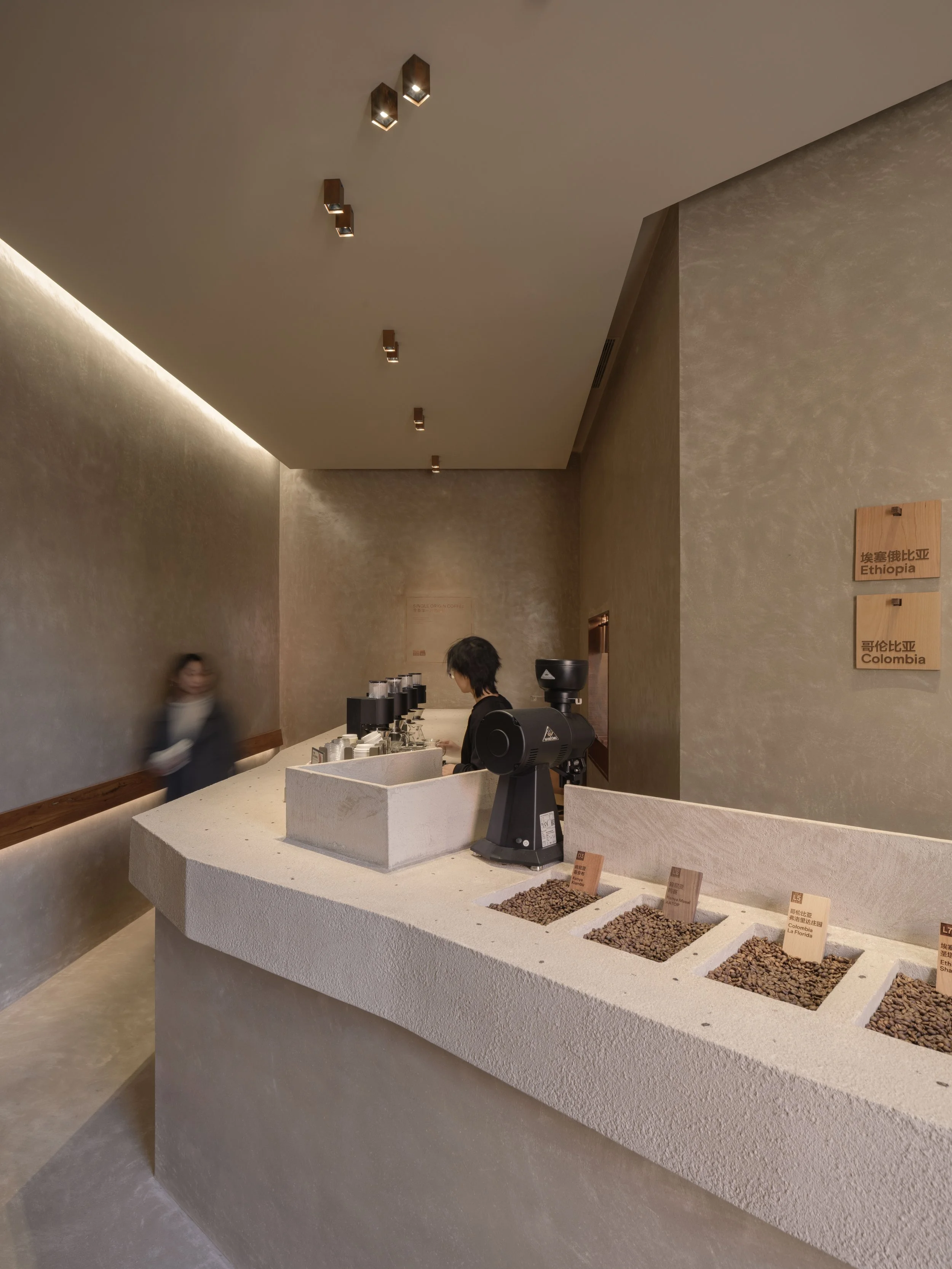
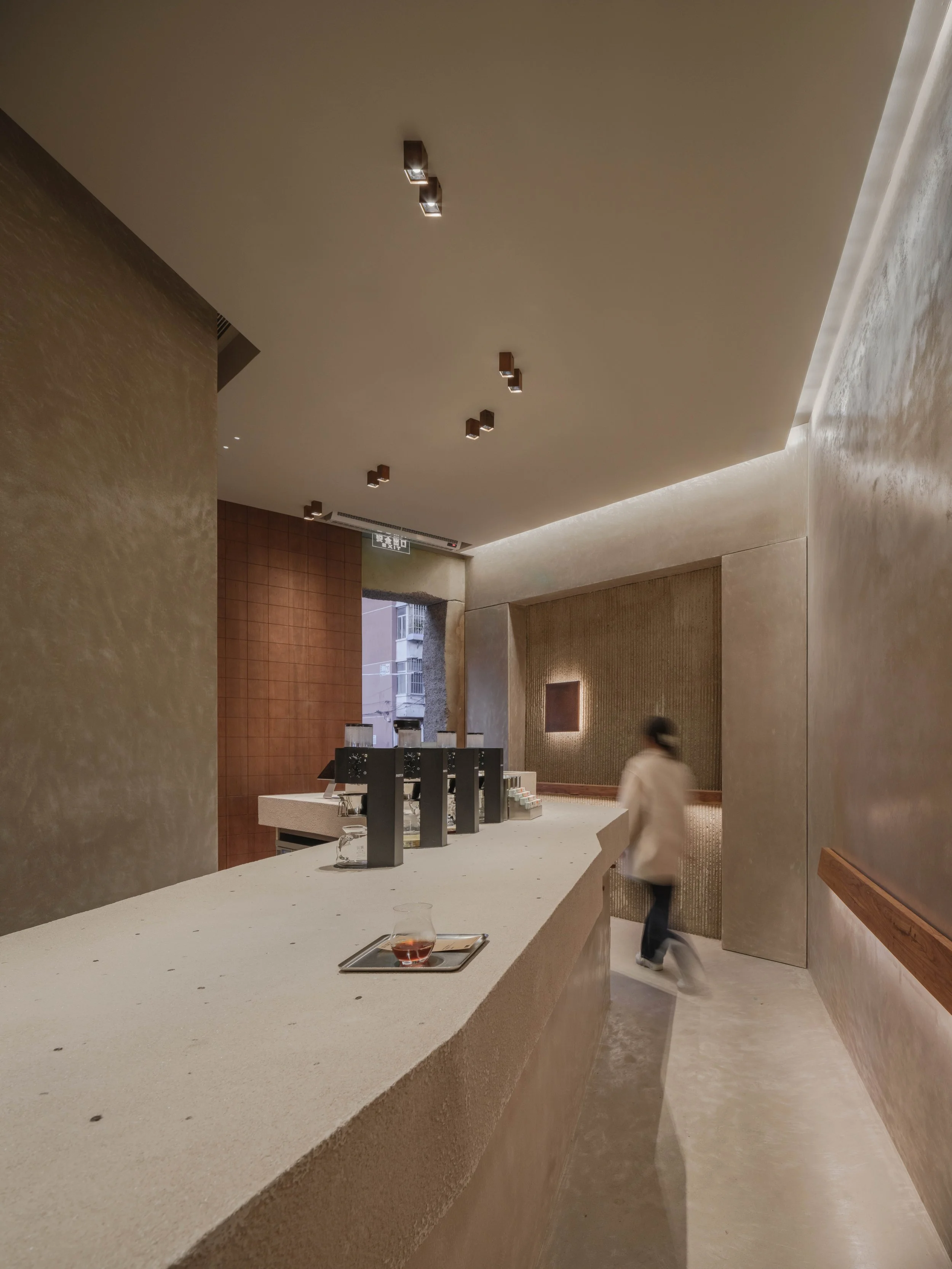
Inside, the spatial experience is carefully orchestrated. A sculptural bar delineates two distinct yet interconnected zones: ordering and standing. Its precise geometry lends clarity to the compact layout, while recessed niches and angled surfaces accommodate varied uses with understated elegance. The ritual of coffee, brief, upright, and attentive, is afforded dignity and focus, elevating the ordinary to the exceptional.


Everyday Sensibility: Extending the Market’s Logic
Instead of importing foreign concepts, the design absorbs and reinterprets the market’s inherent rhythms. SanYuanLi’s stalls operate with immediacy. Display, storage, and transaction unfold simultaneously within compact footprints. This principle is mirrored in the café’s inner façade, where window-style retail openings foster both visual and social continuity with neighboring vendors, dissolving the boundary between café and market.
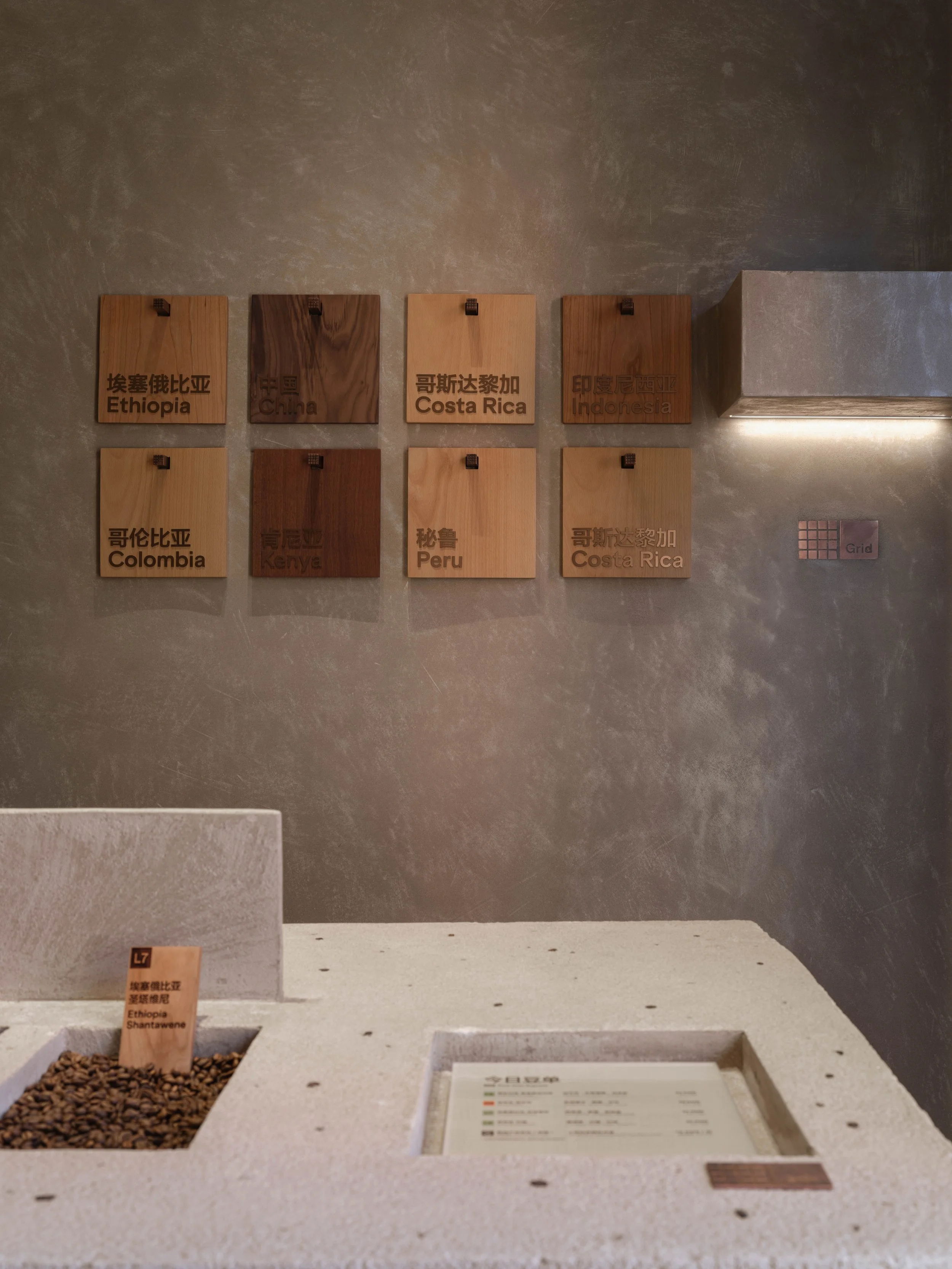
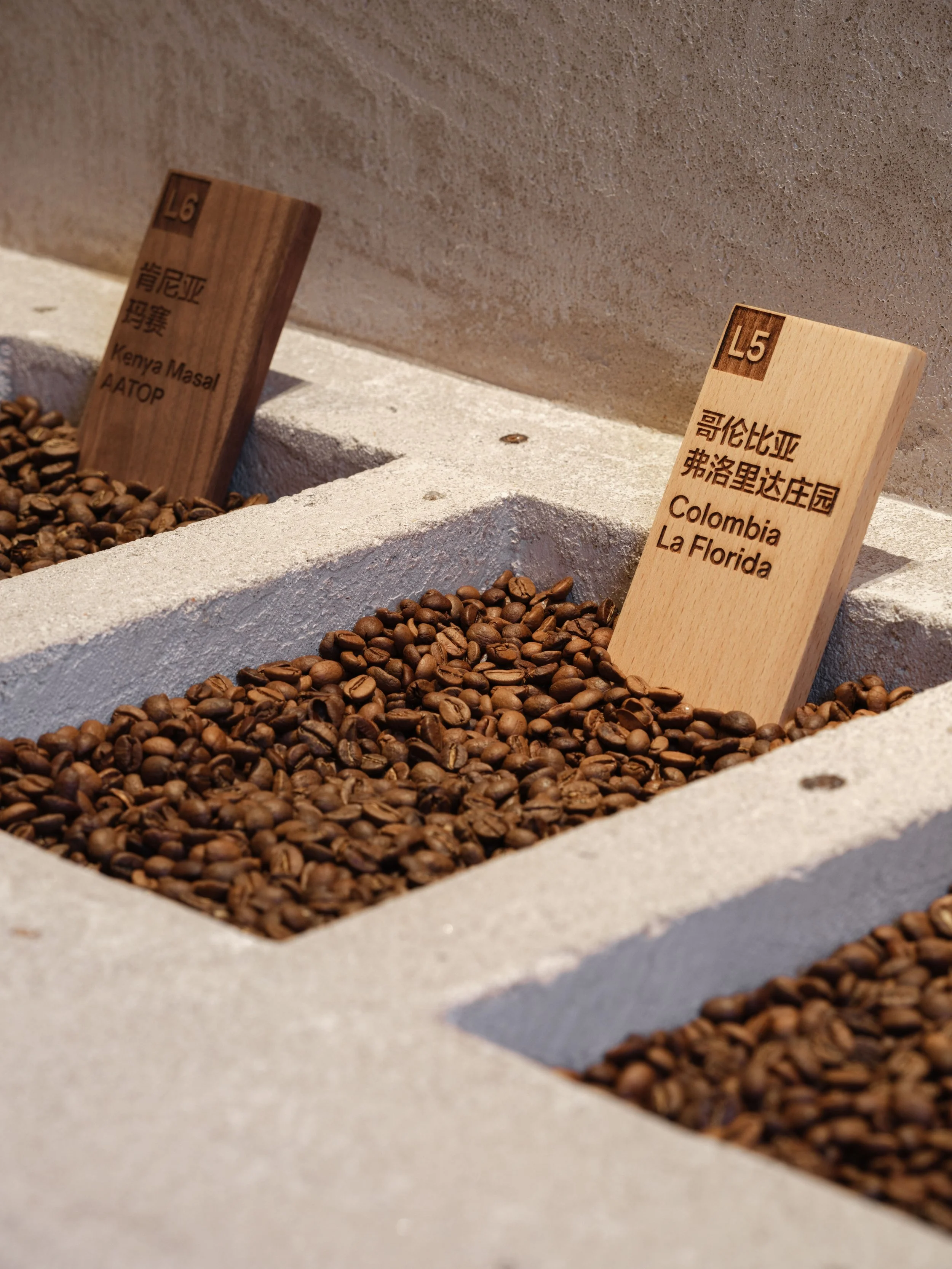
Coffee beans are displayed openly at the bar and retail windows, reinforcing a direct, unmediated connection between product and consumer. Hanging price tags, ubiquitous throughout the market, are reinterpreted for the café, allowing prices and offerings to change with the seasons and supply. Solid wood boards, each with unique textures and tones, serve as adaptable markers rather than permanent signage, underscoring the themes of temporality and daily transformation.
Throughout the project, the spirit of the market is not replicated but abstracted. Variations in form and material are secondary to the preservation of atmosphere: movement, negotiation, and familiarity. The outcome is a space that feels truly embedded, not merely inserted, into its context.
Materiality and Craft
Given the limited scale, material restraint is balanced with tactile richness. Concrete, copper, wood, and aggregates are employed sparingly yet expressively, letting texture, patina, and variation shape the visual narrative. Handcraft is central, not as an act of nostalgia, but as a way to align the space with the vibrant imperfection of its surroundings.
The sliding entrance doors consist of 175 oxidized copper squares interwoven with cherry wood fragments, each piece assembled by hand. This intentionally irregular surface resists uniformity, celebrating craftsmanship. At the bar, single-origin coffee beans from Grid Coffee are embedded within the countertop aggregate, establishing a subtle and playful material dialogue between product and surface.
The ribbed concrete façade reveals its aggregate, while elm wood is reserved for surfaces that invite touch, such as backrests and storage tables. The natural patina of the wood imparts warmth and a sense of quiet familiarity.
This project exemplifies how modest interventions can recalibrate the social and spatial energy of a neighborhood. By engaging with memory rather than resisting it, the café transcends its function as a place to drink coffee, becoming a vital connective tissue within the market’s daily life. In this way, it offers a contemporary vision of urban belonging: understated, rooted, and deeply attuned to the realities of everyday living.
This Project is one of the submission from Merci x Sky Design Awards 2026
Company: B.L.U.E. Architecture Studio
Website: www.b-l-u-e.net