

A Departure Point for Connection: Design & Dialogue in Tsukuba
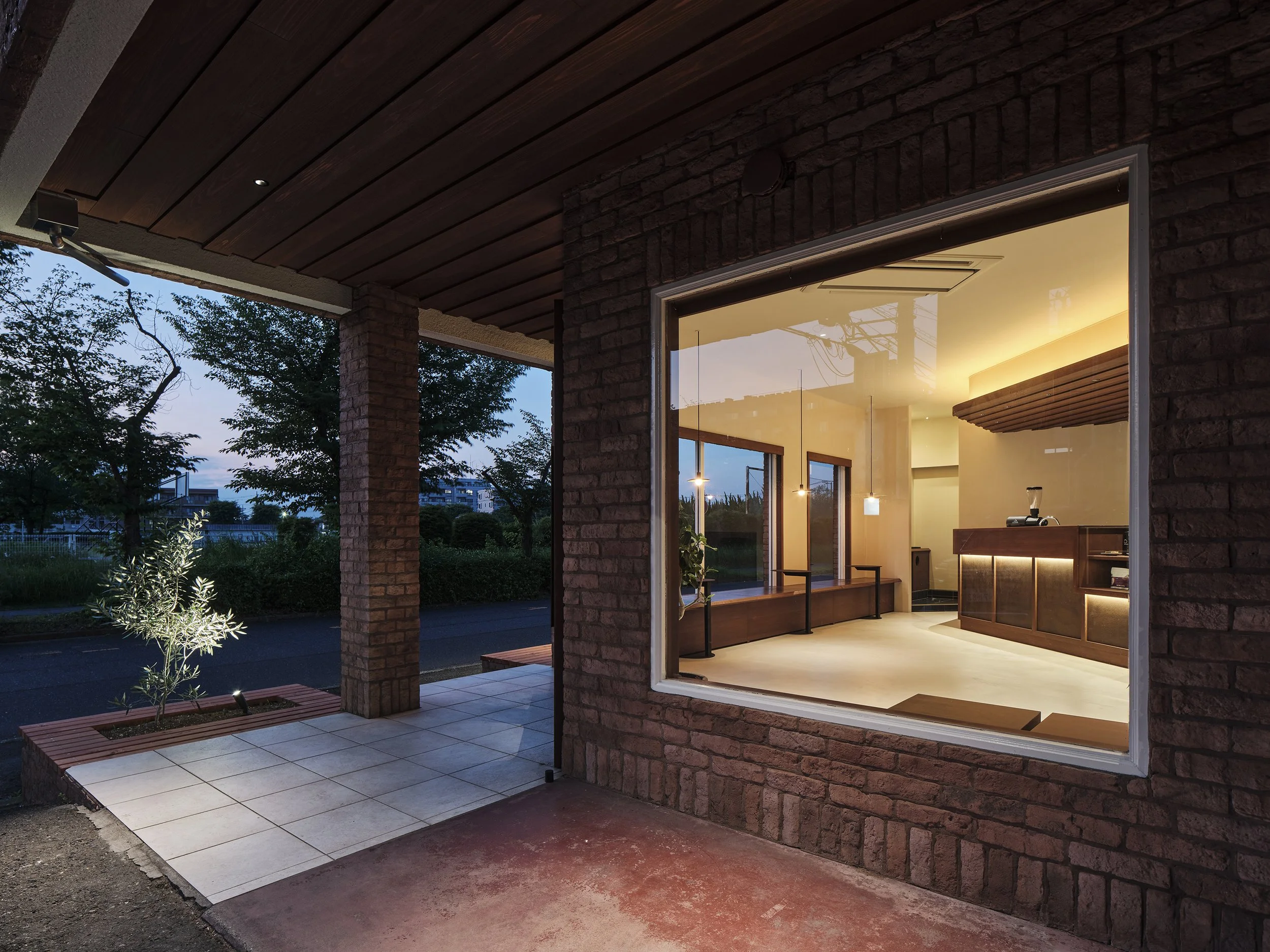
In the cerebral sprawl of Tsukuba, Japan’s renowned "Science City," the urban narrative has long been one of rapid acceleration. Born from a 1987 administrative merger and energized by the arrival of the Tsukuba Express in 2005, the city has become a global magnet for intellect, drawing researchers, students, and academics from every corner of the earth. Yet, in this rush to construct the future, the city was left with a distinct human void.
While the station front gleams with efficiency, the city has lacked the "third places" essential for a mature community: spaces where newly arrived international scientists and long-settled local residents can simply interact. The challenge was clear: how do you create a "commoning" space in a city shaped by transience?
The answer emerges quietly, in the form of a project that is part gallery, part sanctuary, and wholly devoted to the art of connection.
A Sanctuary of Light and Curves
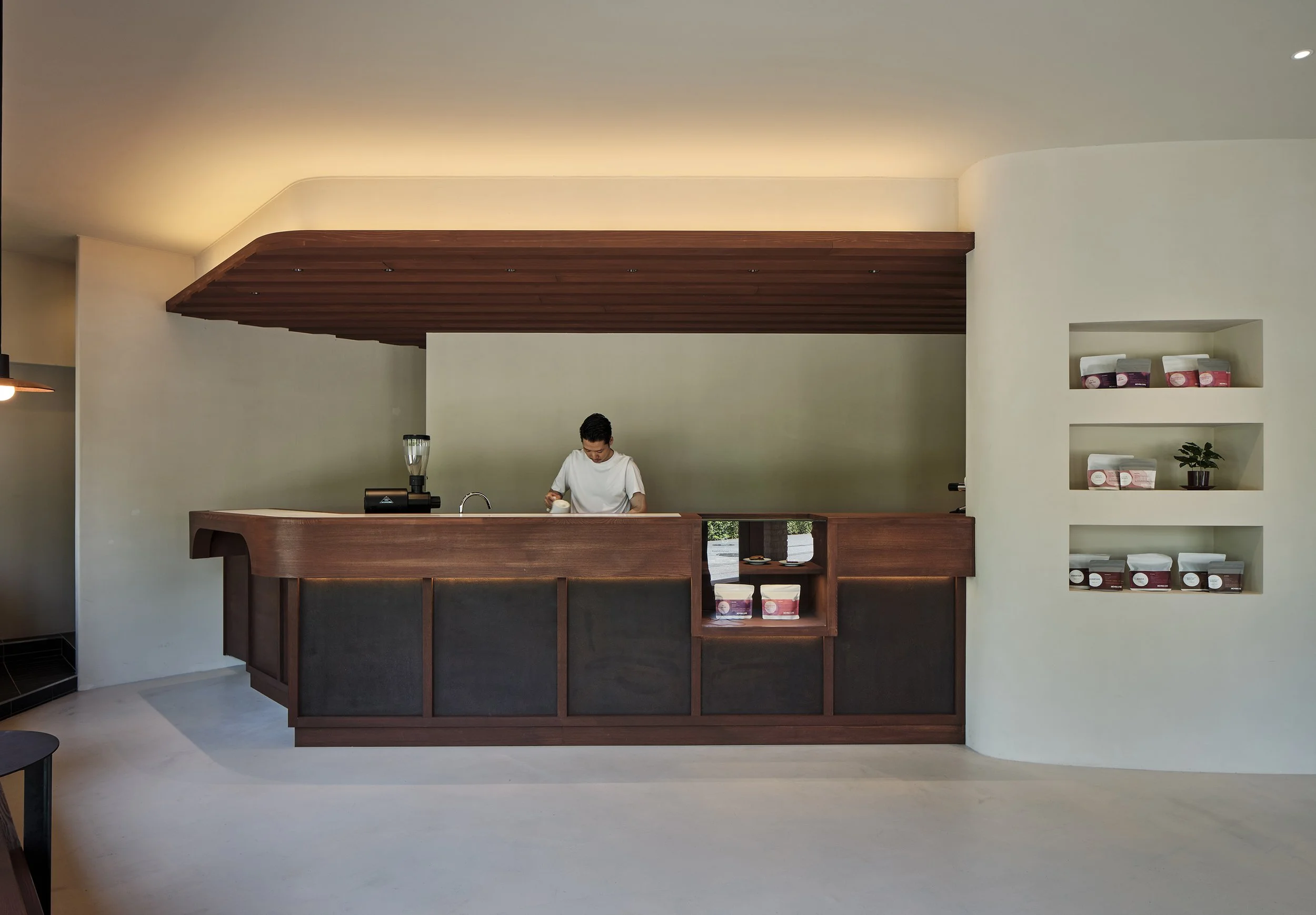
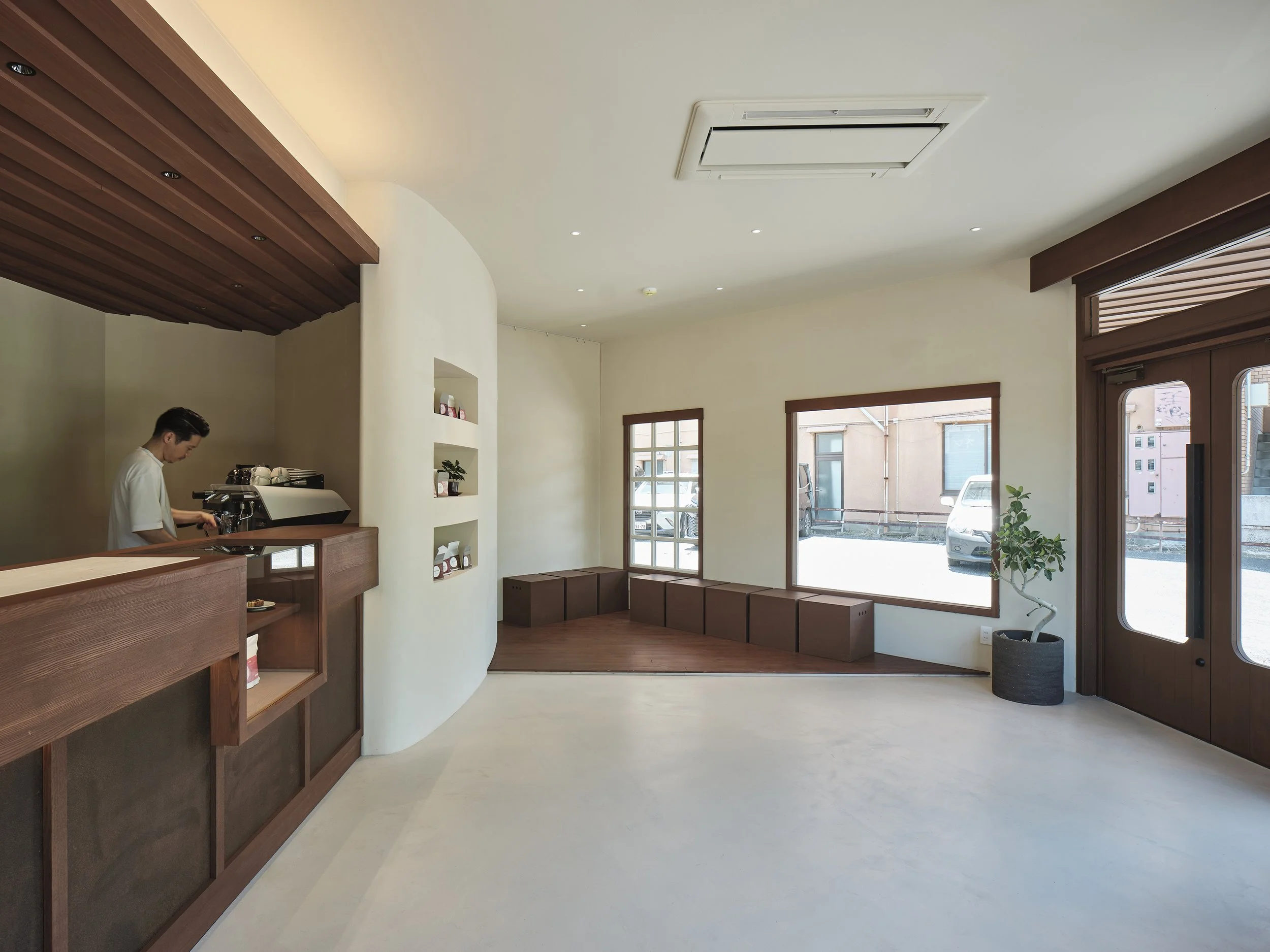
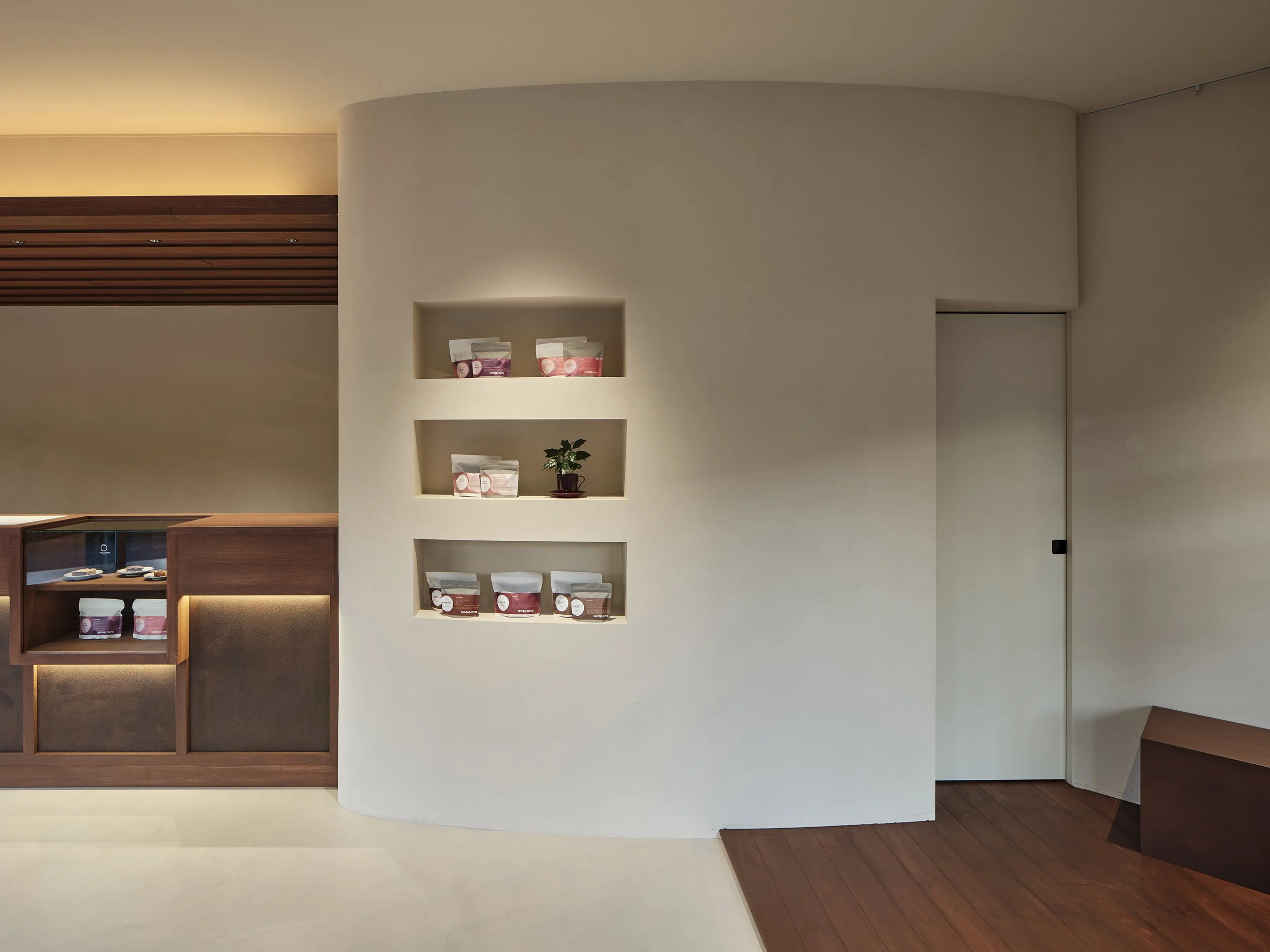
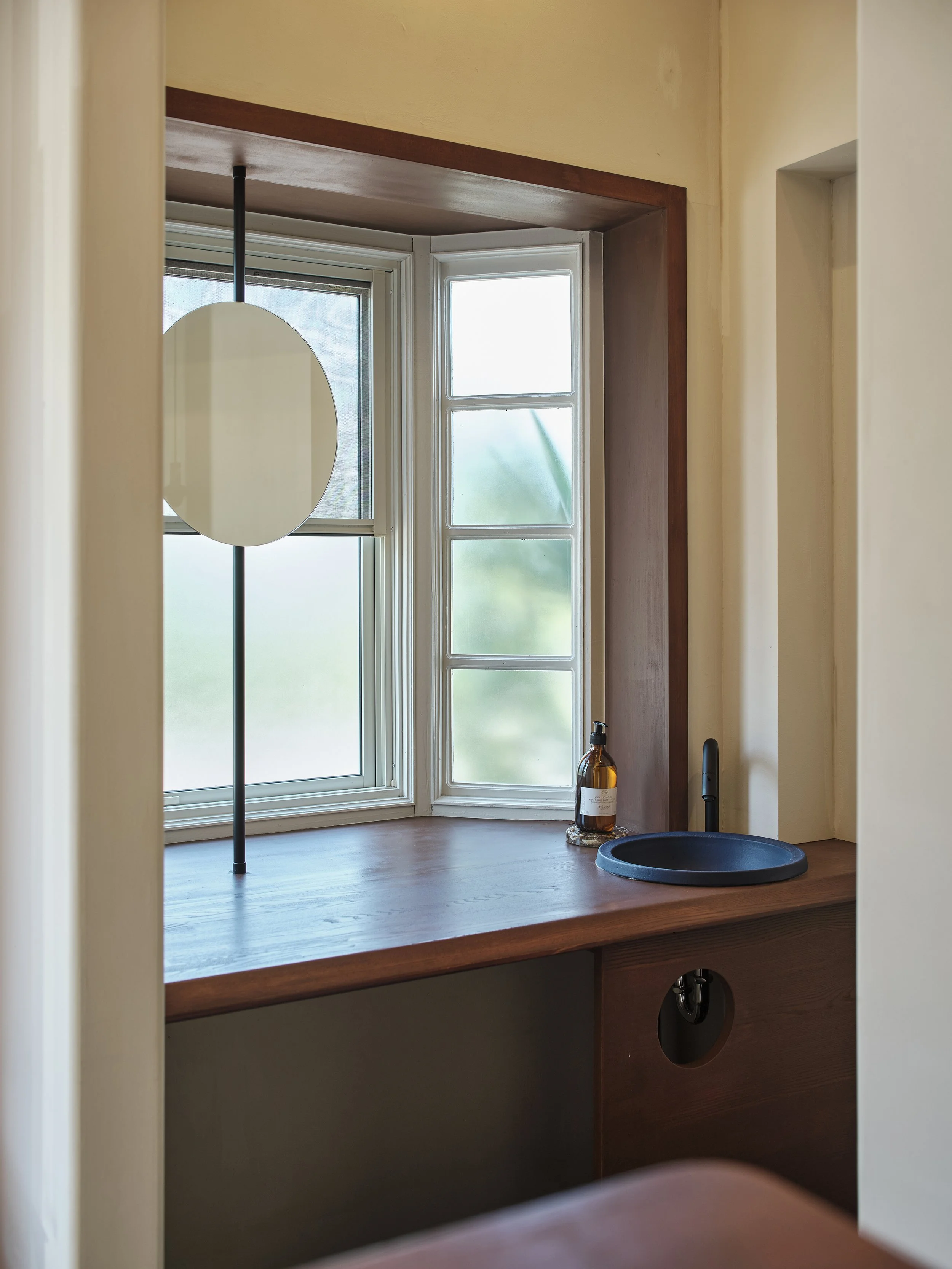
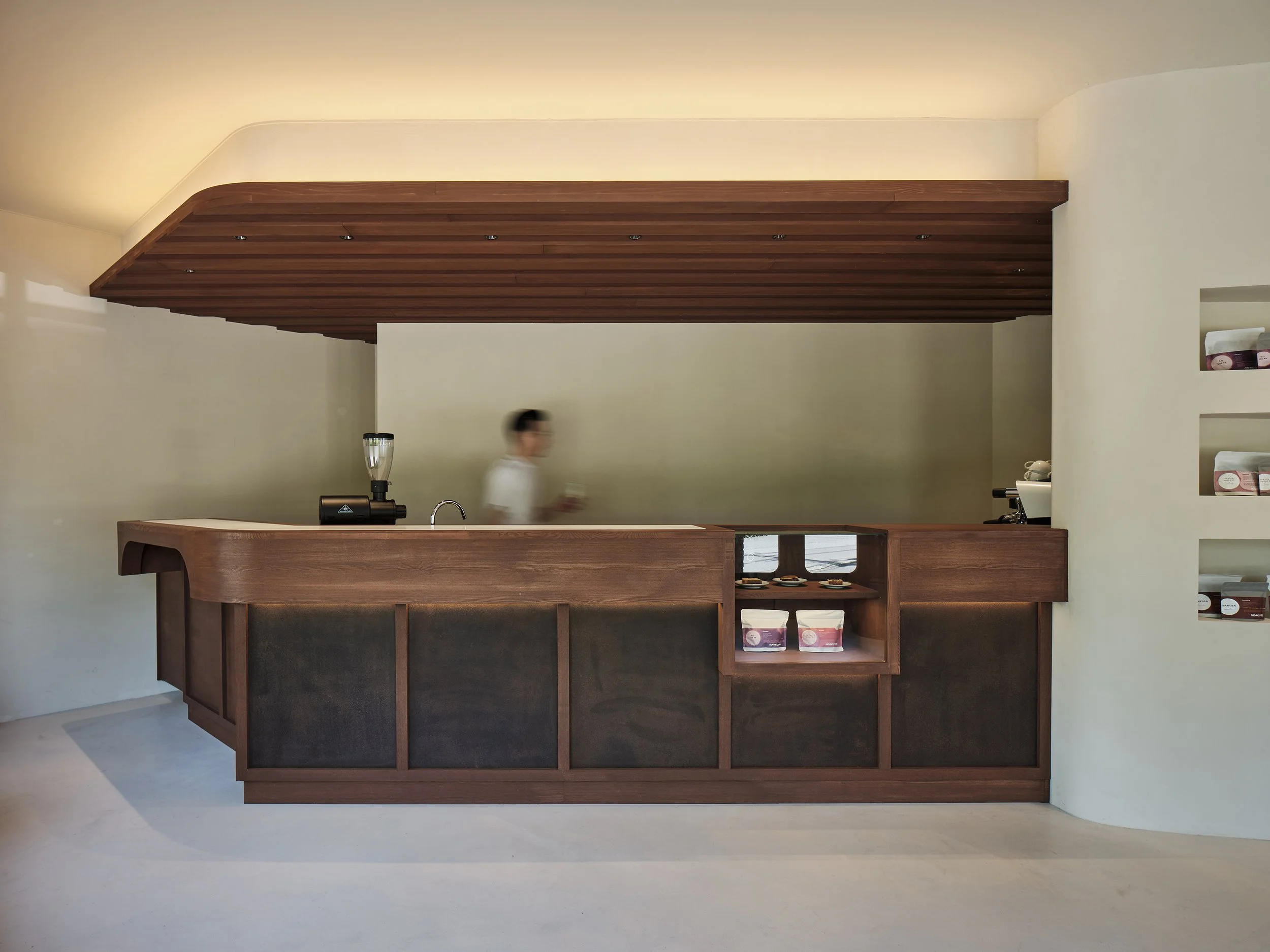
L’hirondelle is designed by Hiro Nakata Atelier, based in Japan. Stepping inside, one is immediately struck by the project’s refusal to be merely a point of commercial transaction. The design language speaks of embrace. The eye is drawn first to the entrance, where a sweeping, arc-shaped wall guides the visitor inward. Finished in white plaster (shikkui), the wall features recessed niches carved directly into the surface. These shelves hold coffee beans and goods not as merchandise, but as art pieces, bathed in a soft, diffuse light that gently washes over the mortar floor. This is a masterclass in the art of subtraction, removing visual noise to amplify a sense of calm.
The Materiality of Time
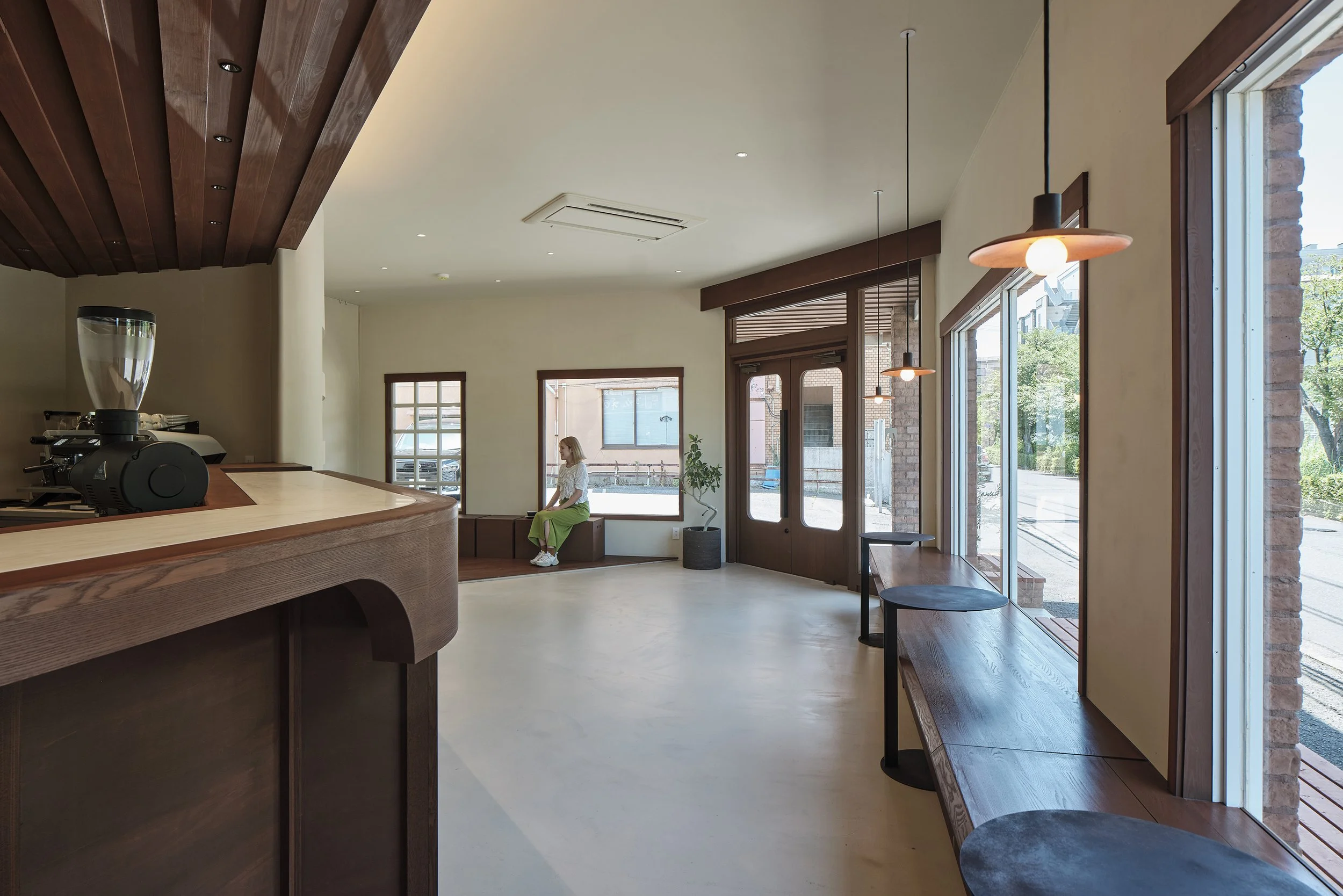
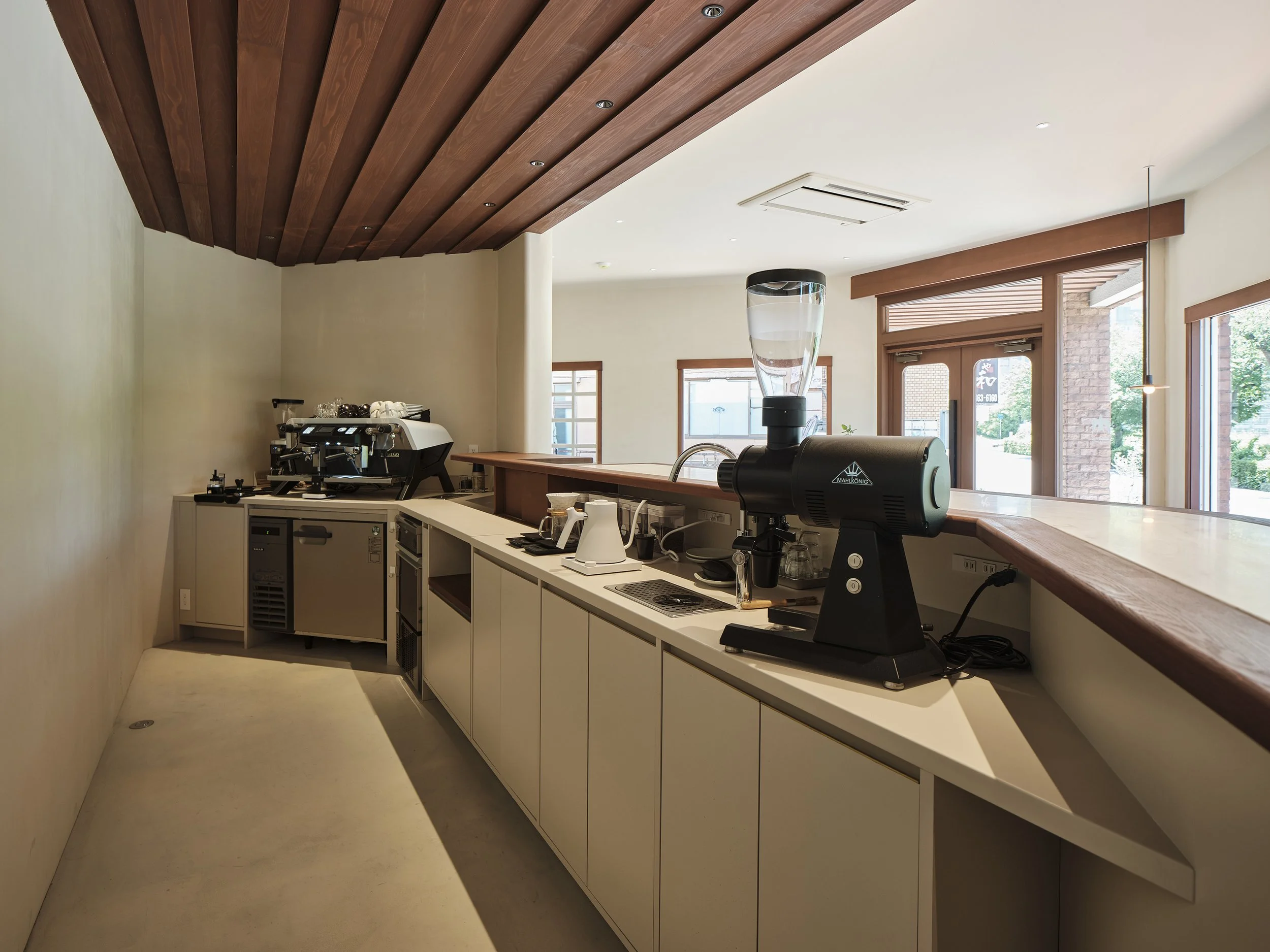
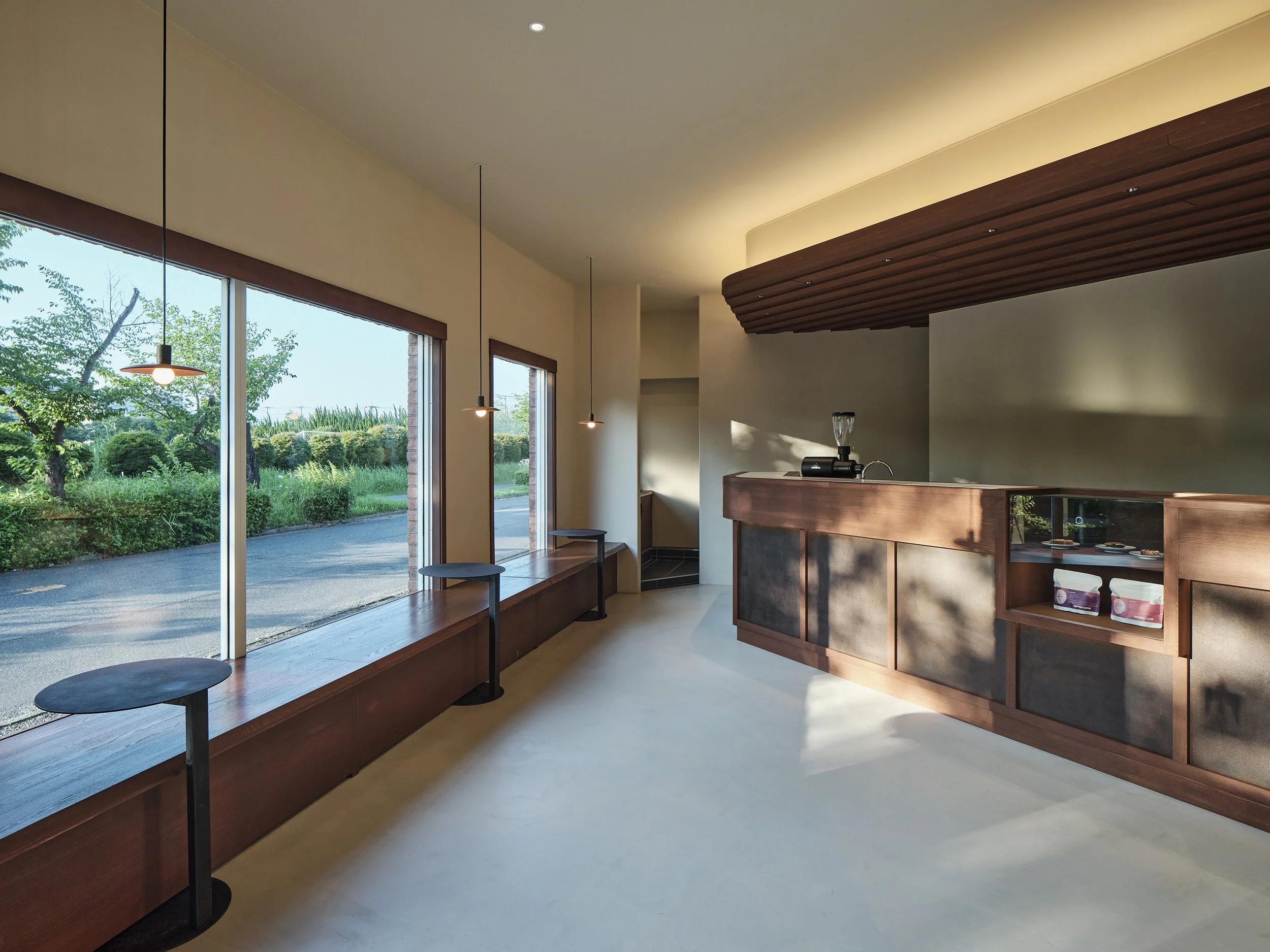
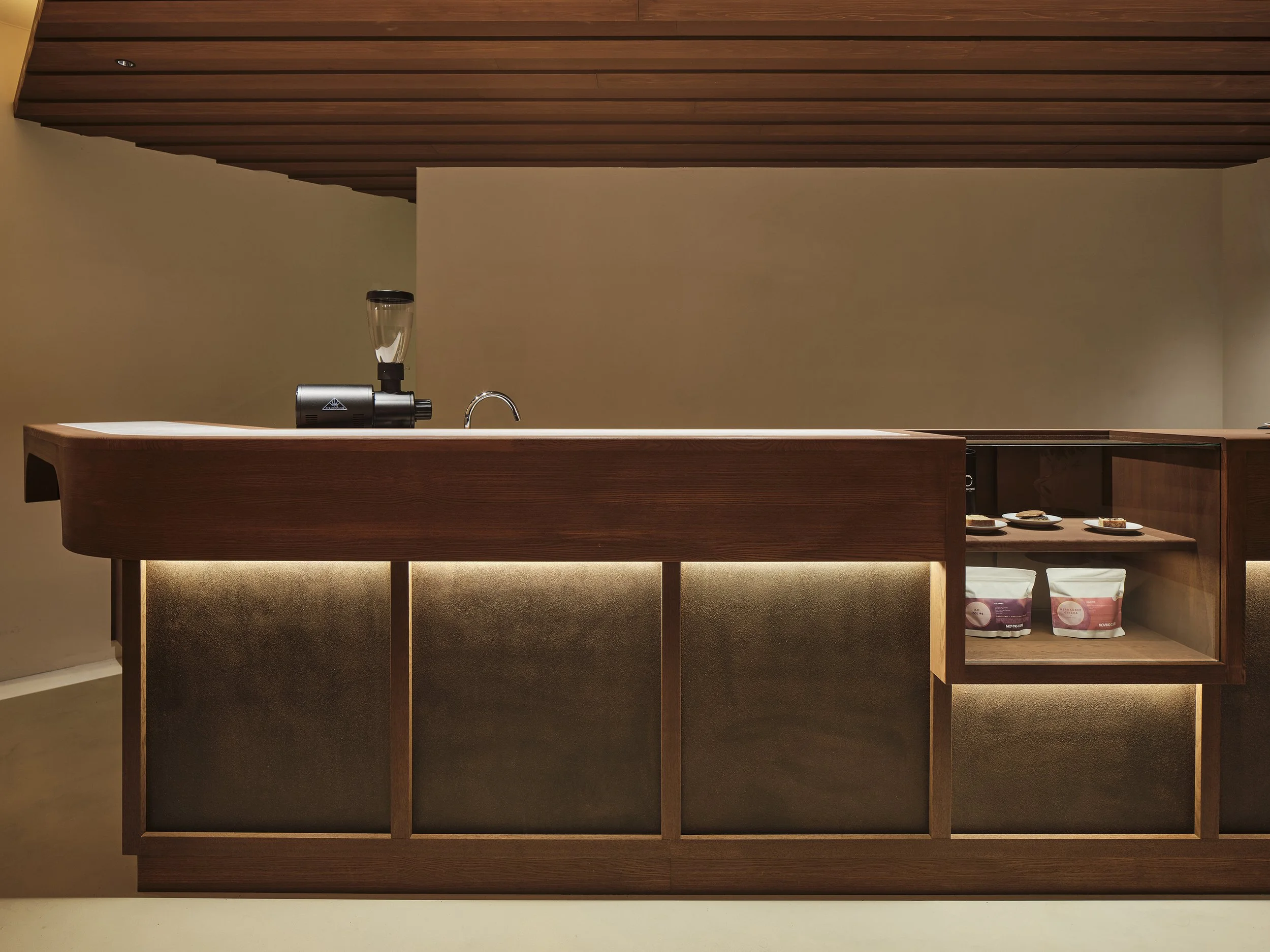
In a city often obsessed with the new, this space bravely champions the beauty of age. The spatial choreography centers around a striking U-shaped counter, designed to dissolve the barrier between barista and guest. Look closer at the details: the wainscoting is clad in rusted iron plates.
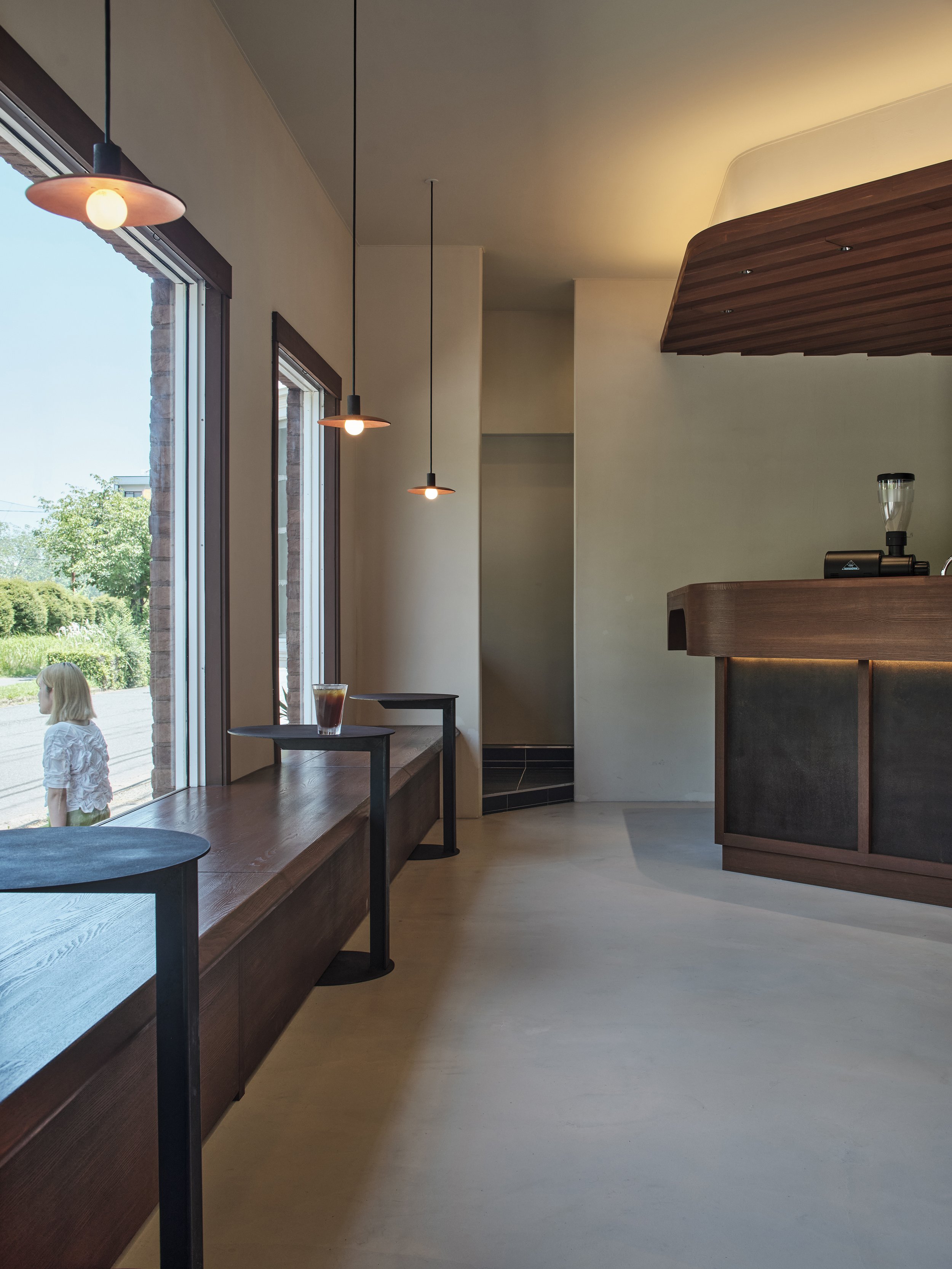
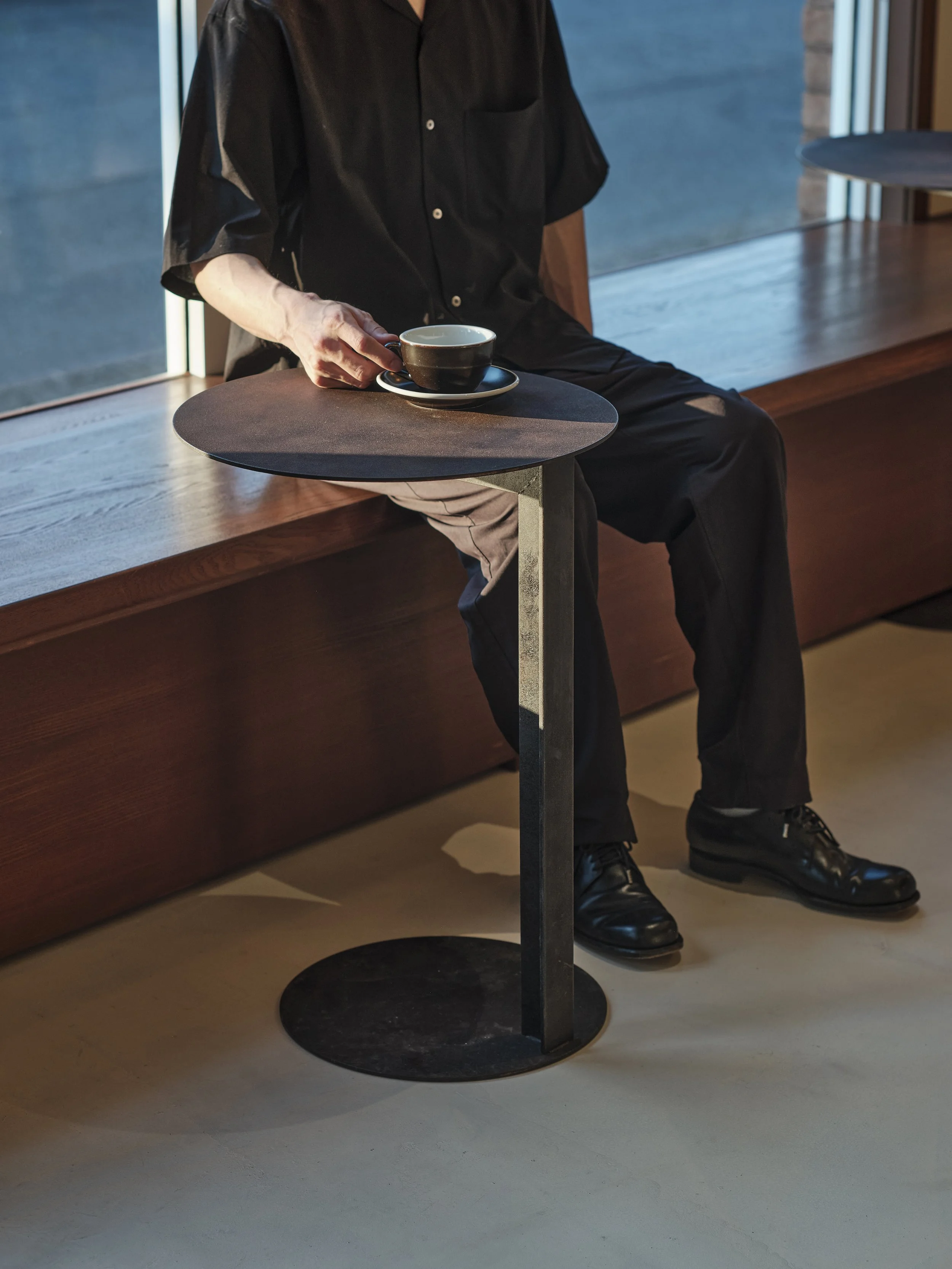
This choice of oxidized metal is poetic. It introduces texture and the passage of time, a patina, into the pristine environment. Paired with the warmth of dark wood, leather, and hand-finished plaster, these materials ground the space. It feels tactile and real, a deliberate counterpoint to the sterile laboratories that populate the city.
Framing the View
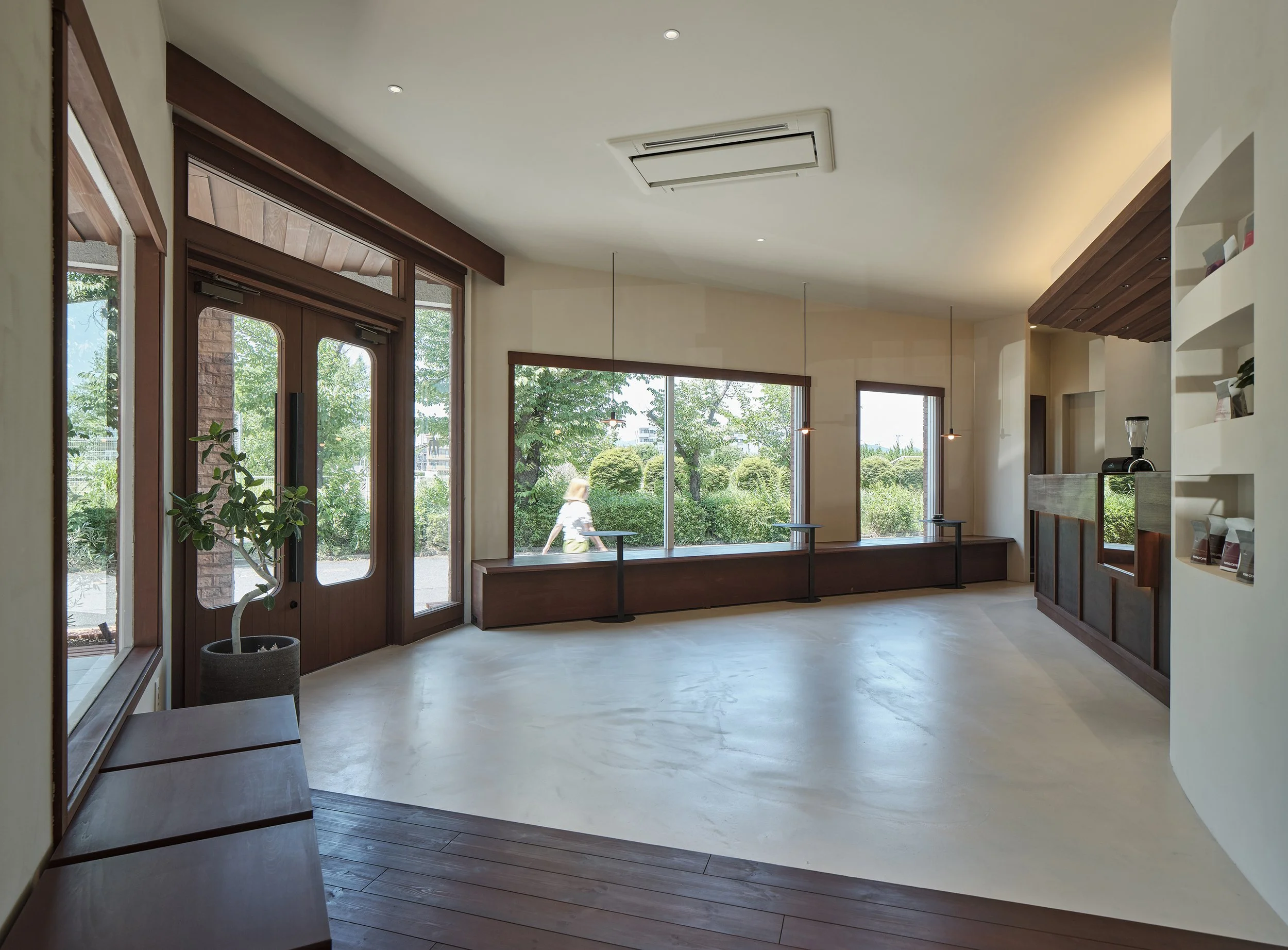
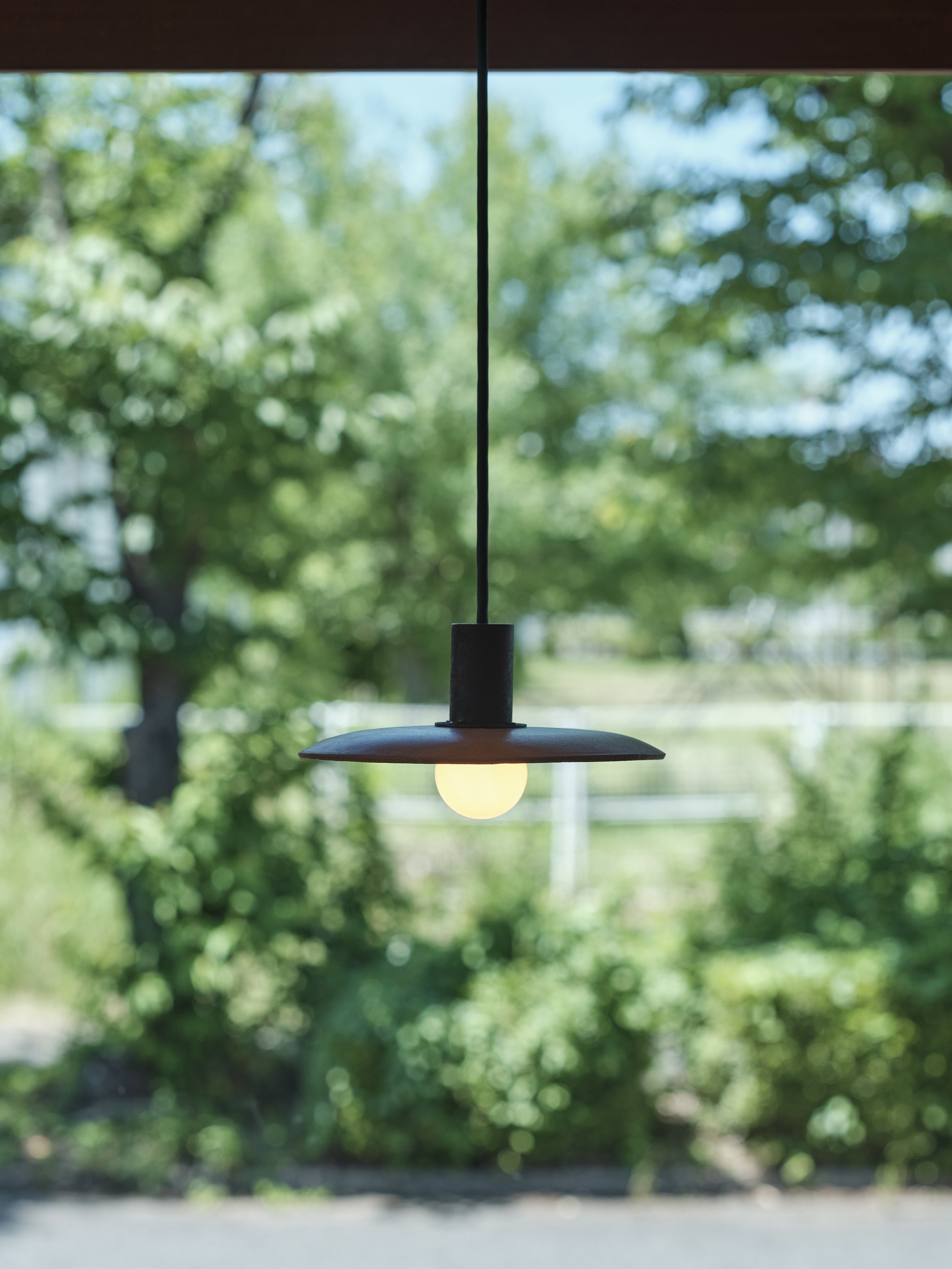
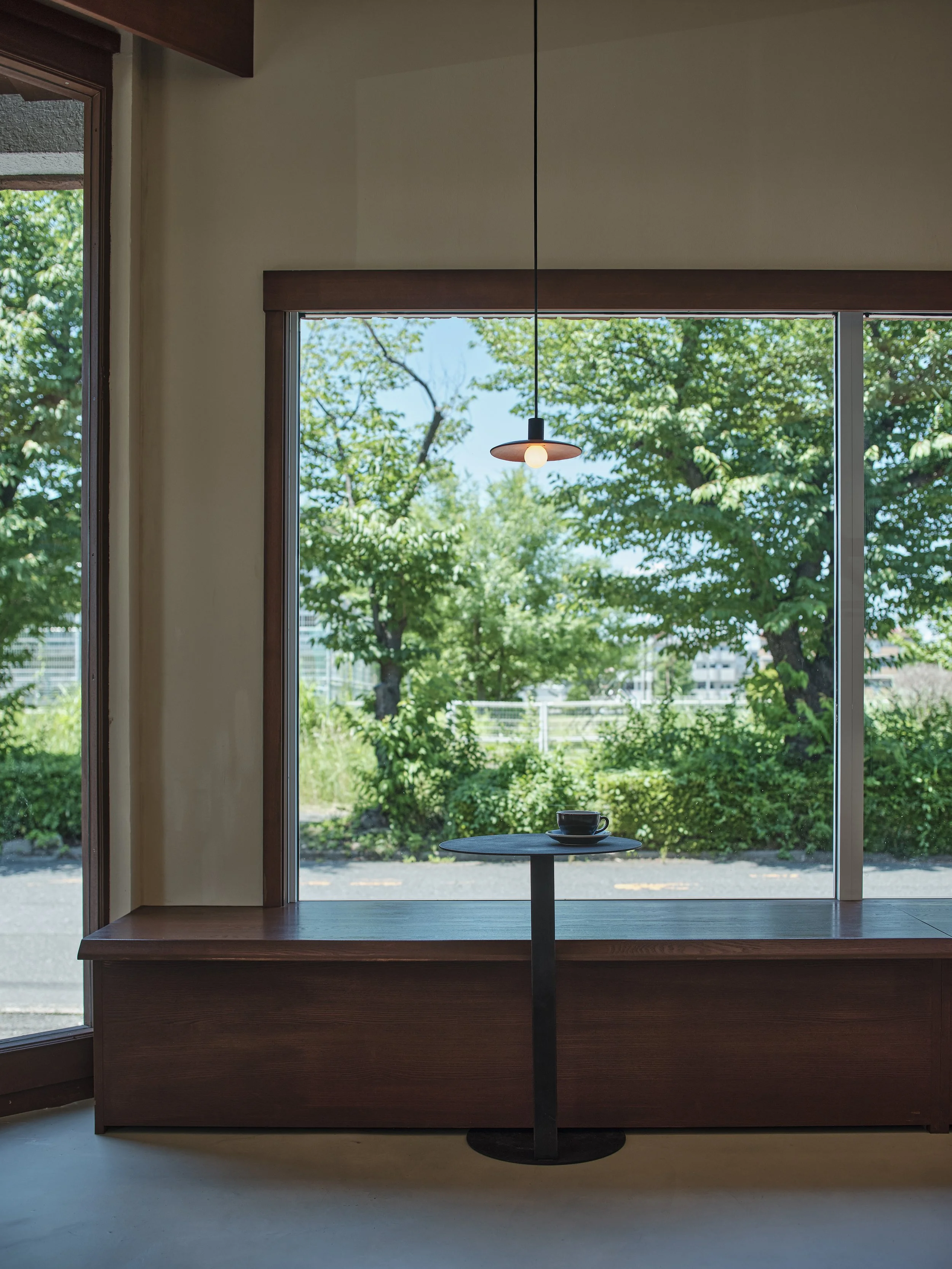
The genius of the layout lies in its permeability. A low, continuous wooden bench runs along the glazing, inviting patrons to sit and gaze outward. The architecture borrows the lush greenery of the streetscape, drawing the changing seasons into the shop. This visual connection does more than please the eye; it serves as a bridge, blurring the line between the private sanctuary within and the vibrant public life outside.
A New Social Fabric
Ultimately, this project is fueled by the belief that coffee possesses the power to transcend borders. By collaborating with local artisans on the furniture and cultivating a gallery-like atmosphere, the shop weaves itself into the regional story.
This is a space designed to grow deeper, not merely older. As the iron develops richer patina and the wood darkens, as conversations among strangers blossom into friendships, this corner of Tsukuba is becoming exactly what the city needs: a departure point for a journey toward a warmer, more connected future.
This Project is one of the submission from Merci x Sky Design Awards 2026
Company: hiro nakata atelier
Website: https://hnkt-a.com