

Perforated Metal Spinning Lamp designed by Muneji Toh Architects (Japan)
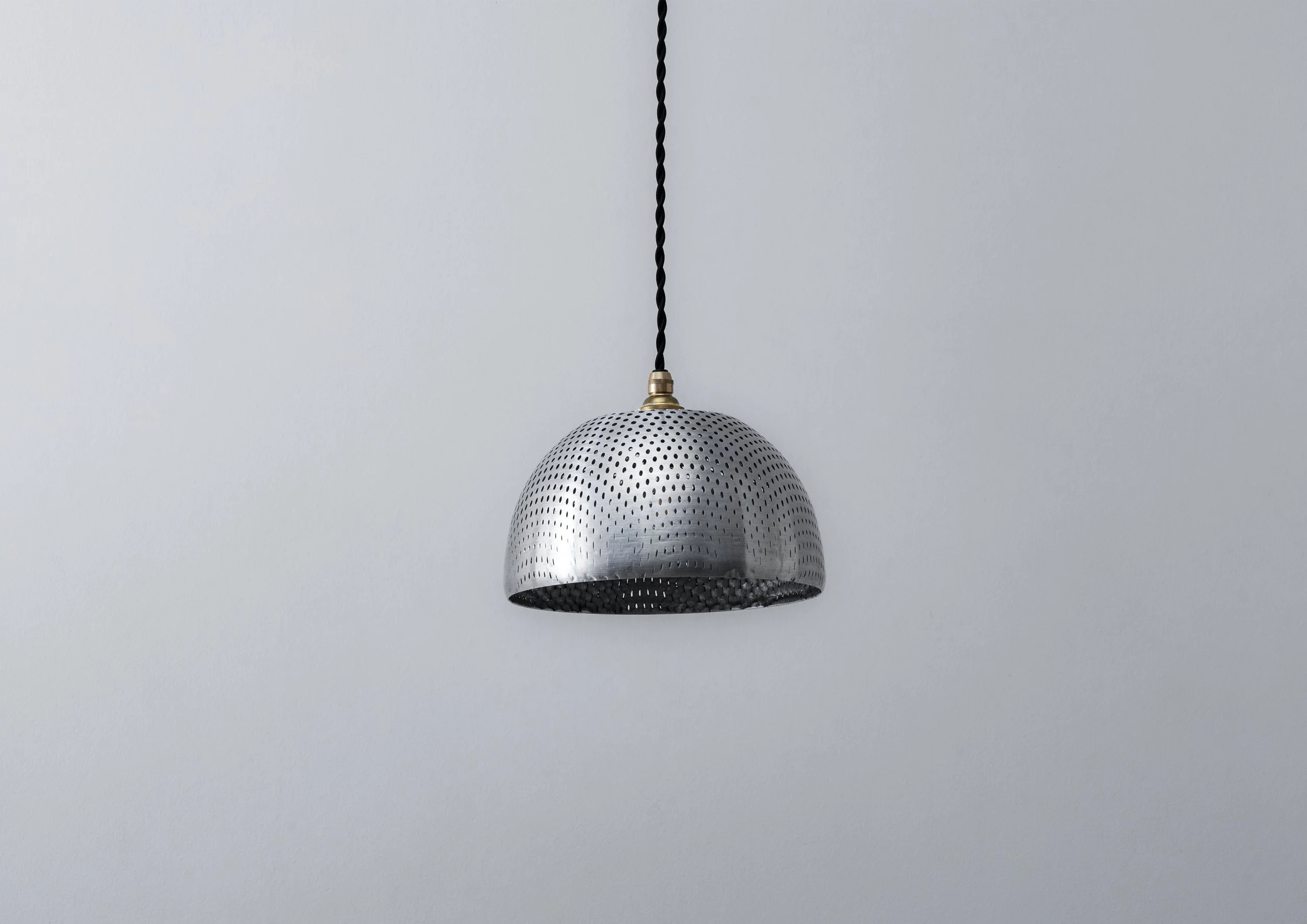
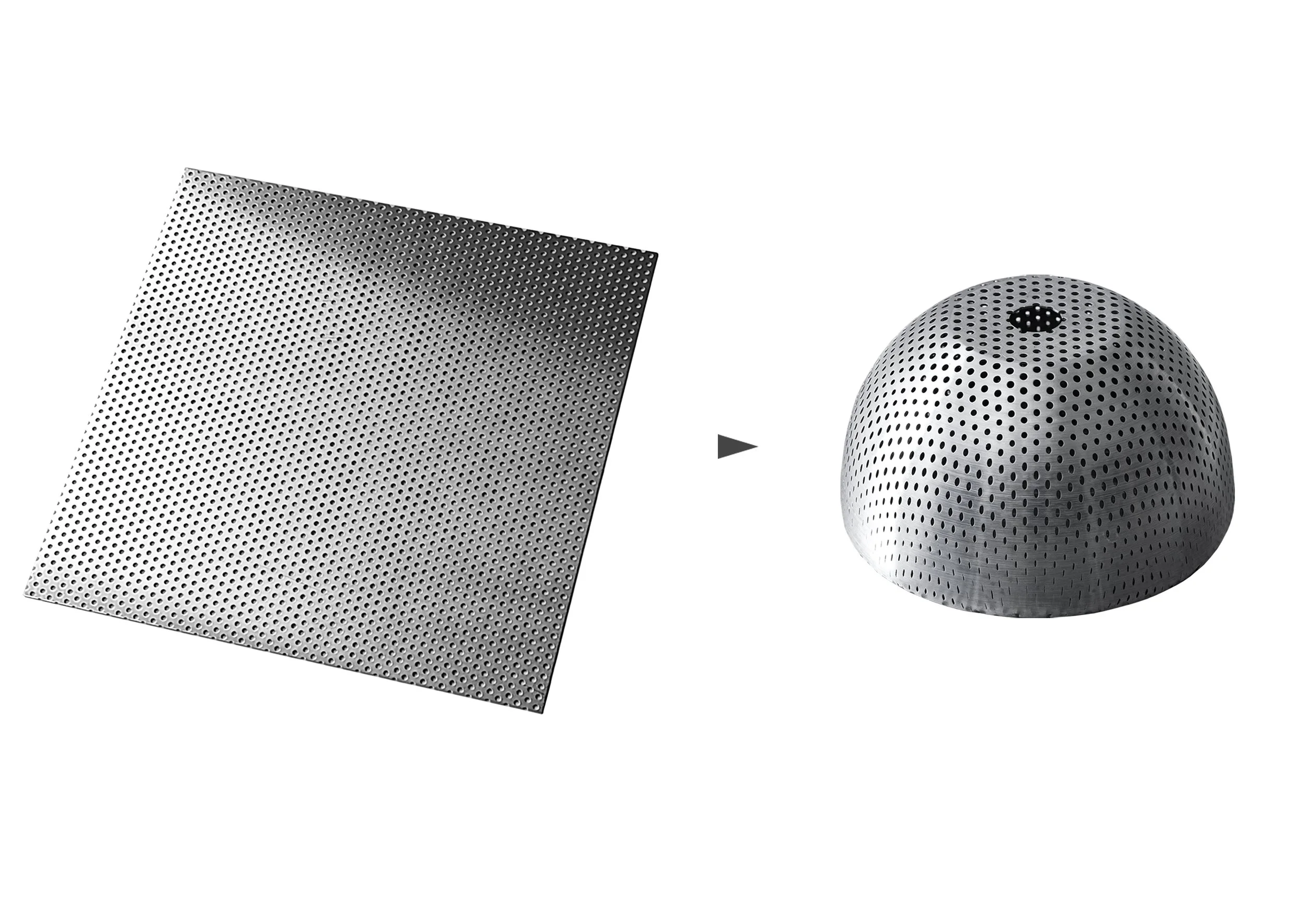
The Perforated Metal Spinning Lamp by Muneji Toh Architects is shaped by a small but consequential decision: to spin a sheet of metal after it has already been perforated.
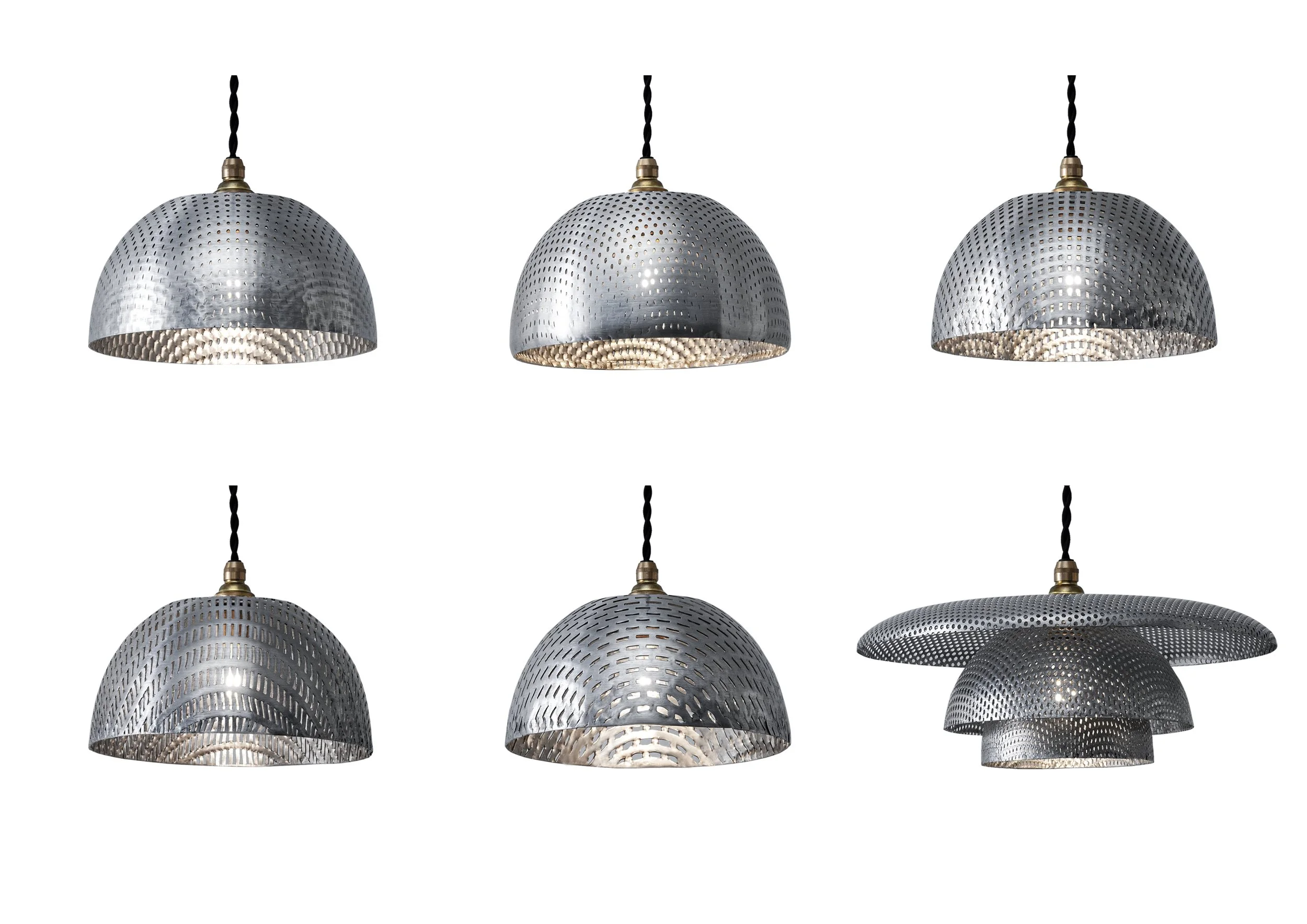
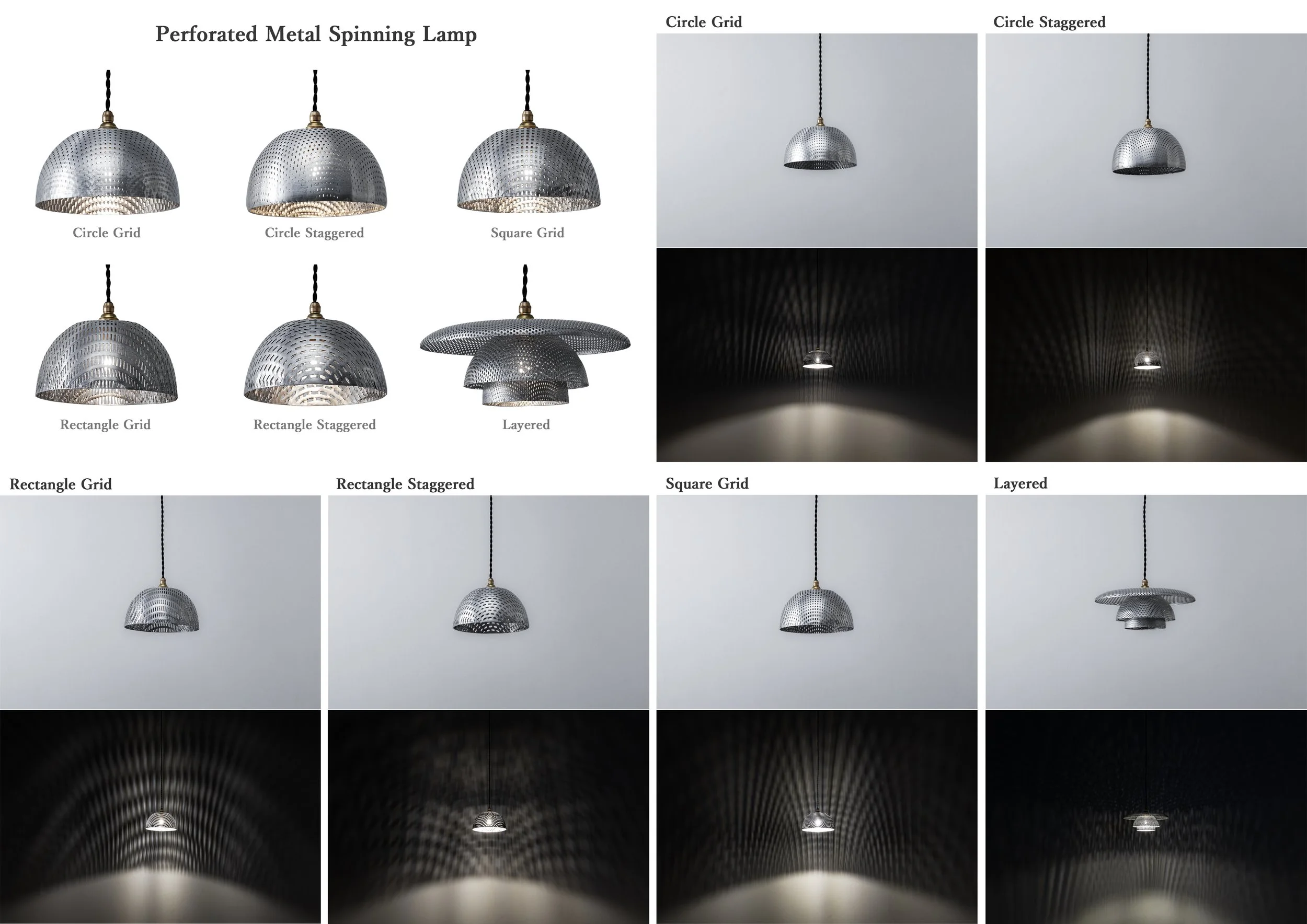
Metal spinning is normally associated with smooth, controlled surfaces. In this case, the regular grid of openings is subjected to the same forming process as the metal itself. As the sheet is drawn into a three-dimensional shape, the perforations stretch with it, changing proportion according to their position on the curve. What begins as an industrially ordered surface becomes progressively less uniform as the form develops.
That change gives the lamp much of its character. The pattern is not applied decoration; it is the visible consequence of fabrication. The finished surface records how the material has moved, with the original perforation grid still legible beneath the distortions created by spinning.
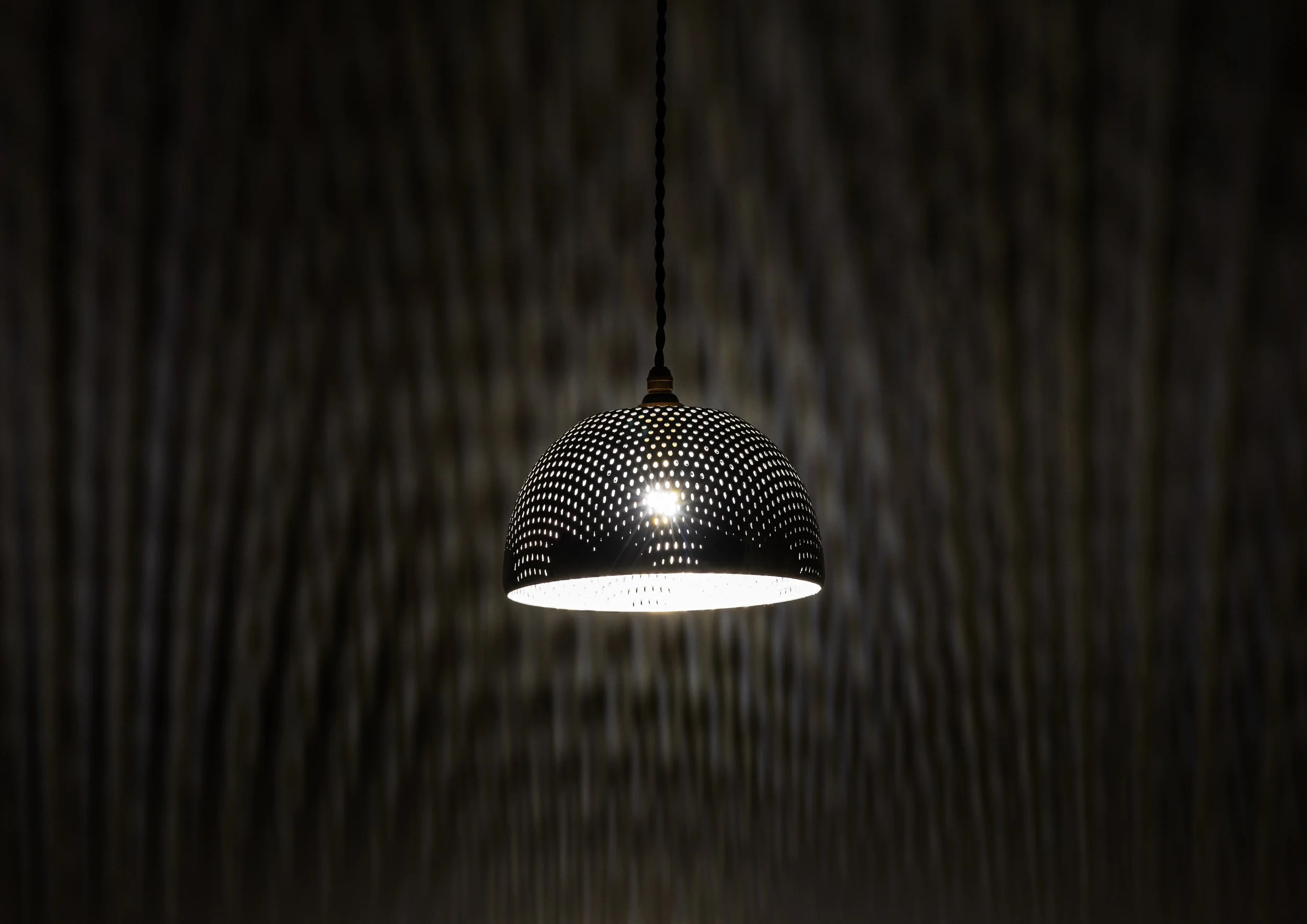
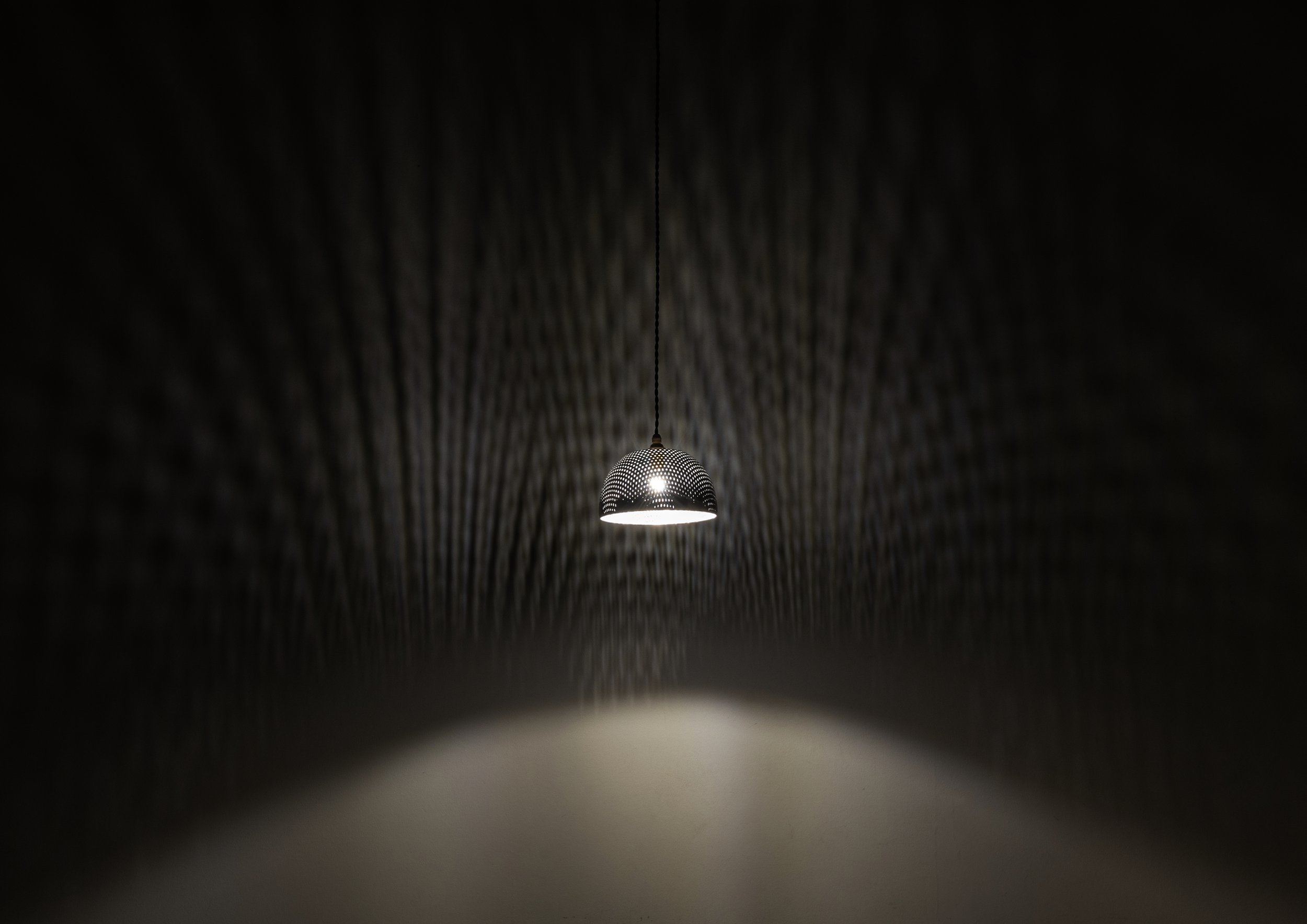
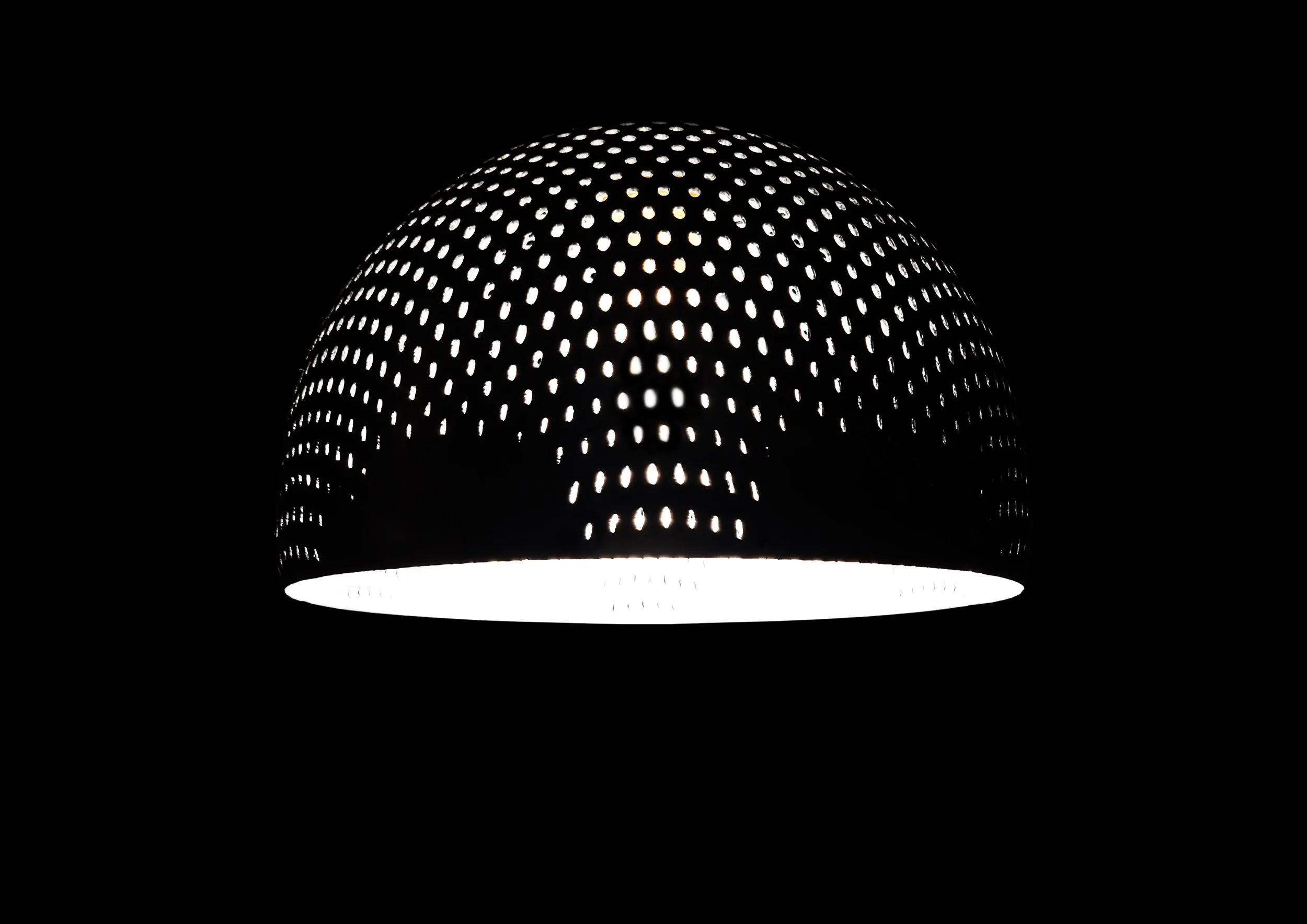
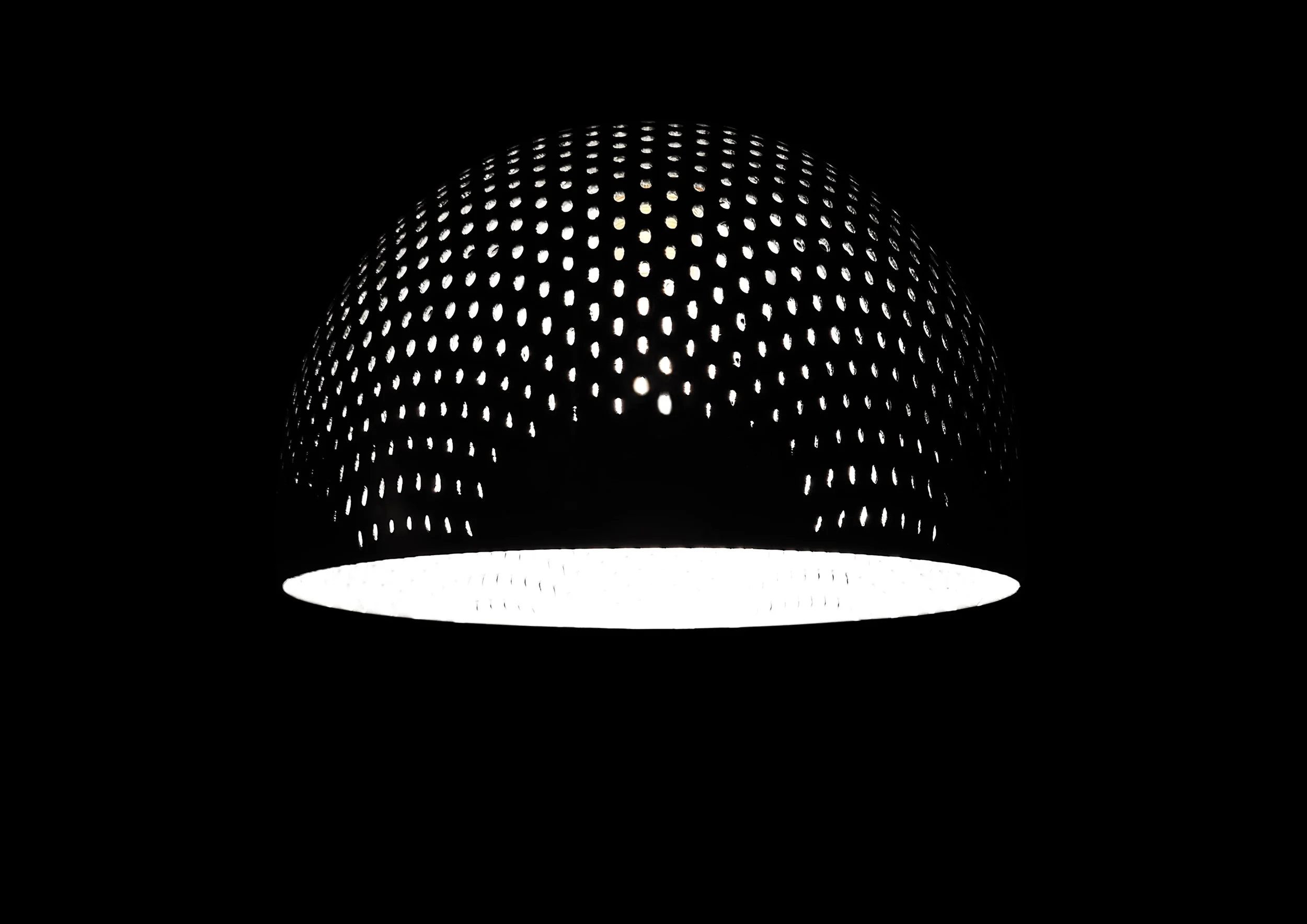
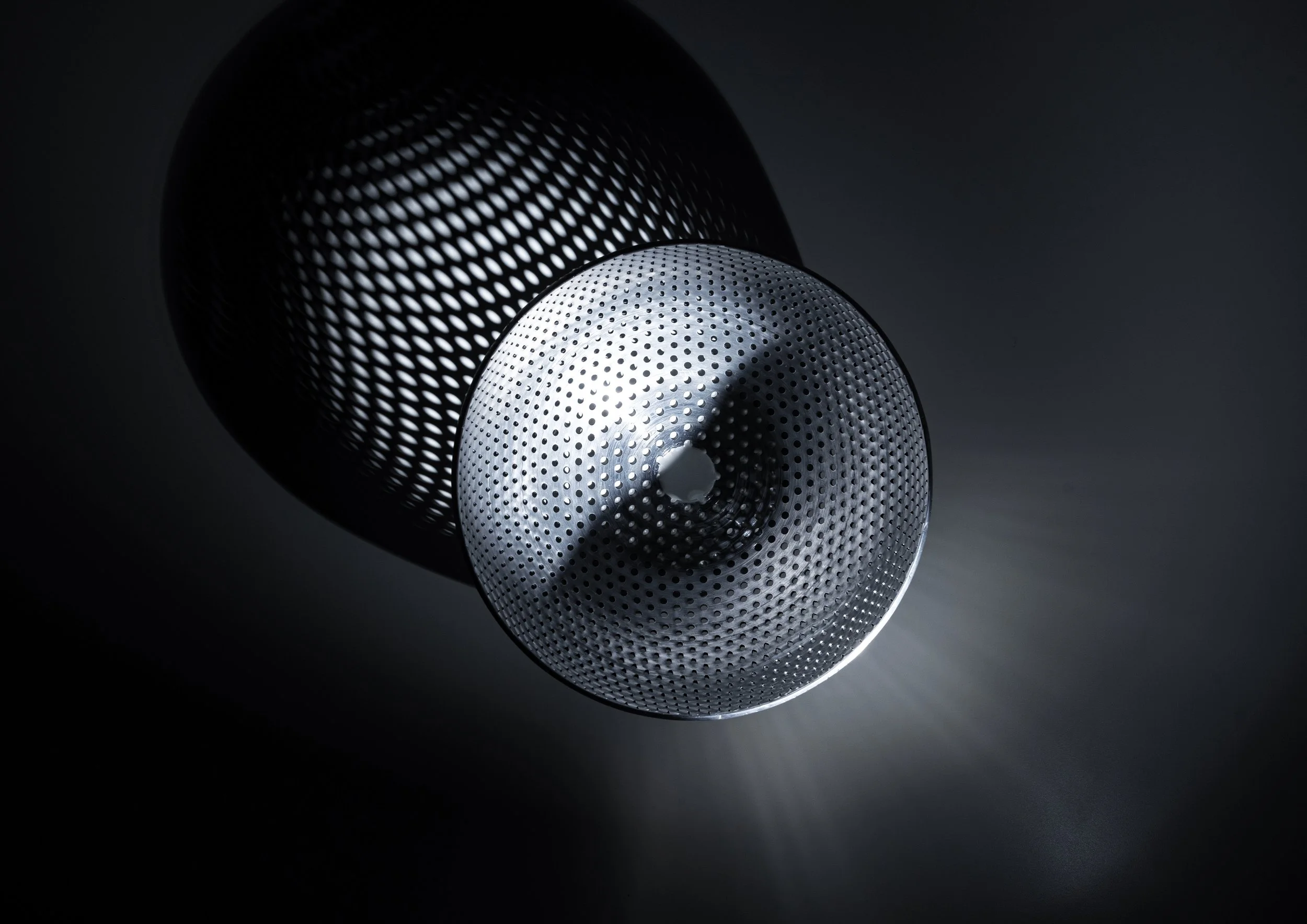
When illuminated, those deformations become spatial. Light passes through openings of different shapes and projects an uneven field onto surrounding walls, making the effect of the process visible beyond the object itself. The shade therefore operates at two scales: as a compact pendant and as a source of changing light and shadow within the room.
There is also something useful in the tension between repetition and variation. The starting material is systematic, while the forming process introduces difference. Neither condition disappears completely. The lamp retains the discipline of an industrial product while allowing the behaviour of the material and the skill of the maker to remain visible.
For Muneji Toh Architects, the interest lies in that relationship between process and appearance. The object does not need an additional motif to explain itself. Its form, pattern and light are all produced by the same act of making, giving a familiar lighting type a more direct connection to the way it is manufactured.
PEGGY'S EDITOR'S NOTE (2026 Sky Design Awards Editorial Jury)
Muneji Toh Architects transforms a standard industrial element into a stunning piece of lighting. The most compelling designs often embrace simplicity and clarity, and this lamp is a perfect example of that restraint. Through the simple act of spinning, the designers have given a flat, rigid material a sense of fluid, organic grace. It is a rare delight to encounter a product that so honestly reflects its creation; the stretched geometry of the metal speaks a language of its own. This design exemplifies a successful integration of technical precision and poetic form, offering a fresh perspective on the potential hidden within familiar materials.
EDITOR'S REVIEW
This piece effectively combines industrial processes with striking visual results. By using the metal spinning technique on perforated metal, the design transforms a standard grid into a dynamic, three-dimensional tapestry. This approach provides a genuine narrative of its creation, as the deformation of the perforations showcases the artisan's skill. The pendant serves a dual purpose: it functions as a primary task light while also casting an ambient, patterned projection in its surroundings. It exemplifies how precise manipulation of raw materials can result in functional art.
DRAWING AND SPATIAL ANALYSIS
The lighting effect is influenced by four key factors: the original perforation pattern, the degree of deformation created during spinning, the position of the light source, and the distance between the pendant and surrounding surfaces. The submitted photographs illustrate a focused pool of direct light accompanied by a broader projection through the metal shell. Before final publication, it is important to verify all dimensions, material specifications, lamp holder details, and installation drawings as confirmed by the designer.
ORIGINAL DESIGNER SUBMISSION — VERBATIM
We created a lamp using metal spinning. Metal spinning is a processing technique that uses a special machine to transform a sheet of metal into a 3 dimensional shape. We applied this metal spinning technology to the lighting fixtures.
Normally, metal plates are used, but the highly skilled craftsmen add a spinning process to perforated metal plates. The spinning process stretches the perforated metal, changing the regular perforation pattern to create special patterns of light and shadow.
Project: Perforated Metal Spinning Lamp
Location: Japan
Project type: Lighting Design — Pendant Lighting / Product Design
Designer/company: Muneji Toh Architects