

HAKUSAN MEGANE SHANGHAI designed by Each Design (China)
A pair of glasses is one of the most personal items a person can wear. It sits close to the face, alters the way the world is perceived, and gradually becomes part of an individual's identity. For Hakusan Megane, a company with a history dating back to 1883, opening its first store in mainland China meant creating a space where that intimacy could merge with a new city.
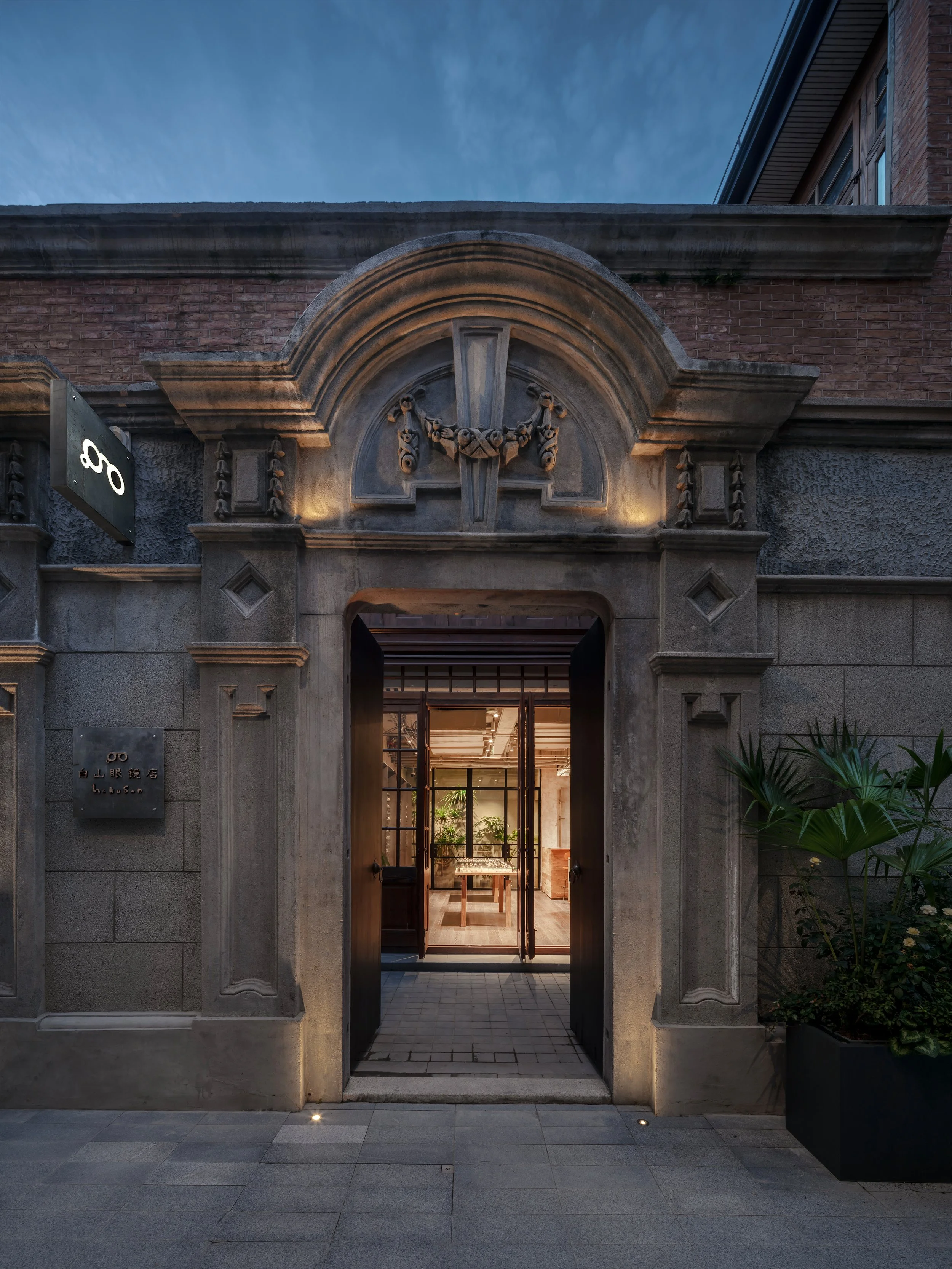
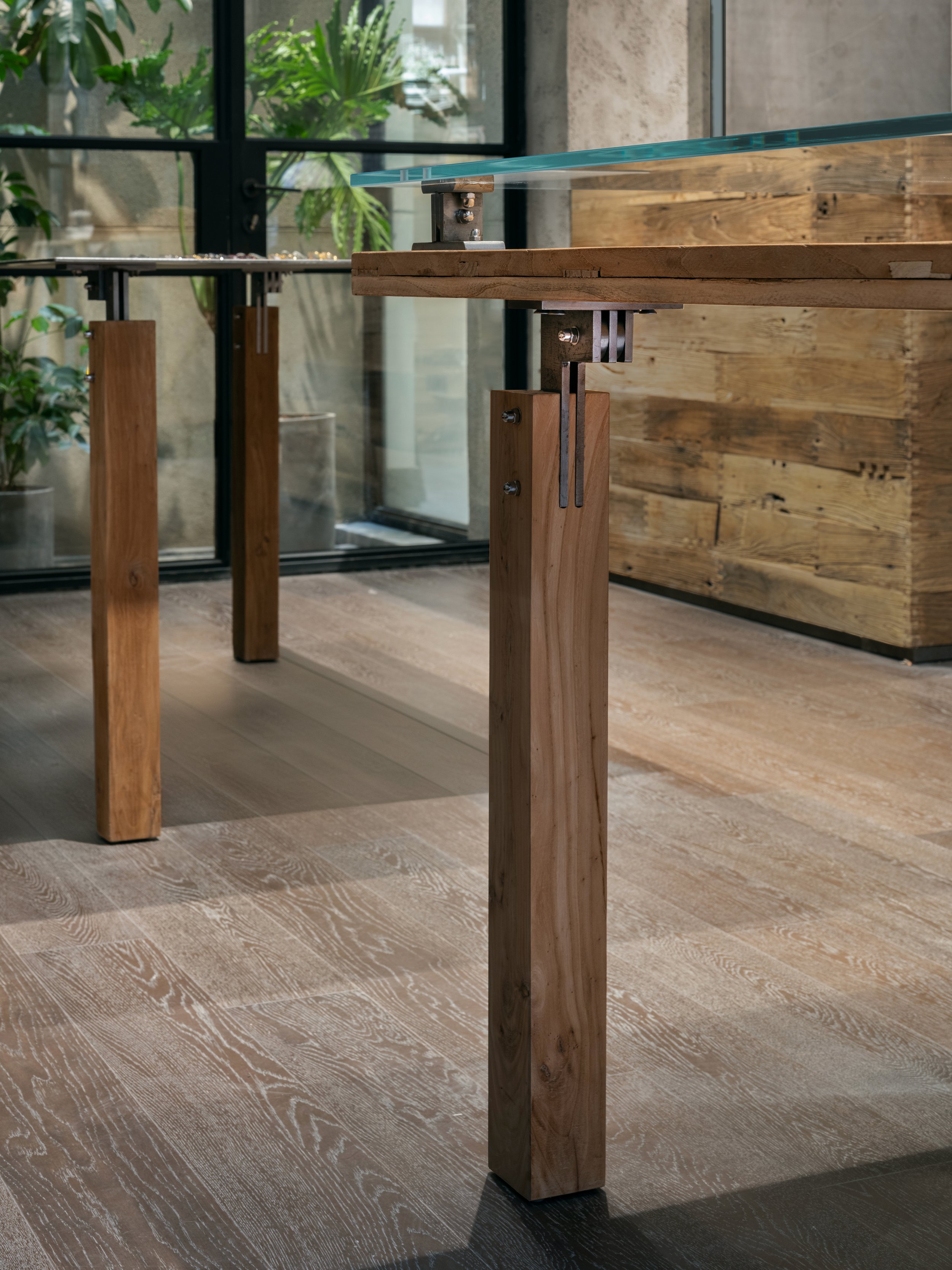
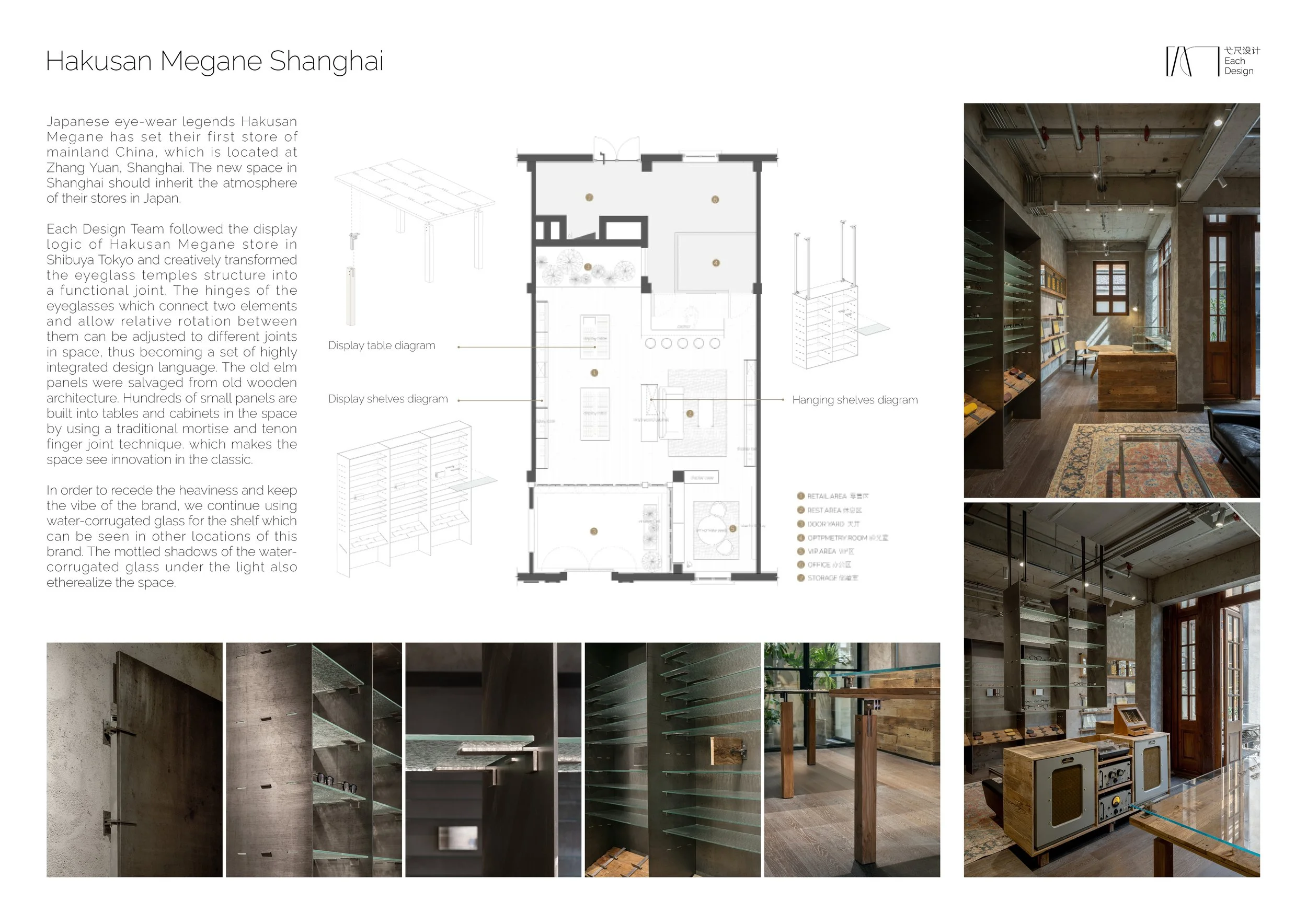
The boutique in Shanghai is situated in Zhang Yuan, a late-nineteenth-century garden complex that has been restored into a cultural and commercial quarter. Each Design approached the project with a focus on continuity: they aimed to preserve the atmosphere and display style associated with Hakusan Megane’s Japanese stores while allowing Shanghai's materials and history to influence the new location. The retail design draws inspiration from the construction of eyewear itself. Hinges and temples are small, almost invisible components, yet they determine how a frame opens, closes, and adapts to the wearer. Each Design expanded this concept into a system of joints for shelves, tables, and cabinets, giving the interior a character that directly relates to the product. This approach creates a subtle brand identity: Hakusan Megane is recognized by how its elements connect, rotate, and support one another. The store doesn’t rely on oversized graphics to convey its identity; instead, the precision of an eyeglass frame is echoed in the furniture and display system.
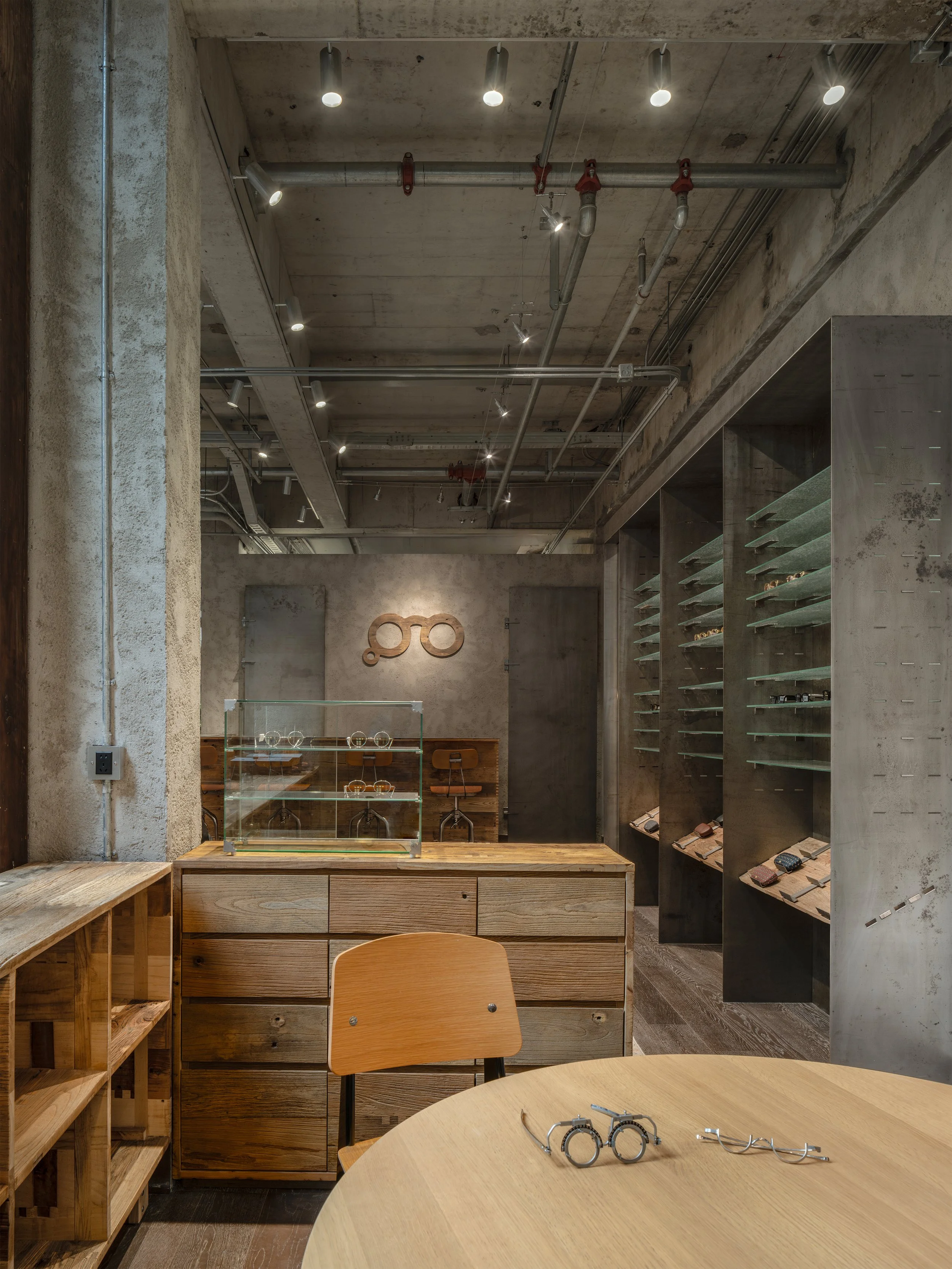
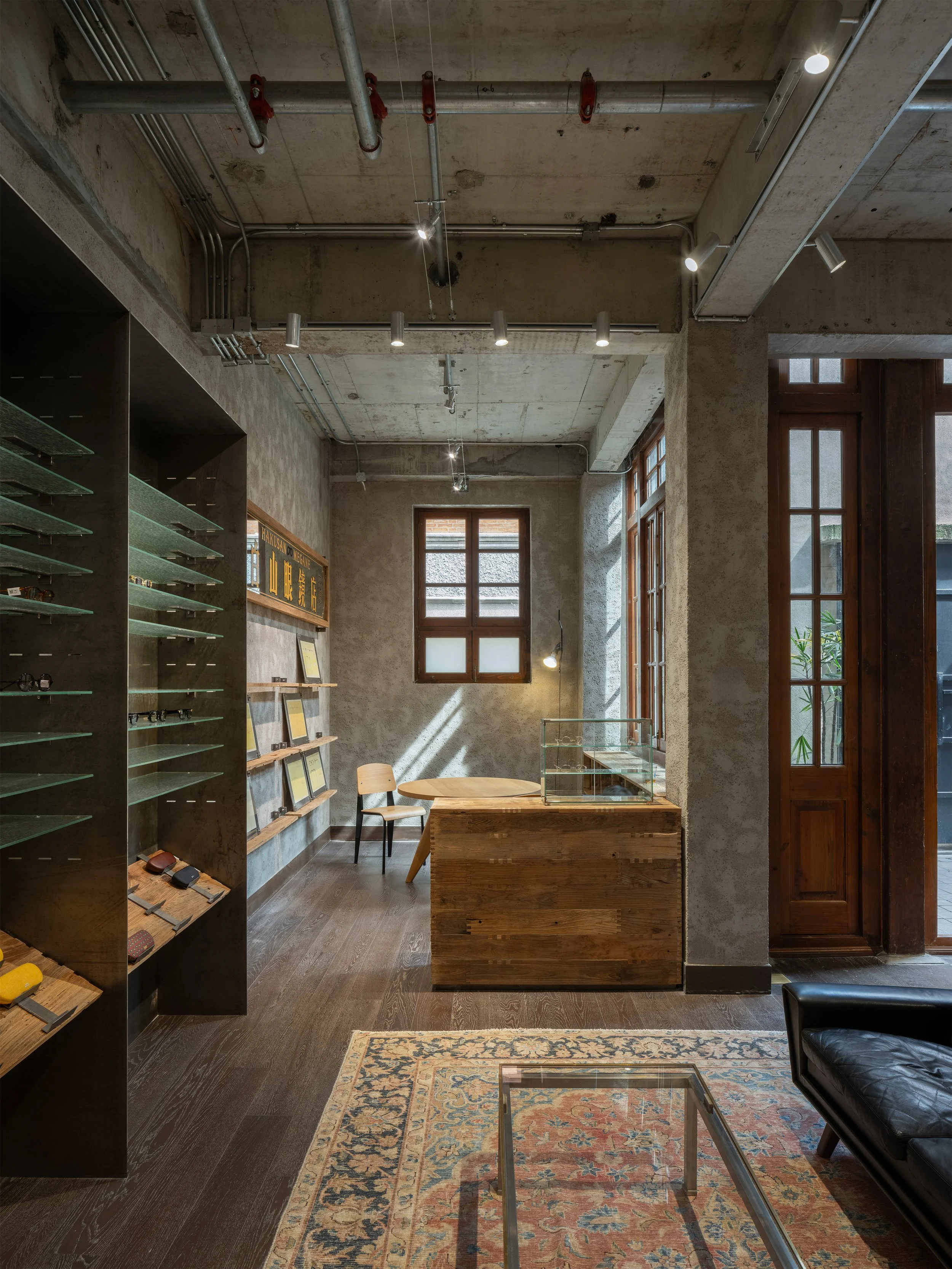
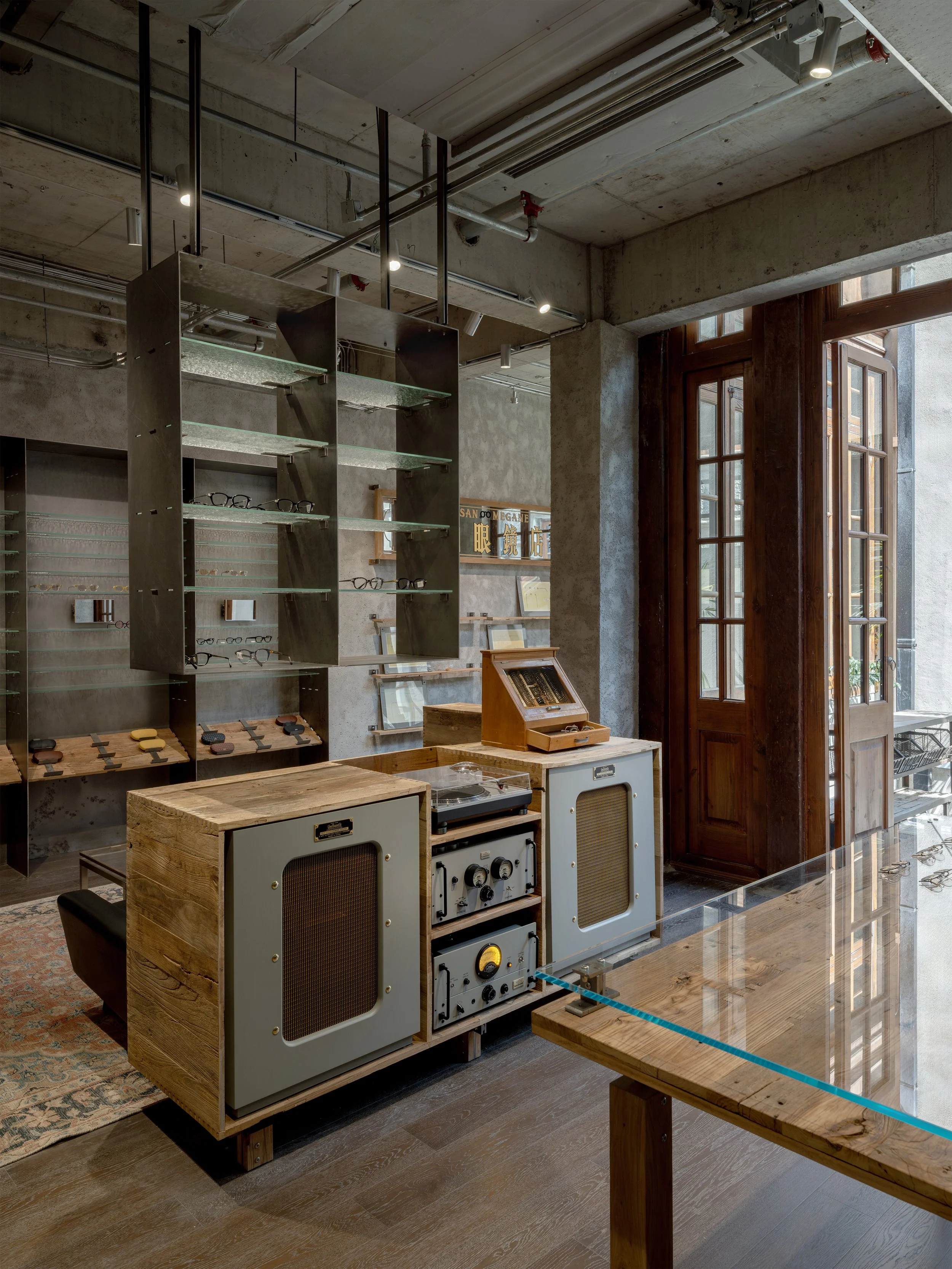
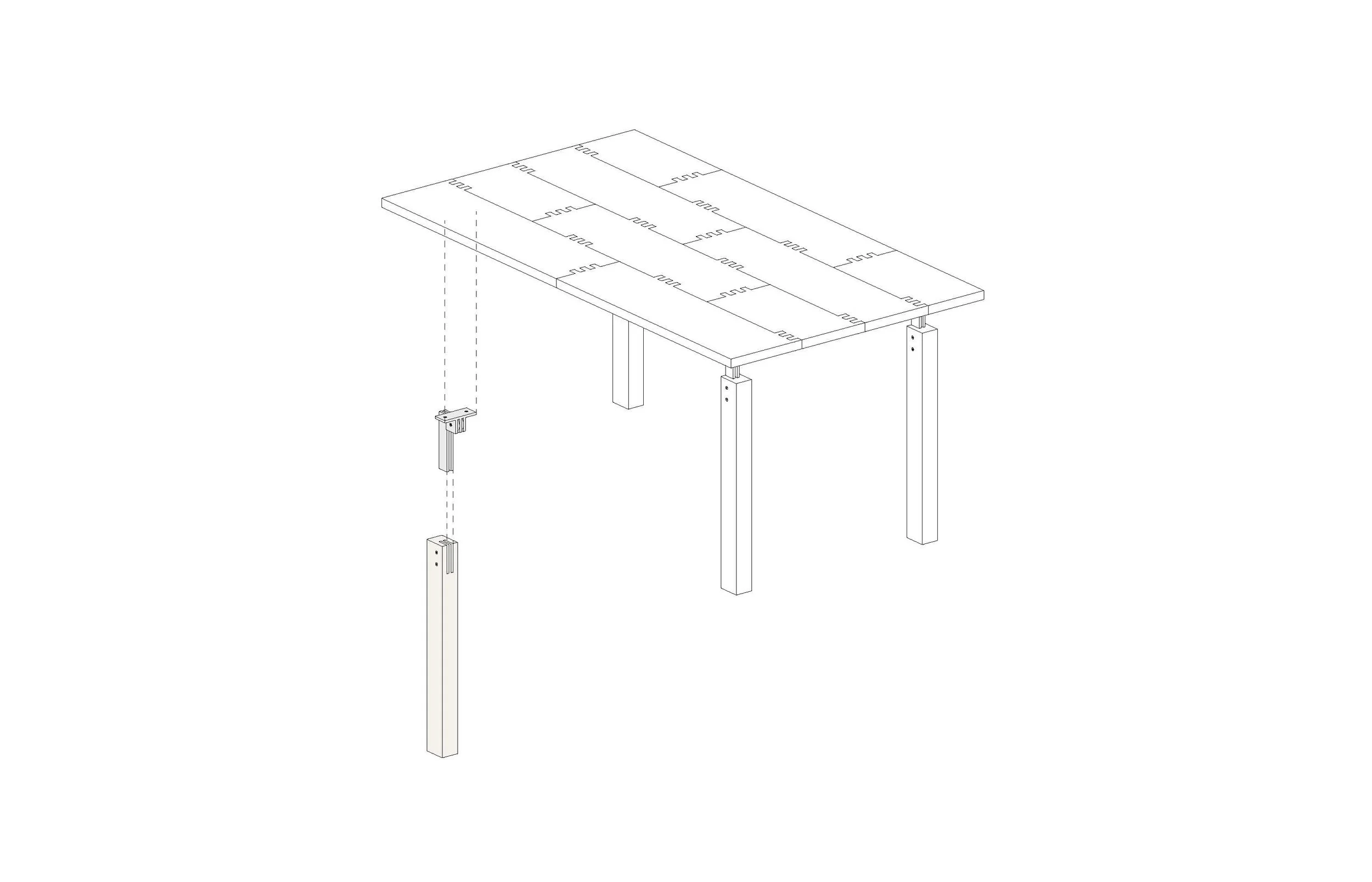
The layout follows the display logic of Hakusan Megane’s Shibuya store, maintaining a familiar order across the brand. In Shanghai, this system is reinterpreted using materials selected for their age, texture, and connection to Zhang Yuan. The outcome connects the two locations through construction methods rather than visual replication. Reclaimed elm is used for the tables and cabinets; salvaged from older timber buildings, this wood retains variations in grain, colour, and surface, giving each piece a sense of history. Hundreds of smaller sections are joined using mortise-and-tenon finger joints, allowing the craftsmanship of construction to remain visible.
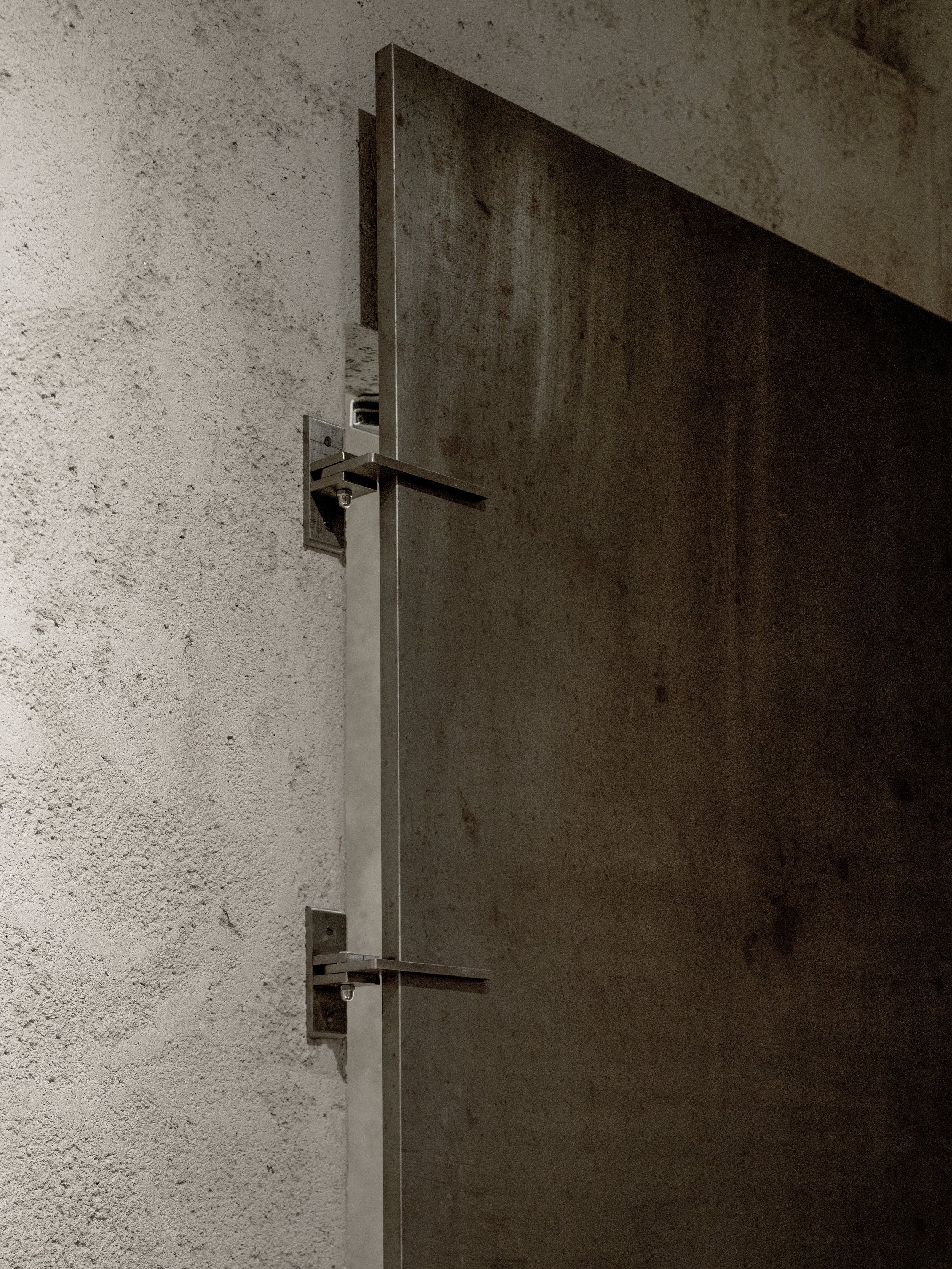
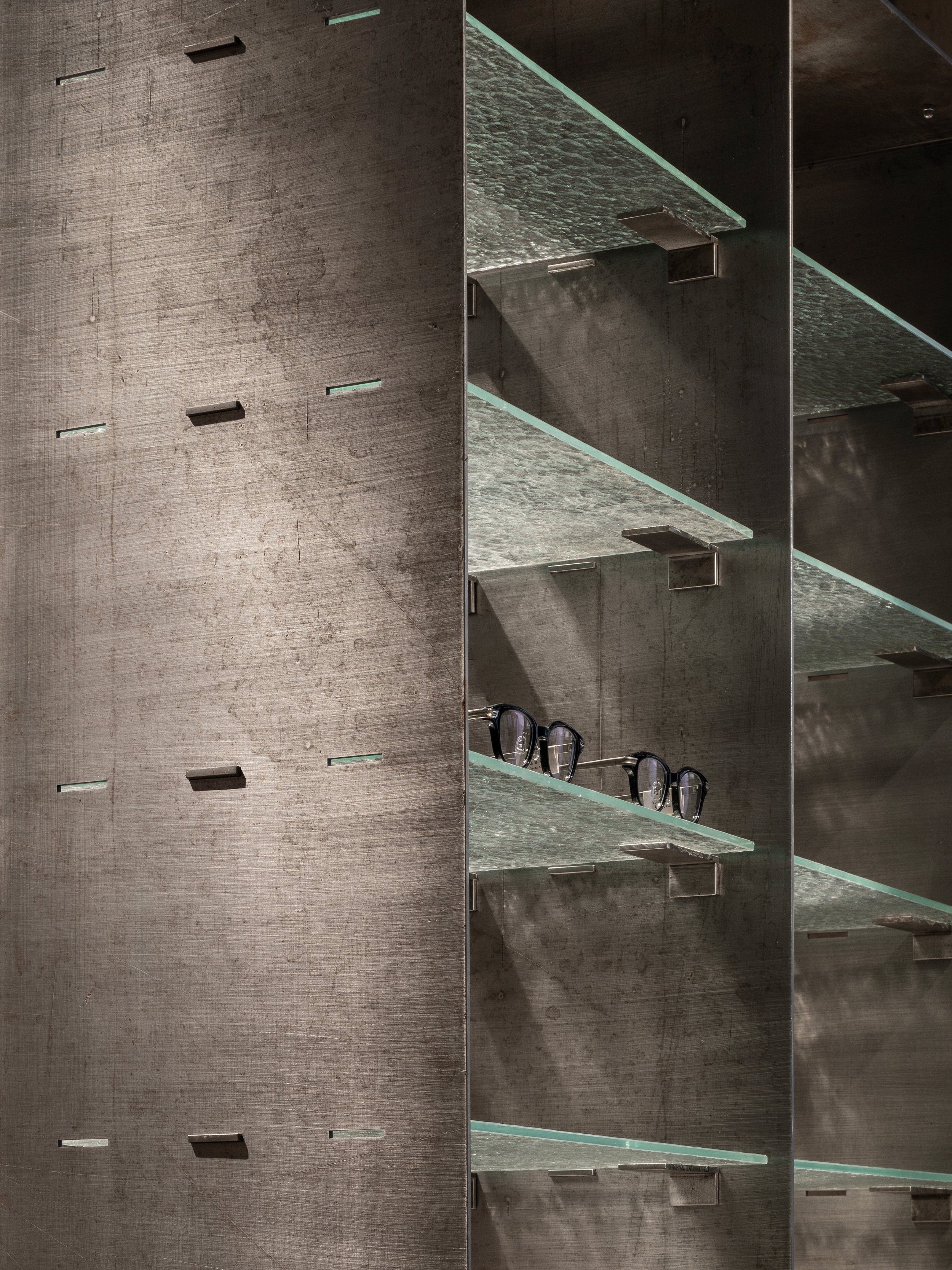
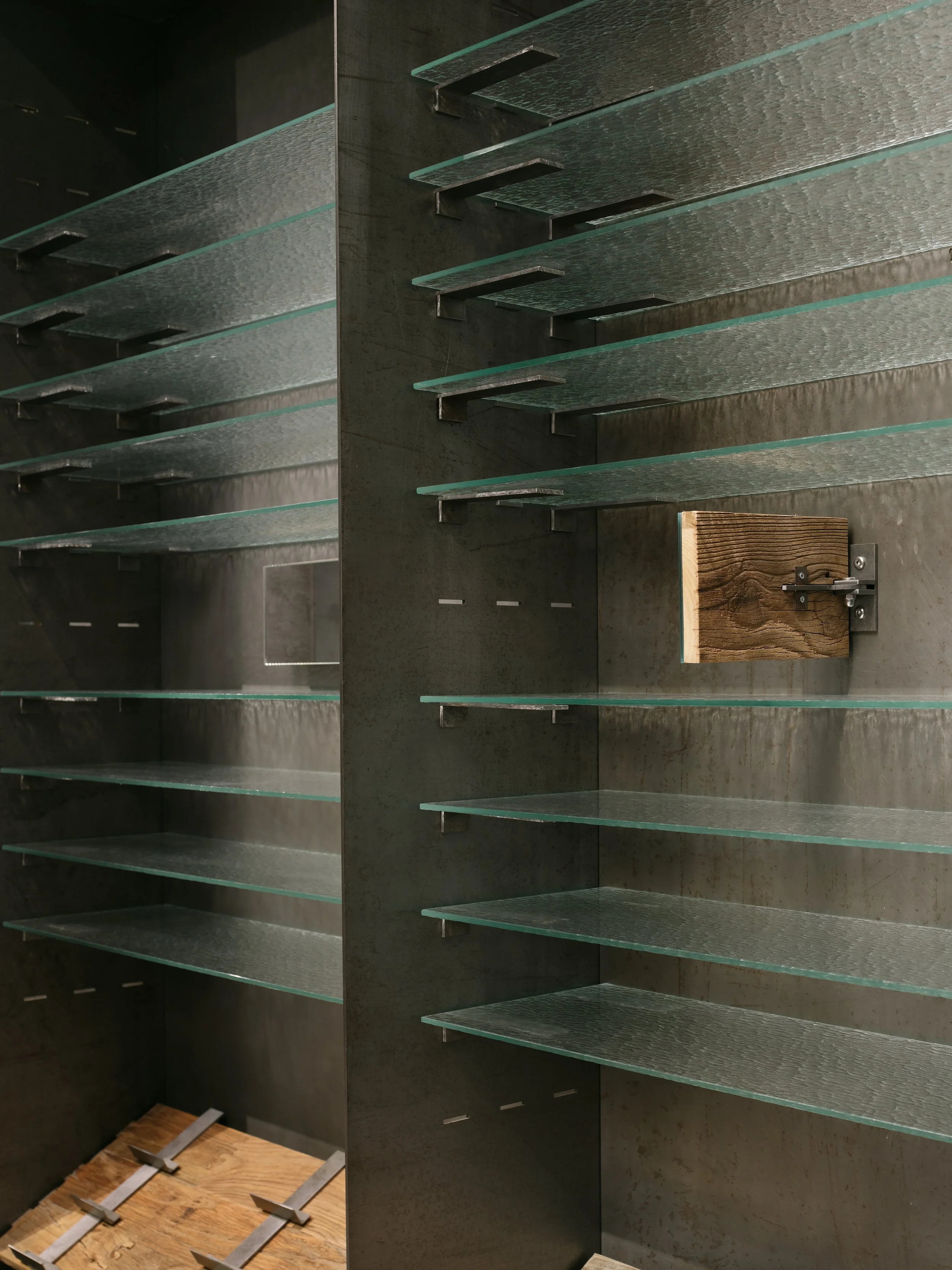
The same joining principle applies to solid iron. Eight-millimetre panels are crafted into wall shelving with thoughtfully integrated connections, lending the heavy material a lighter appearance. Timber and metal share a common language of precision, while their weathered surfaces place them within a shared material history. Water-corrugated glass, also used in other Hakusan Megane stores, introduces a delicate optical element. Light dances across its rippled surface, casting shifting shadows over the frames and materials behind them. The glass fosters a direct relationship with vision, allowing clarity and distortion to enhance the display experience.
For visitors, the atmosphere unfolds through careful observation. The grain of reclaimed elm, the oxidation of iron, the edges of joints, and the silhouettes of frames all offer rewards at a smaller scale. The store reflects the process of choosing eyewear: through proportion, comfort, detail, and the gradual recognition of what feels right. The protected building provides a setting imbued with memory. New fixtures are integrated within an inherited shell, allowing the boutique to connect with Zhang Yuan without simply duplicating its past. Japanese craftsmanship and Shanghai history converge through material, touch, and construction.
Hakusan Megane Shanghai represents international expansion as a thoughtful act of translation. Each Design has carried the brand’s values into a new city through the mechanics of eyewear, a disciplined display, and materials shaped by time. The store feels distinctly like Hakusan Megane while remaining inseparable from the local context in which it now resides.
PEGGY'S EDITOR'S NOTE (2026 Sky Design Awards Editorial Jury)
Heritage retail often relies on superficial elements such as aged timber and muted lighting. However, HAKUSAN MEGANE SHANGHAI sets itself apart by establishing its design language based on the essential mechanics of the product itself. By translating the mechanics of a hinge into custom joinery, Each Design effectively defines the furniture and display systems with genuine purpose. This approach creates a space that feels authentically aligned with the brand.
The interaction between reclaimed elm and oxidized iron tells a tactile story. Both materials show the marks of time, linking Hakusan Megane’s rich history with the protected architectural context of Zhang Yuan. This project exemplifies how a new international store can connect with its local environment through honest construction and a respect for material history.
EDITOR'S REVIEW
The project stands out for its intelligent integration of product design and spatial joinery. The eyewear hinges and temples lend a subtle structural elegance to the fixtures. The use of reclaimed elm and oxidized iron creates a deep connection with the historic Zhang Yuan setting, honouring the beauty that comes with age while also introducing a modern touch. The adaptation of finger joints to thin, solid iron showcases technical skill, giving the shelving a visually light appearance and demonstrating that structural integrity can be the essence of true innovation.
DRAWING AND SPATIAL ANALYSIS
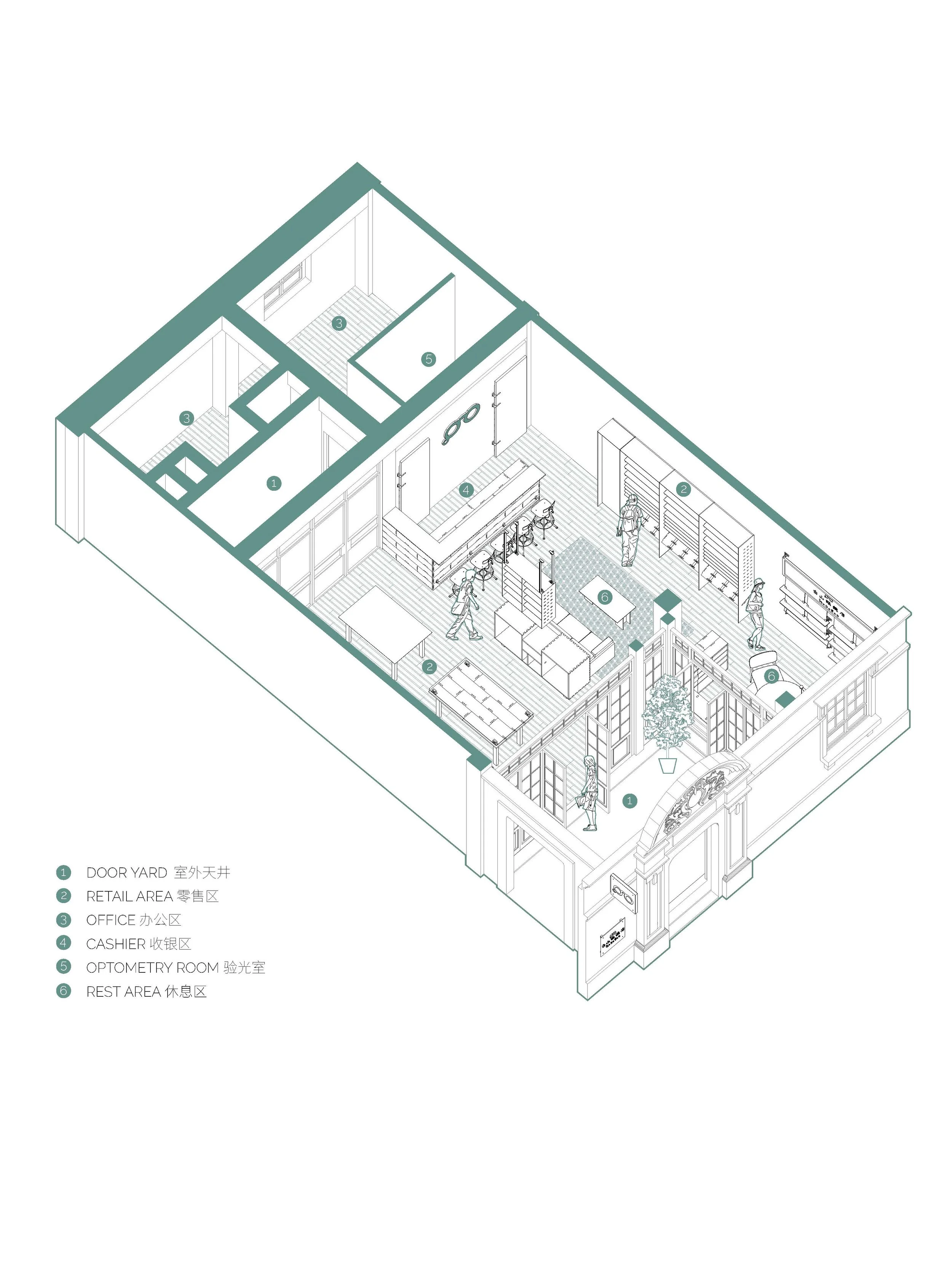
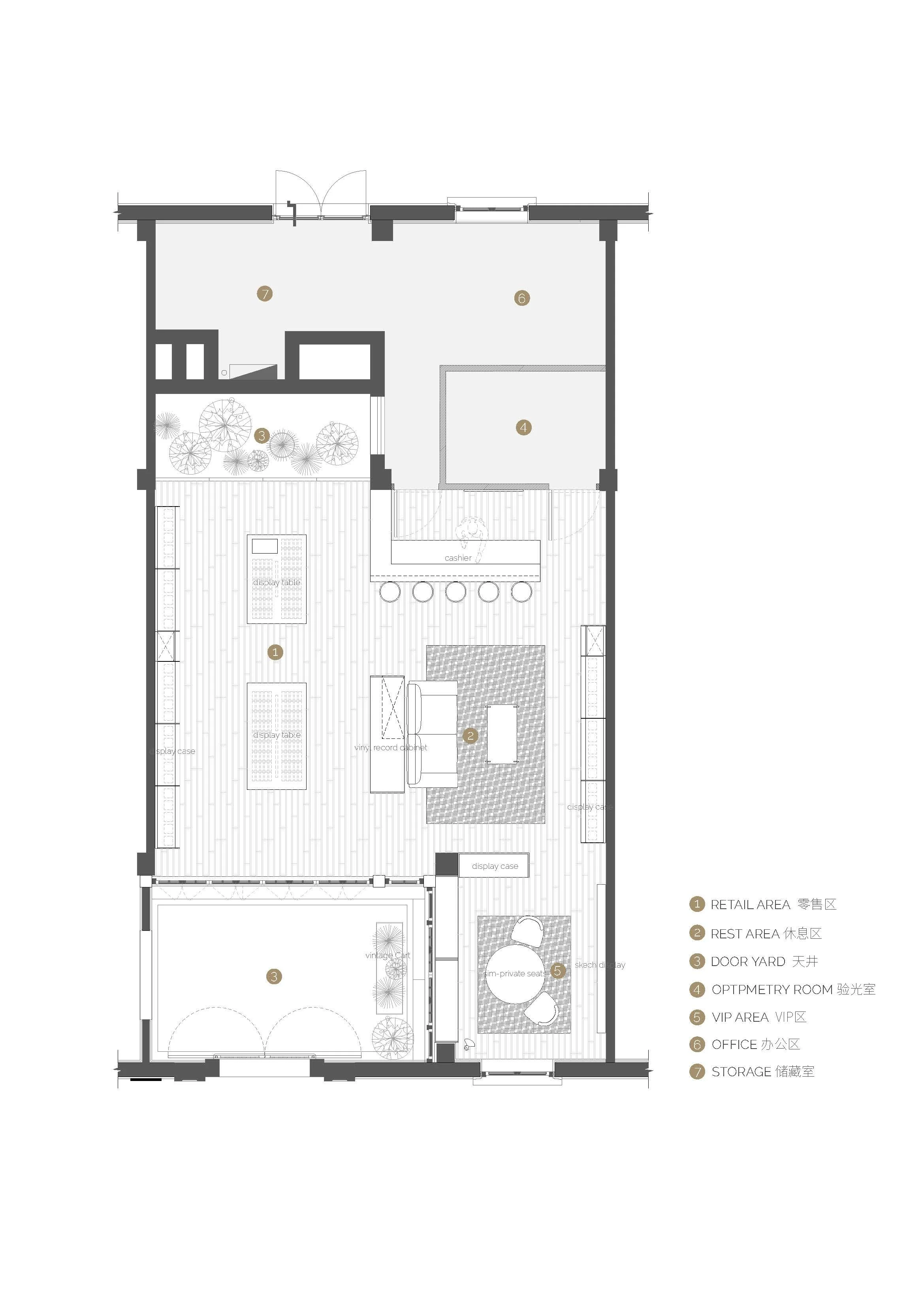
The protected interior of Zhang Yuan limits major interventions, so the project's spatial identity focuses on a freestanding and wall-mounted fixture system. Display tables and cabinets are placed in the center of the boutique, allowing for circulation around them while maintaining a visual connection with the existing walls and openings. Wall shelves are constructed from thin finger-jointed iron panels, which reduces their physical depth and keeps the perimeter available for product displays without requiring heavy secondary construction.
Eyewear is arranged at various heights to facilitate both browsing and close consultations. Repeated hinge-inspired joints create a sense of continuity between the horizontal shelves, upright supports, and movable components. Water-corrugated glass is incorporated within the display system and is highlighted with focused illumination, providing a lighter visual layer for the product zones against the timber and metal elements. A complete set of dimensioned plans was not available in the accessible materials. The spatial analysis follows the relationships described by Each Design and is illustrated in the submitted project documentation.
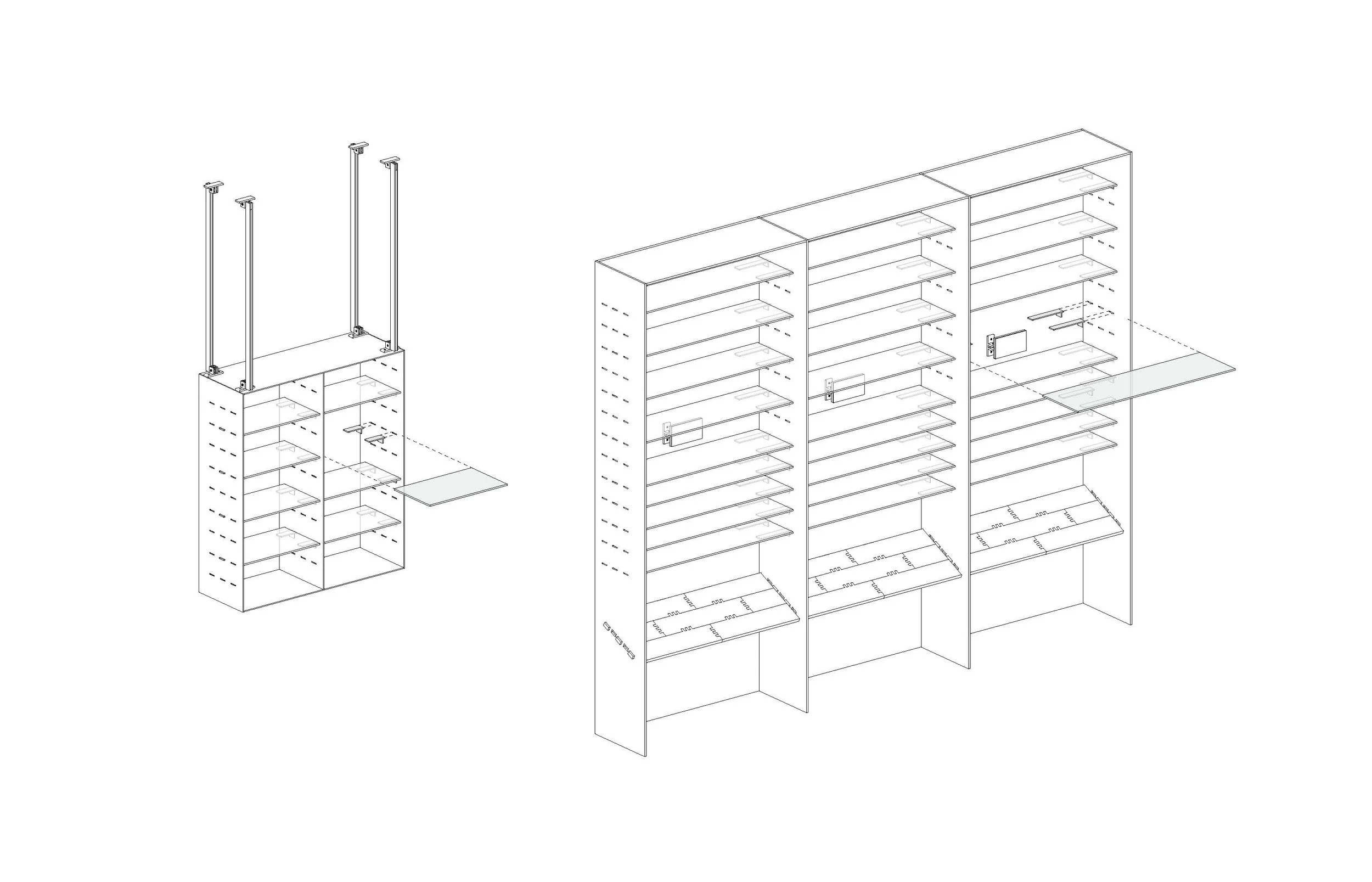
ORIGINAL DESIGNER SUBMISSION — VERBATIM
Japanese eyewear legends Hakusan Megane has set the standard in quality and design since its original inception in 1883. The brand is known for their iconic silhouettes and creation of classic shapes unique to the brand. For their first store of mainland China, Each Design got an opportunity to cooperation with Hakusan Megane team and design the store for them in Zhang Yuan, Shanghai.
Because of the long history of the brand, Hakusan Megane team hoped that the new space in Shanghai can inherit the atmosphere of their stores in Japan. Therefore, how to make the new space that maintains the vibe of the stores in Japan but also have some uniqueness of the new location became a challenge of this project. To solve this challenge, Each Design Team followed the display logic of Hakusan Megane store in Shibuya Tokyo and creatively transformed the eyeglass temples structure into a functional joint, combined with the traditional wood mortise and tenon technique, which makes the space see innovation in the classic.
The location of the project – Zhang Yuan, which is the most famous garden of Shanghai at the end of the 19th century. Nowadays, it has been endowed with new commercial and cultural values after protective restoration in recent years. Inspired by this location, Each Design Team carefully make the selection of time-preserved or recycled materials rather than a fresh, shiny texture. Attempted to make the space engage in a dialogue with the history of the site and the brand. The combination of row iron panels and old elm completes the above narrative. By using the material that we carefully choose, there is no conflict between the cold and hard of the metal and the warm and soft of the wood. They are integrated by the oxidation traces on the surface of the material under the action of the time.
In the historical protection building, the concept of design is expressed more subtly and delicately. The focus of the project is concentrated on the display fixture system and furniture. The concept revolves around "glasses" and "craftsmanship" according to the brand attributes of Hakusan Megane Store. Each team noticed that "hinges" and "piles" are usually indispensable structural elements of glasses. This structure, which connects two elements and allows relative rotation between them, can be adjusted to different joints in space, thus becoming a set of highly integrated design language.
Besides the details structure we reformed from eyeglass hinges, the use of wood material of the display fixtures fit the brand’s craft attributes. The old elm panels were salvaged from old wooden architecture. Instead of gluing the panels together, hundreds of small panels are built into tables and cabinets in the space by using a traditional mortise and tenon finger joint technique. We appreciate the wood factory we cooperate with, which is still willing to complete manual production at the moment of stress efficient production.
In order to recede the heaviness of wooden fixture, we didn’t use screws and intricate structure but borrow the finger-joint technique to use on 8mm thick solid iron panels. This allowed us to create a lightweight shelving system against the wall. In this new location of Hakusan Megane, we continue using the water-corrugated glass for the shelf which can be seen in other locations of this brand. The mottled shadows of the water-corrugated glass under the light also etherealize the space.
Project: HAKUSAN MEGANE SHANGHAI
Location: Zhang Yuan, Shanghai, China
Project type: Interior Design — Retail Design / Eyewear Boutique
Designer/company: Each Design
Additional credits: Crafted furniture and fixture system developed with specialist wood fabricators
Client/collaborators: Hakusan Megane
Completion: 14 July 2024