

ISHIDAYA designed by DESIGN & CREATIVE ASSOCIATES (VIETNAM)
At ISHIDAYA & NISHI SHUZO BAR, designed by DESIGN & CREATIVE ASSOCIATES in Hanoi’s central district, two cultural worlds meet. The building’s original architecture draws from Western decorative traditions, while the restaurant’s soul is unmistakably Japanese, reflected in both cuisine and hospitality. The designers found common ground in Taisho Roman—a sensibility that emerged in early twentieth-century Japan, when national traditions encountered Western modernity. Taisho Roman is remembered for its fashion, illustration, and richly layered interiors, but its importance lies in how it reflects a society adapting to outside influences while holding onto its identity. This dynamic feels especially relevant in Hanoi, where architecture, commerce, and daily life bear the imprint of Vietnamese, French, and global cultures.
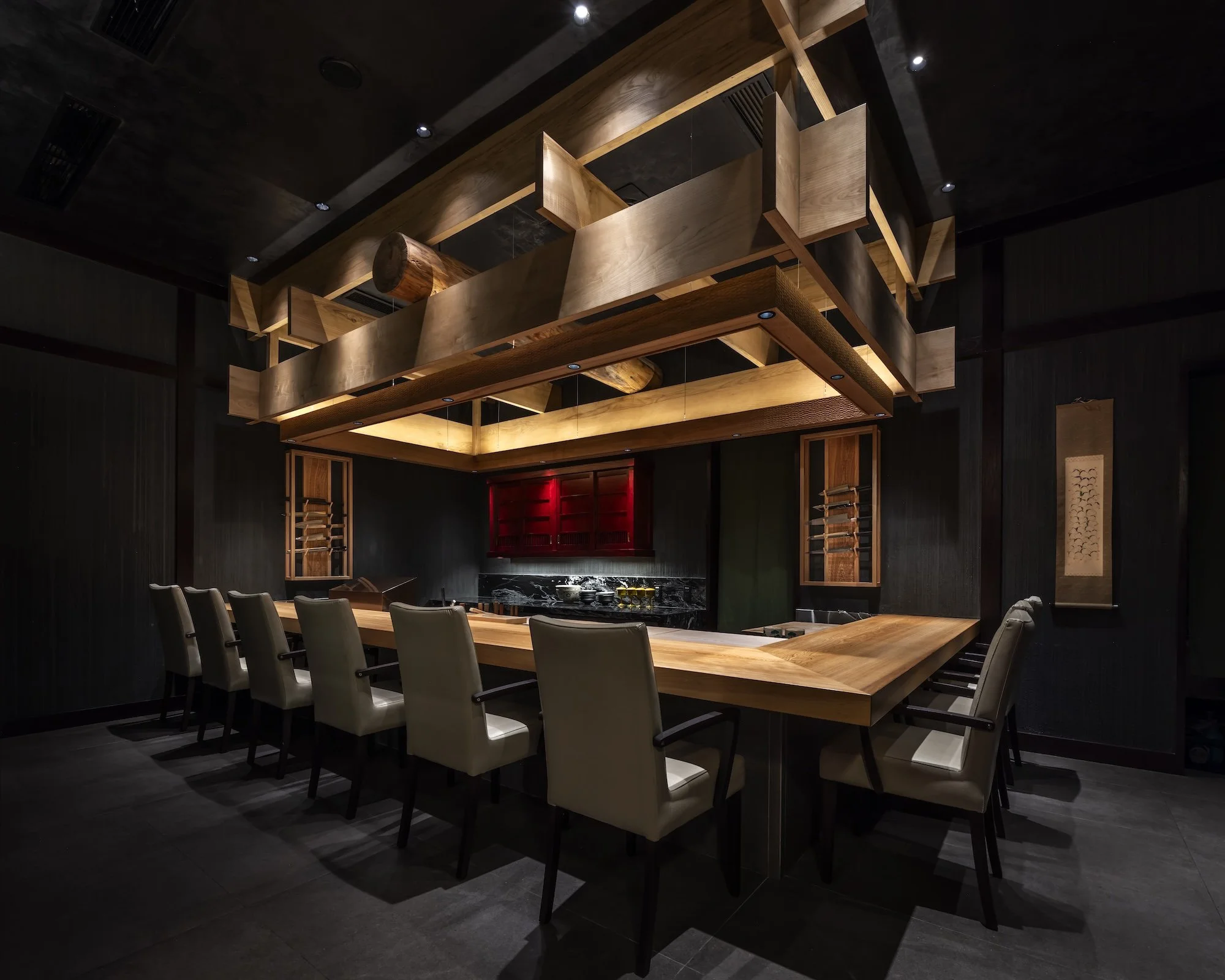
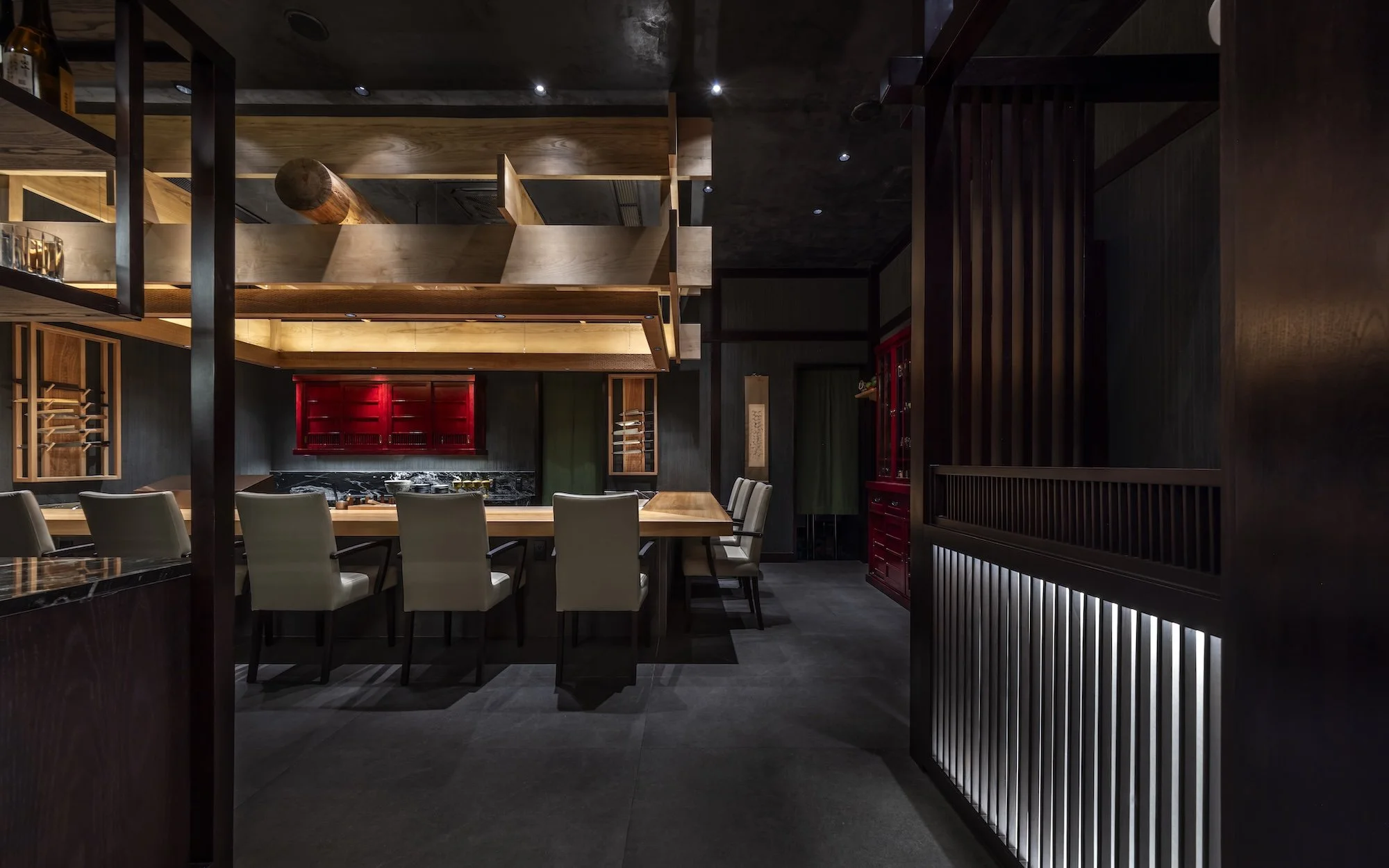
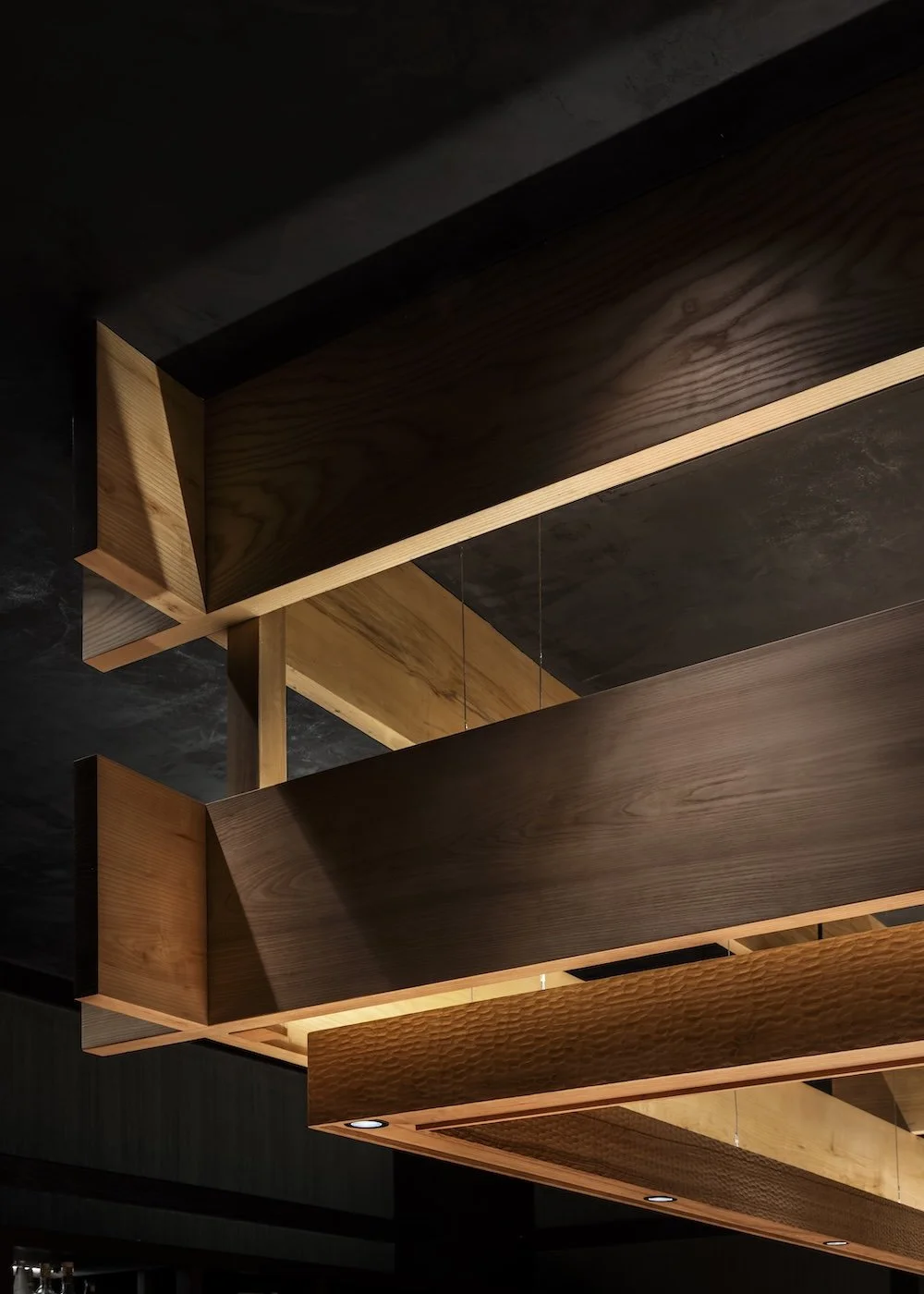
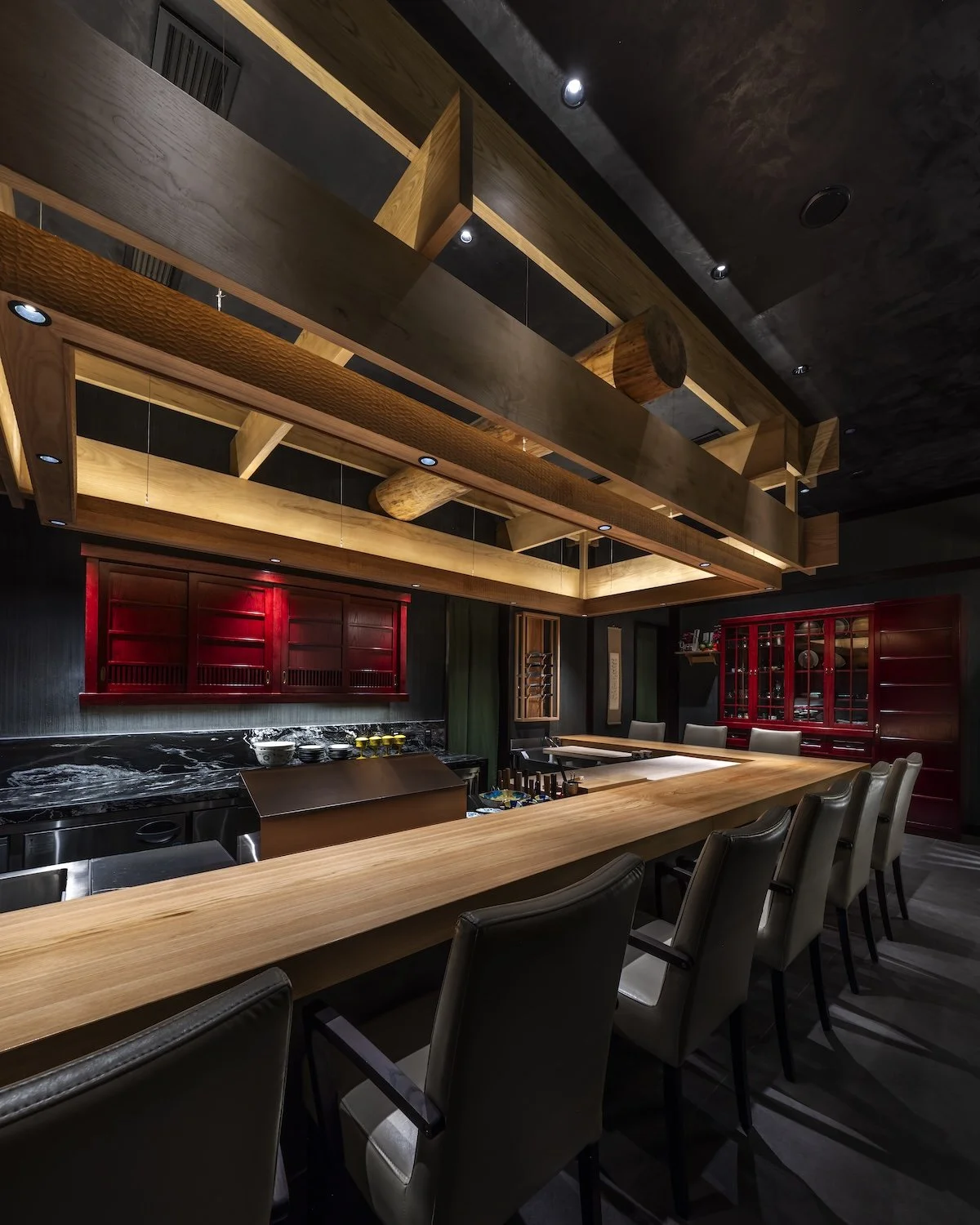
The restaurant’s character emerges from this blend. Japanese identity is clearly present, yet never isolated from its context. Western architectural details are woven into the whole, resulting in a setting shaped by many places and times. The interior expresses a designer’s deep familiarity with Japanese culture, combined with an awareness of how it can be thoughtfully reimagined beyond its place of origin. A suspended timber framework at the heart of the restaurant embodies this cultural negotiation architecturally. Its construction draws upon Japanese timber craft, while its layered geometry reflects the graphic discipline of Art Deco. Concealed lighting separates the structure from the dark ceiling, giving it the presence of an installation above the counter.
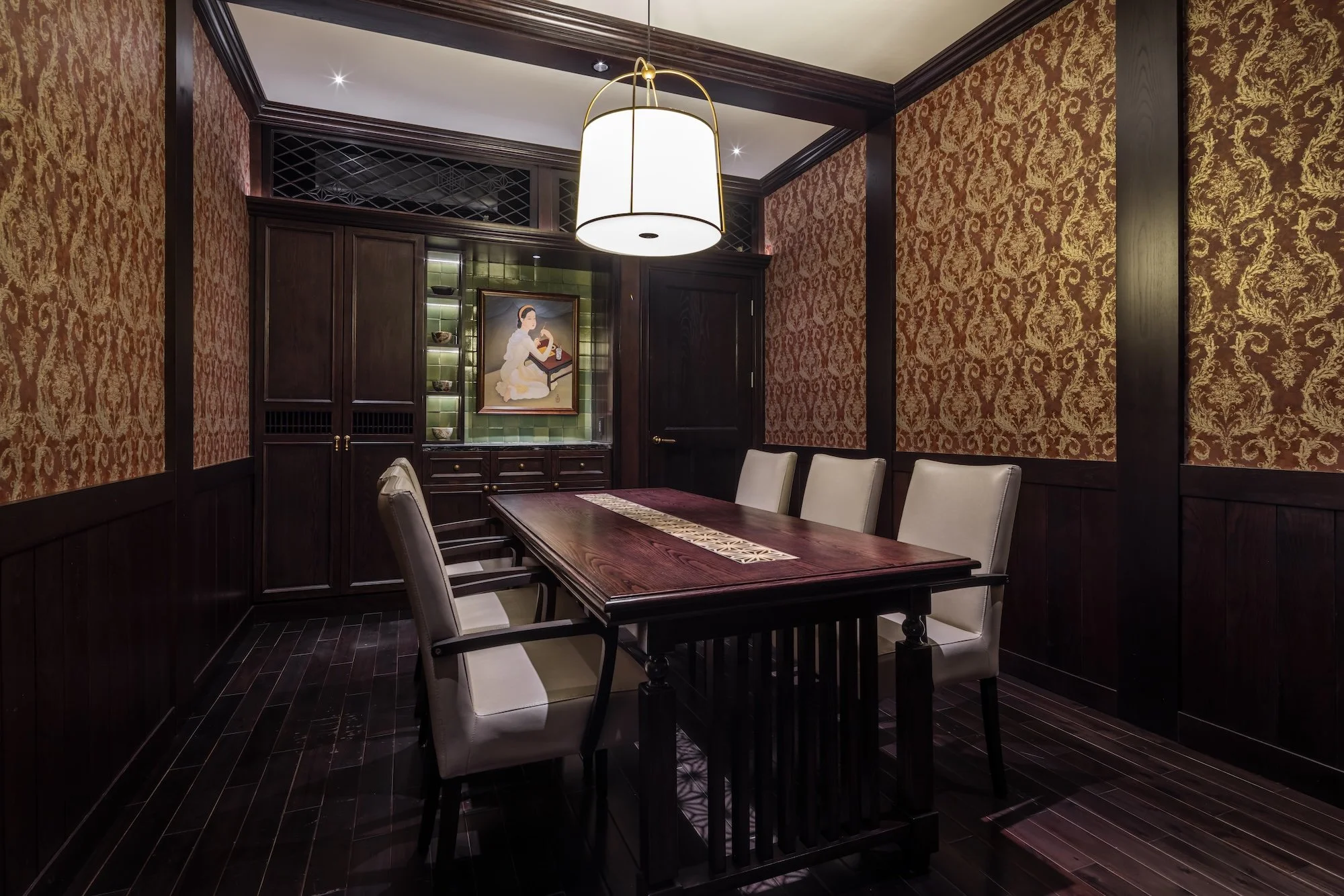
The design matters because the reference is expressed through construction rather than applied as ornament. The framework establishes scale around the bar, focuses attention on service, and provides the room with a recognizable centre. Latticework introduces a refined dimension of timber craft, while deep red surfaces, dark stone, and washi-inspired lighting create an atmosphere suited to the gradual pace of an evening. The restaurant is also organized around proximity. Counter seating brings guests near preparation and service, preserving the direct relationship between host, food, and diner that is central to Japanese hospitality. Elsewhere, tables and private rooms allow conversation at a different pace. The interior transitions between the focus of the counter and the privacy of a salon, accommodating dining and drinking within the same social environment.
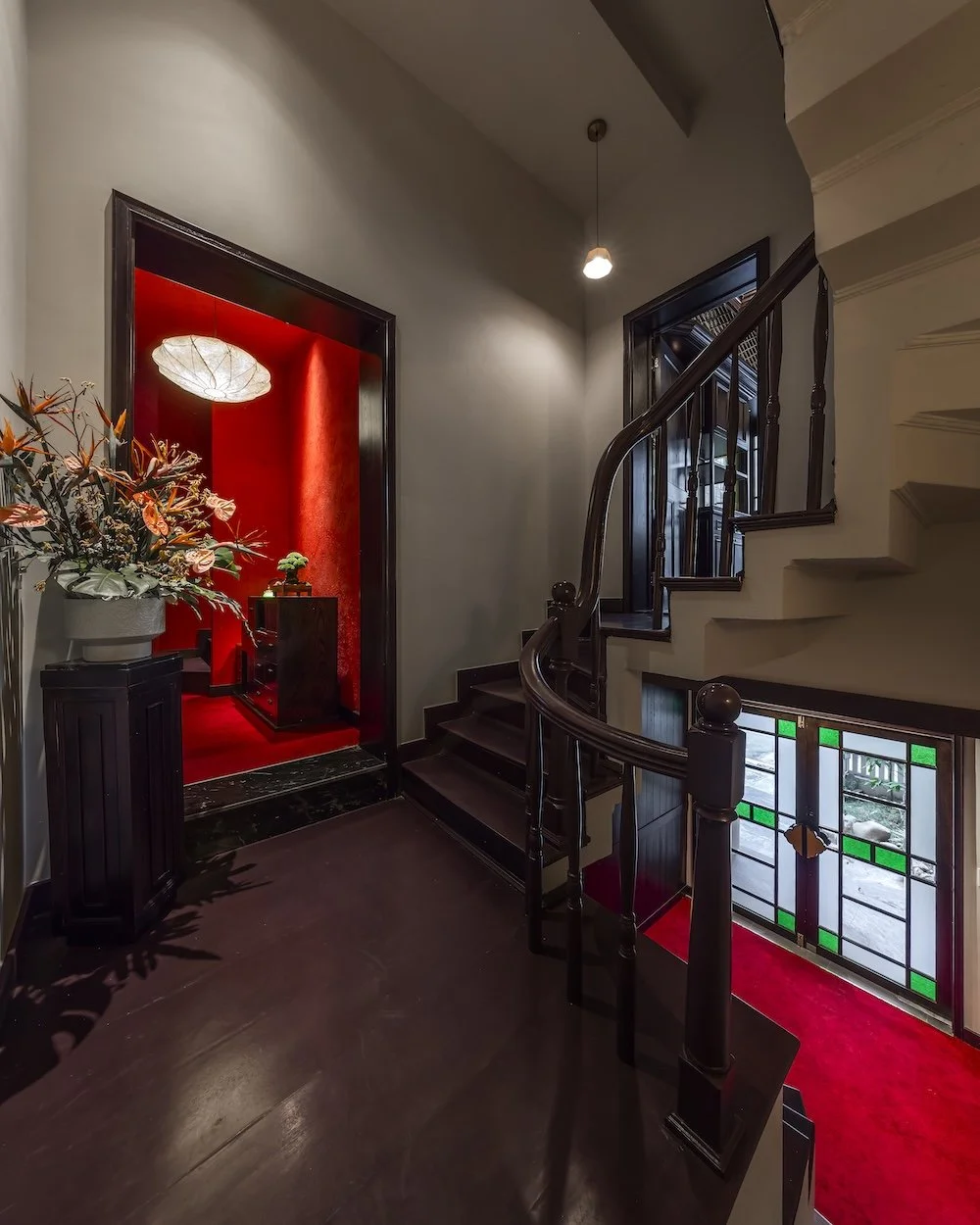
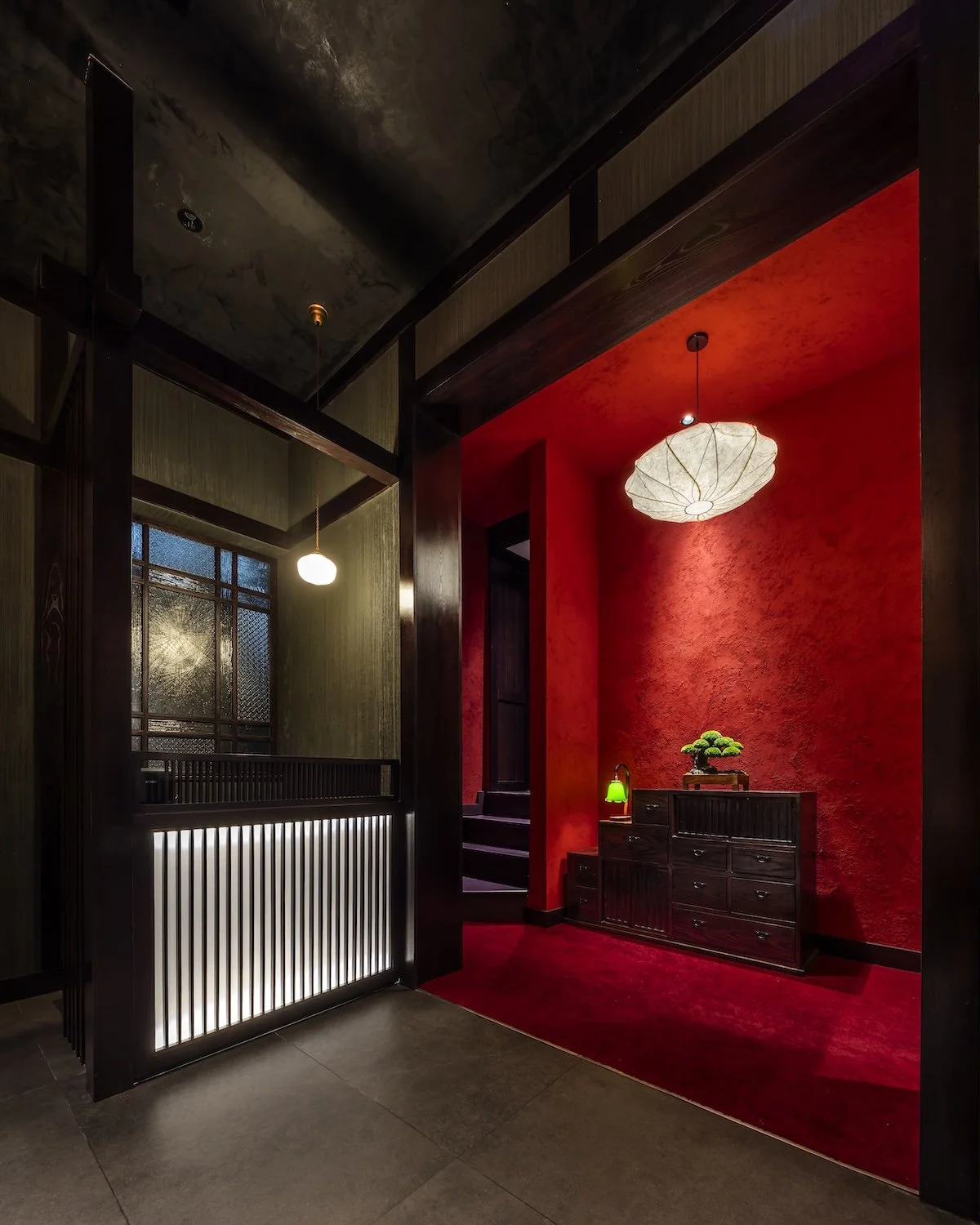
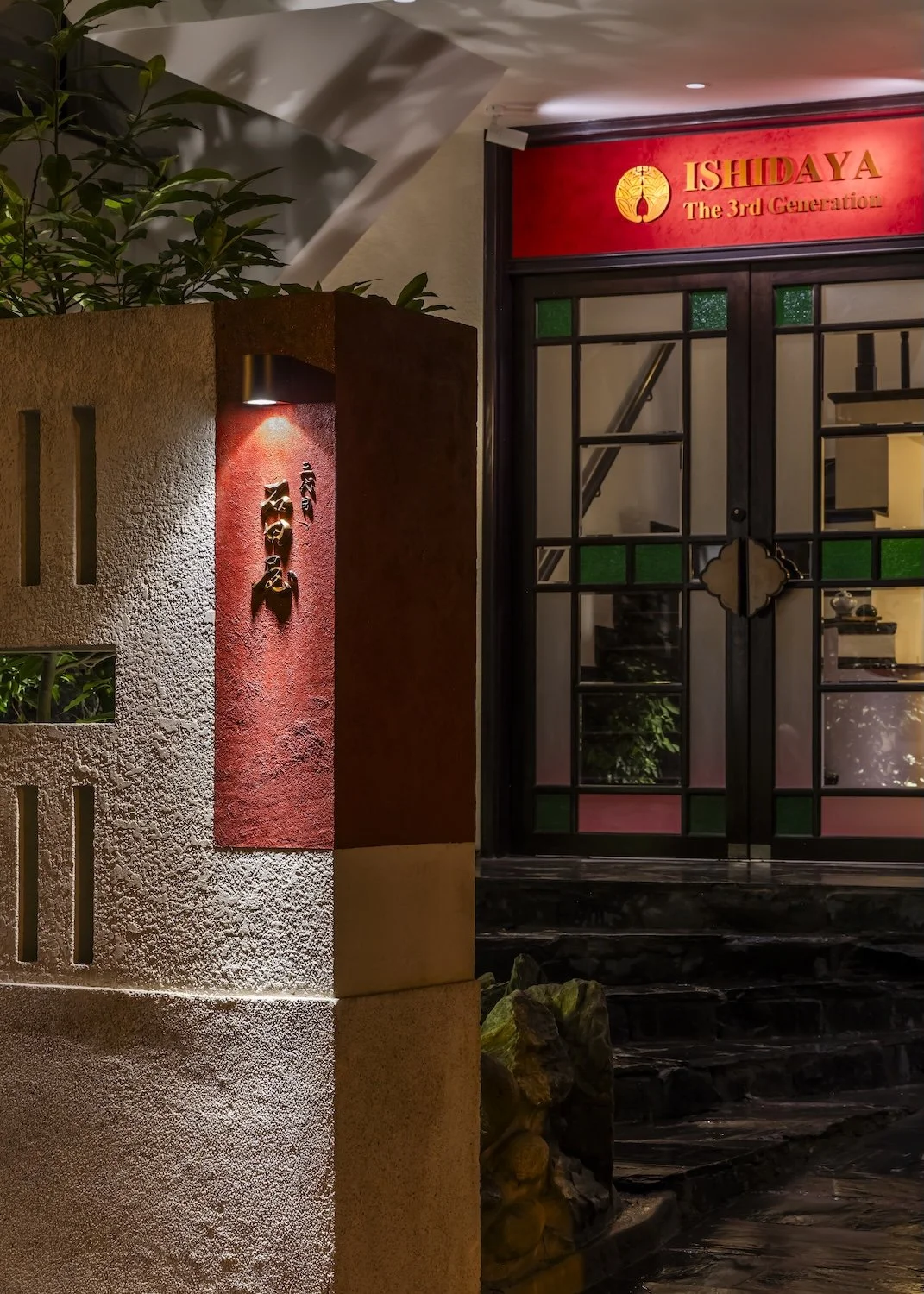
The private room reveals another aspect of the project. Patterned walls, dark wainscot, and a formal pendant evoke domestic interiors associated with the Taisho period, when Western furnishings entered Japanese life through selective adoption. Japanese artwork and restrained table settings maintain the room’s connection to the restaurant’s cultural identity, while the existing building provides an authentic architectural setting for these references. Colour plays a particularly important role. Red first appears as a threshold, marking the transition from the lighter circulation spaces to the deeper atmosphere of the restaurant. Within the dining rooms, it reappears in cabinetry and textured walls, set against black surfaces and warm timber. The effect concerns the gradual adjustment of the senses as guests move away from the street and into the evening, rather than theatrical drama.
ISHIDAYA & NISHI SHUZO BAR exemplifies how cultural sensibilities can be thoughtfully expressed in new contexts. Rather than relying solely on decorative references, the design foregrounds the essential elements of Japanese hospitality, careful spatial choreography, nuanced transitions, and a harmonious interplay of light and material. This approach fosters a genuine sense of place, demonstrating how core values can be meaningfully translated across borders. Hanoi remains equally present. The building’s Western inheritance is preserved, the restaurant responds to the city’s increasingly international dining culture, and the design recognizes cultural diversity as fundamental to its context. Taisho Roman gains relevance precisely because it resulted from a similar process of encounter and reinterpretation.
ISHIDAYA & NISHI SHUZO BAR is best understood as the work of a Japanese designer whose practice has been shaped by experience in Vietnam. It brings Japanese history to Hanoi while remaining fully integrated with the city. Through timber construction, Art Deco geometry, controlled lighting, and the rituals of dining, DESIGN & CREATIVE ASSOCIATES has created an interior formed by the experience of belonging to one culture while building a life in another.
PEGGY'S EDITOR'S NOTE (2026 Sky Design Awards Editorial Jury)
Adapting the Taisho Roman sensibility to a contemporary setting in Hanoi requires a careful approach. This project is successful because it treats history as a foundation for creating new spatial experiences, avoiding the common mistake of simply imitating the past. The strength of this work lies in its ability to transition seamlessly from the public street to the private salon. The carefully designed lighting and thoughtful choice of materials showcase a deep understanding of Japanese dining rituals, transforming the space into a sanctuary. It offers a meaningful exploration of how cultural identity can find a home within a complex architectural context.
EDITOR'S NOTE & REVIEW
The journey into Ishidaya begins with a conscious adjustment of the senses. As you transition from the vibrant streets of Hanoi to the restaurant's deep, red-hued interior, the space distinctly separates itself from the bustling city outside. This arrival sets the stage for the project's main objective: fostering a nuanced dialogue between different cultures. The Taisho Roman theme serves as a bridge, connecting the building's inherited Western decorative structure with the essence of Japanese hospitality.
The suspended timber framework, a significant architectural feature, serves as a focal point, directing light and activity towards the counter. By prioritizing spatial choreography and gradually darkening the atmosphere, the design allows historical references to remain subtle, ensuring that the intimacy of the dining experience takes center stage.
ORIGINAL DESIGNER SUBMISSION — VERBATIM
ISHIDAYA & NISHI SHUZO BAR is a restaurant and bar located in the central district of Hanoi, near the governmental area. This project began with a fundamental question: how to harmonize the existing building’s Western decorative elements with the refined aesthetics of Japanese cuisine and culture.
To connect these two identities, the design adopts the concept of Taisho Roman—a period in Japanese history when tradition and modernity, Eastern and Western cultures, coexisted and influenced one another. By reinterpreting this cultural fusion, the project seeks to reconstruct a space where Japanese and Western aesthetics naturally merge in contemporary Hanoi.
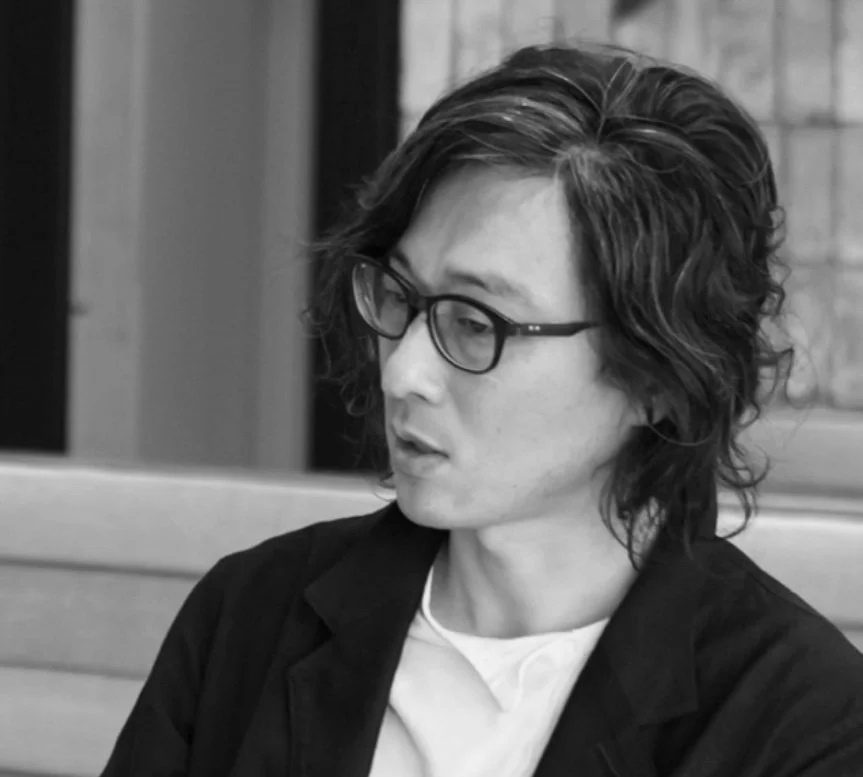
Mr. Kawaguchi
At the heart of the space, a sculptural wooden framework is installed above the counter as a symbolic architectural feature. This structure fuses the beauty of traditional Japanese wooden construction with the geometric language of Western Art Deco, giving three-dimensional form to the philosophy of Taisho Roman.
Integrated indirect lighting illuminates the wooden frames like a floating sculpture, creating rhythm and depth while softly defining the atmosphere of the interior. Through the layering of wooden structures, deep red tones, lattice details, washi-inspired lighting, and Art Deco motifs, the space achieves a unique balance between historical character and modern expression.
The interplay of material and light invites guests to slow down and immerse themselves in an experience shaped by both cuisine and design. Designed as a refined Japanese dining space with an integrated bar, the interior accommodates contrasting qualities—stillness and vibrancy, formality and relaxation, dining and drinking—within a single unified environment.
The result is an elegant setting for adults to gather, converse, and enjoy moments of quiet luxury.
ISHIDAYA & NISHI SHUZO BAR is not merely a place to eat and drink, but a stage where architecture, history, culture, and storytelling intersect.
Rooted in Japanese aesthetics while embracing the character of its location, the project connects past and present, East and West, and presents a new cultural value in the heart of contemporary Hanoi.
Project: ISHIDAYA & NISHI SHUZO BAR
Location: Central Hanoi, Vietnam
Project type: Interior Design — Bar and Restaurant / Japanese Dining and Bar
Designer/company